Built from SS 304 · SS 316

Design and fabrication of
coil tanks is our speciality!

Coil and jacketed tanks keep the fluid inside them hot or cold: edible oil, chocolate, milk, chemicals, bitumen and heavy fuel. The heat transfer area is calculated from the amount of heat to be transferred, and the type of coil or jacket is chosen by the fluid, pressure and cleaning needs.

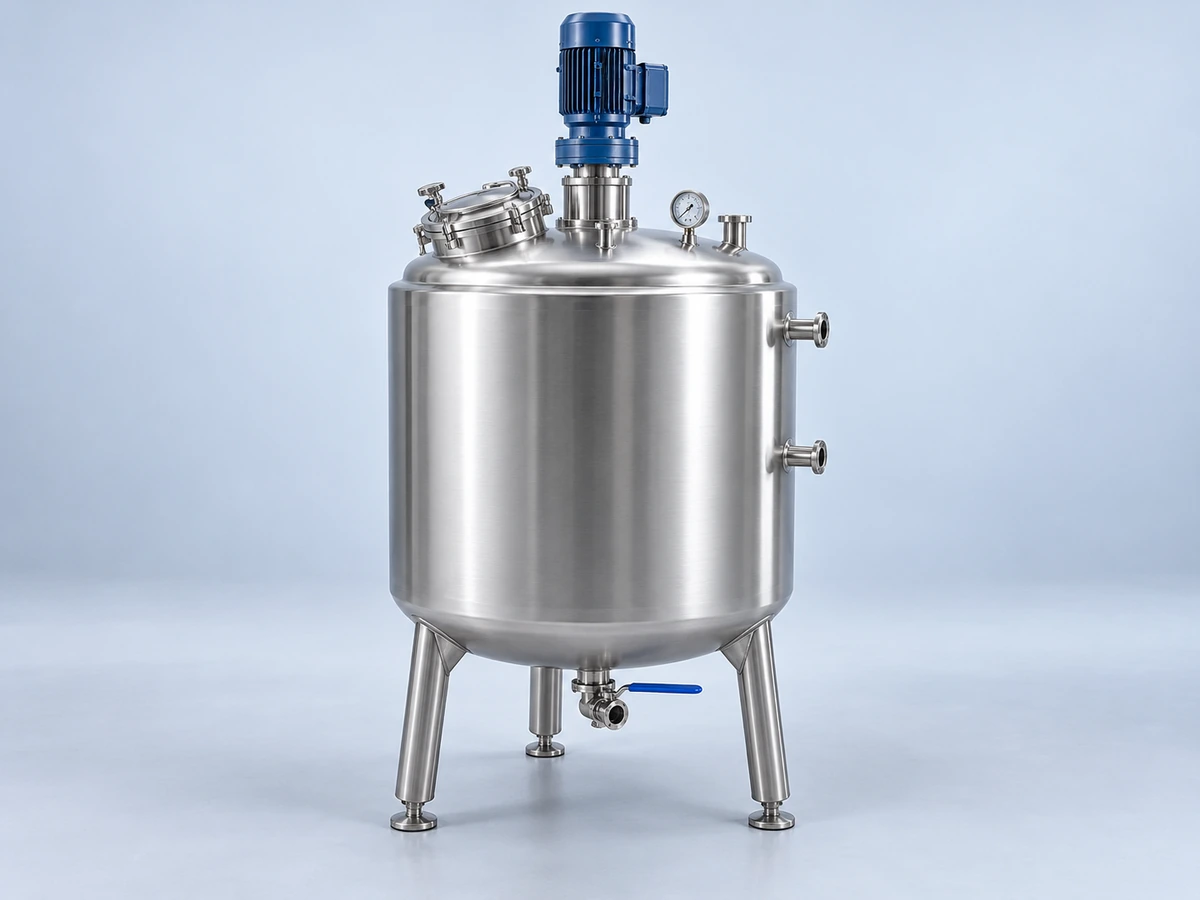
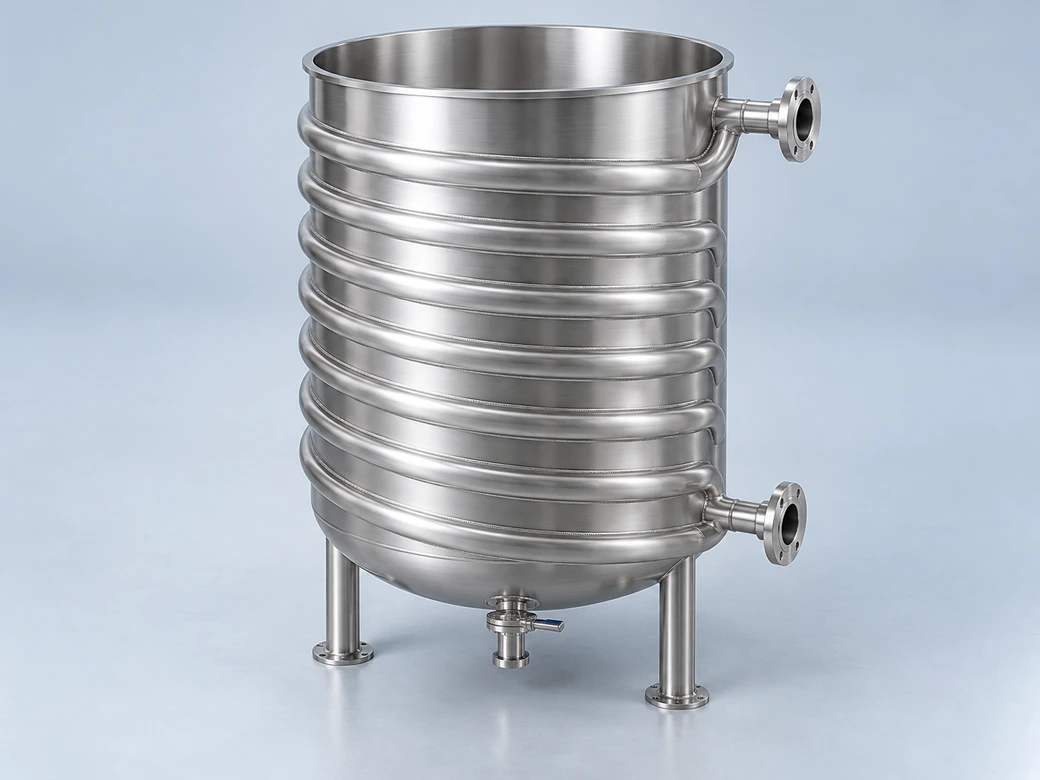
Product photo — stainless coil tank
Heat transfer method
Coil · jacket · half-pipe
Heating fluid
Hot water · steam · thermal oil
Material
Stainless 304 / 316
Fabrication warranty
24 months
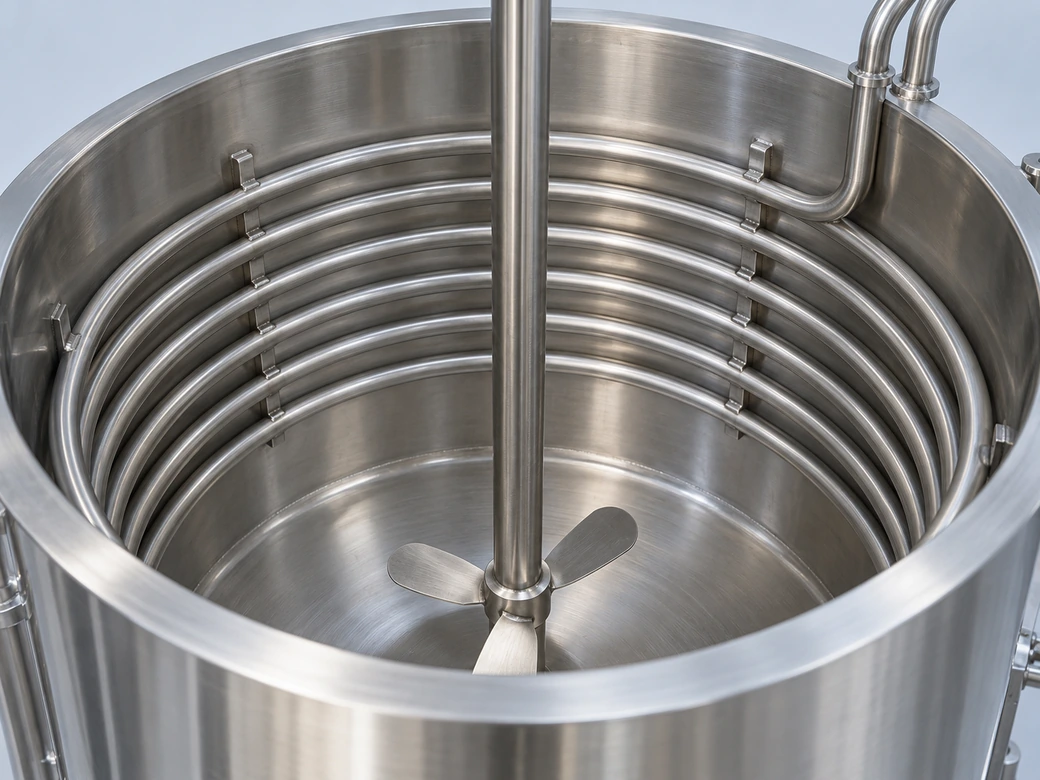
Internal coil
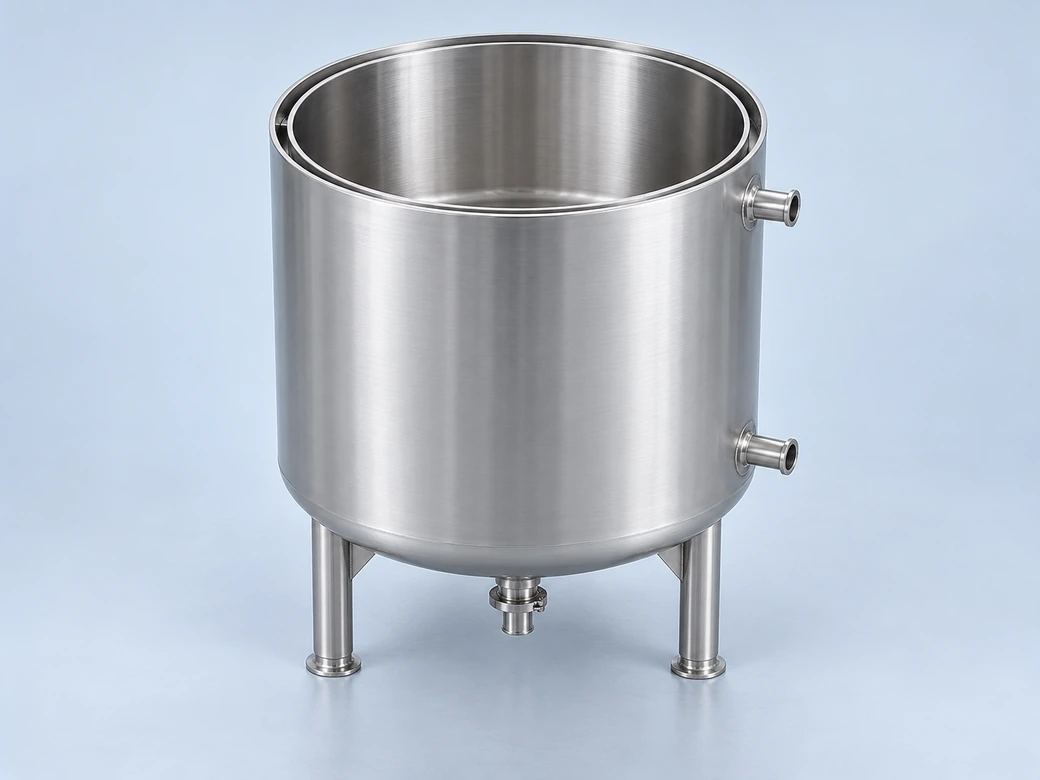
Full jacket
Half-pipe jacket
Hygienic stainless
Agitator and insulation
Separate testing

1. How the coil size is set

Heat load and heat transfer area

The heat the coil must transfer comes from three figures: the fluid's mass, its heat capacity and the difference between the initial and final temperatures. If this heat must be transferred in a given time, for example heating oil from 20 to 60 degrees in two hours, the required heat duty follows.

The coil area equals the heat duty divided by the product of the heat transfer coefficient and the mean temperature difference between the two fluids. The heat transfer coefficient depends on the type of fluid, the flow velocity and whether there is an agitator. A viscous fluid without an agitator has a very low coefficient and needs a large coil.

2. Key relations of thermal design

The basic relations for calculating a coil:

Heat required
Q = m · c · ΔT
Heat duty
P = Q / t
Coil area
A = P / (U · ΔTm)
Effect of agitation
U ↑ → A ↓
Workshop note

Adding an agitator is usually cheaper than enlarging the coil, because it multiplies the heat transfer coefficient.

3. Comparing heat transfer methods

FeatureInternal coilFull jacketHalf-pipe jacket
Heat transfer areaHighMediumGood
Internal cleaningHarderEasyEasy
Heating fluid pressureMedium to highLimitedHigh
Common useBitumen, chemicalsDairy, foodSteam and thermal oil

4. Hygienic coil tanks

In the food and pharmaceutical industries, anywhere the fluid can linger is a place for bacteria to grow. An external jacket keeps the inside of the tank smooth and makes clean-in-place (CIP) possible. The internal welds are smooth and polished, and the stainless steel is passivated after fabrication.

For these uses, a stainless 304 or 316 tank with a jacket or half-pipe, and a hygienic agitator where needed, is the common choice.

Features of our coil tanks

From calculating the coil area to separate testing of the coil and tank

Calculation of the heat transfer area
Internal coil, jacket or half-pipe
Stainless 304 and 316 for food use
Combined with an agitator for viscous fluids
Thermal insulation and outer cladding
Separate testing of the coil or jacket
Polished internal surface for cleaning
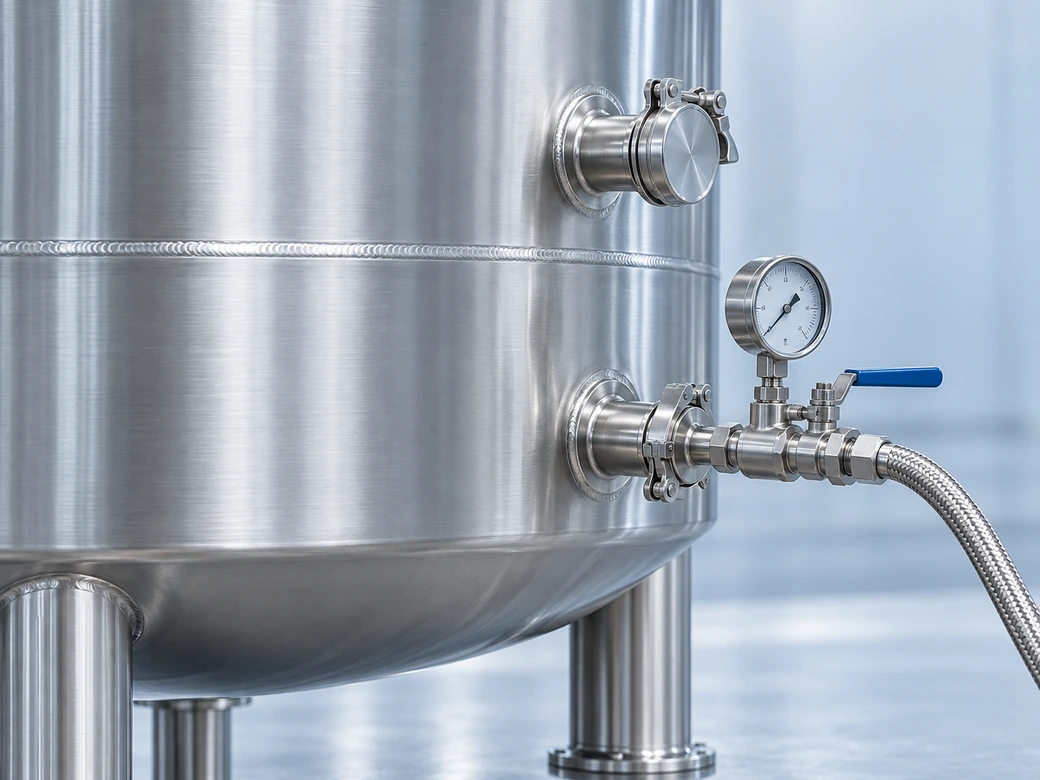
Inlet and outlet nozzles for the heating fluid
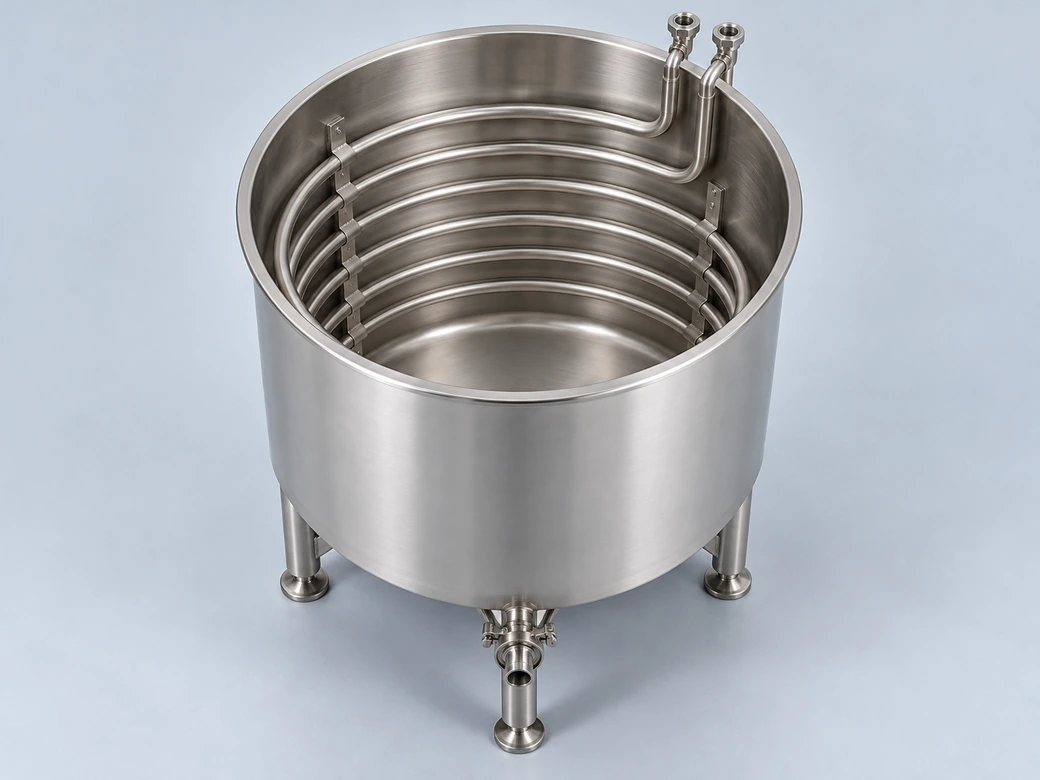
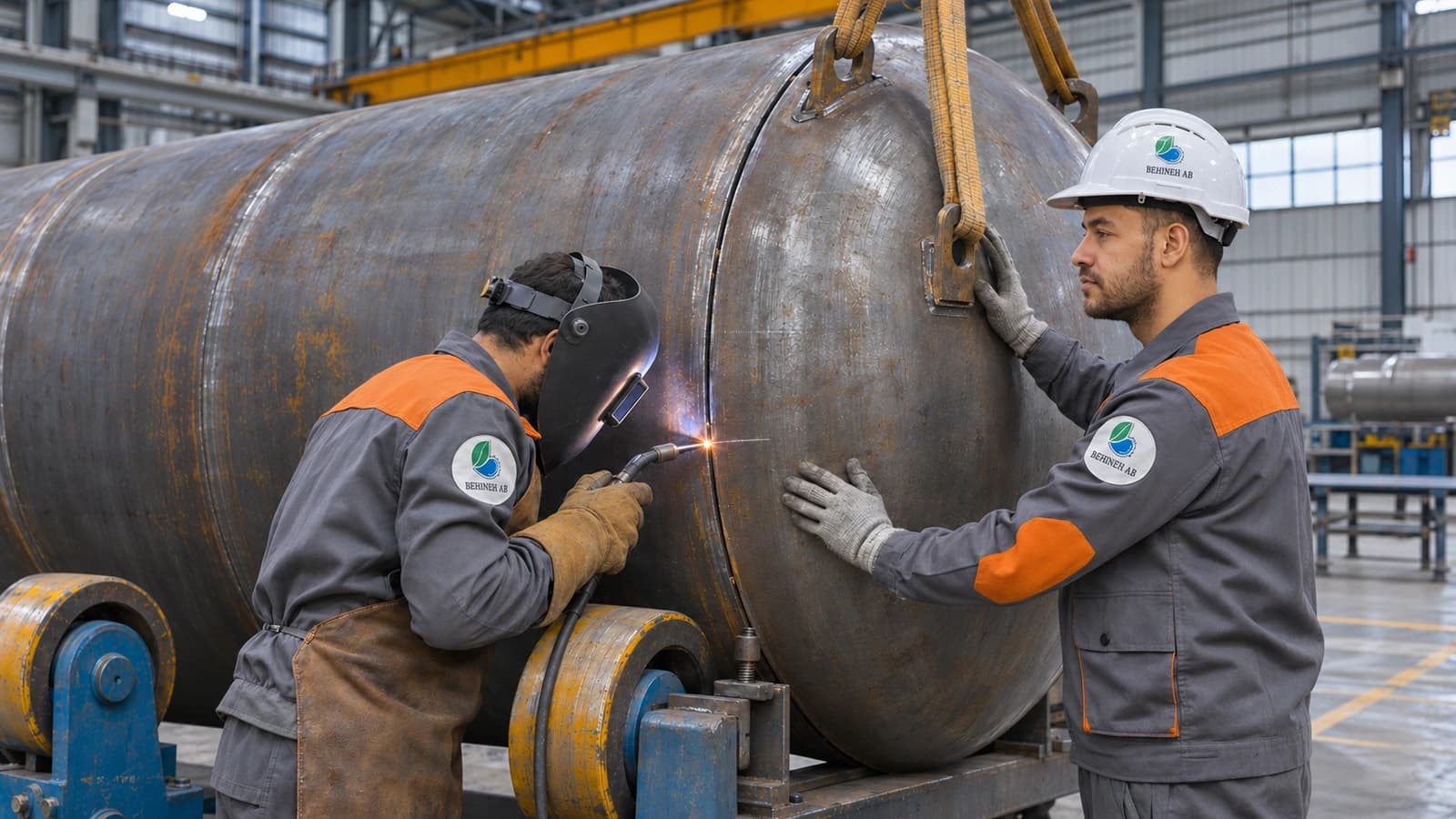
Workshop photo — building an internal coil

What is a coil tank?

Many fluids can only be stored or processed at a specific temperature. Edible oil and chocolate harden in the cold, milk must stay cool, and bitumen and fuel oil cannot be pumped without heating. A coil tank controls the fluid's temperature by passing hot water, steam, thermal oil or chilled water through a coil or jacket.

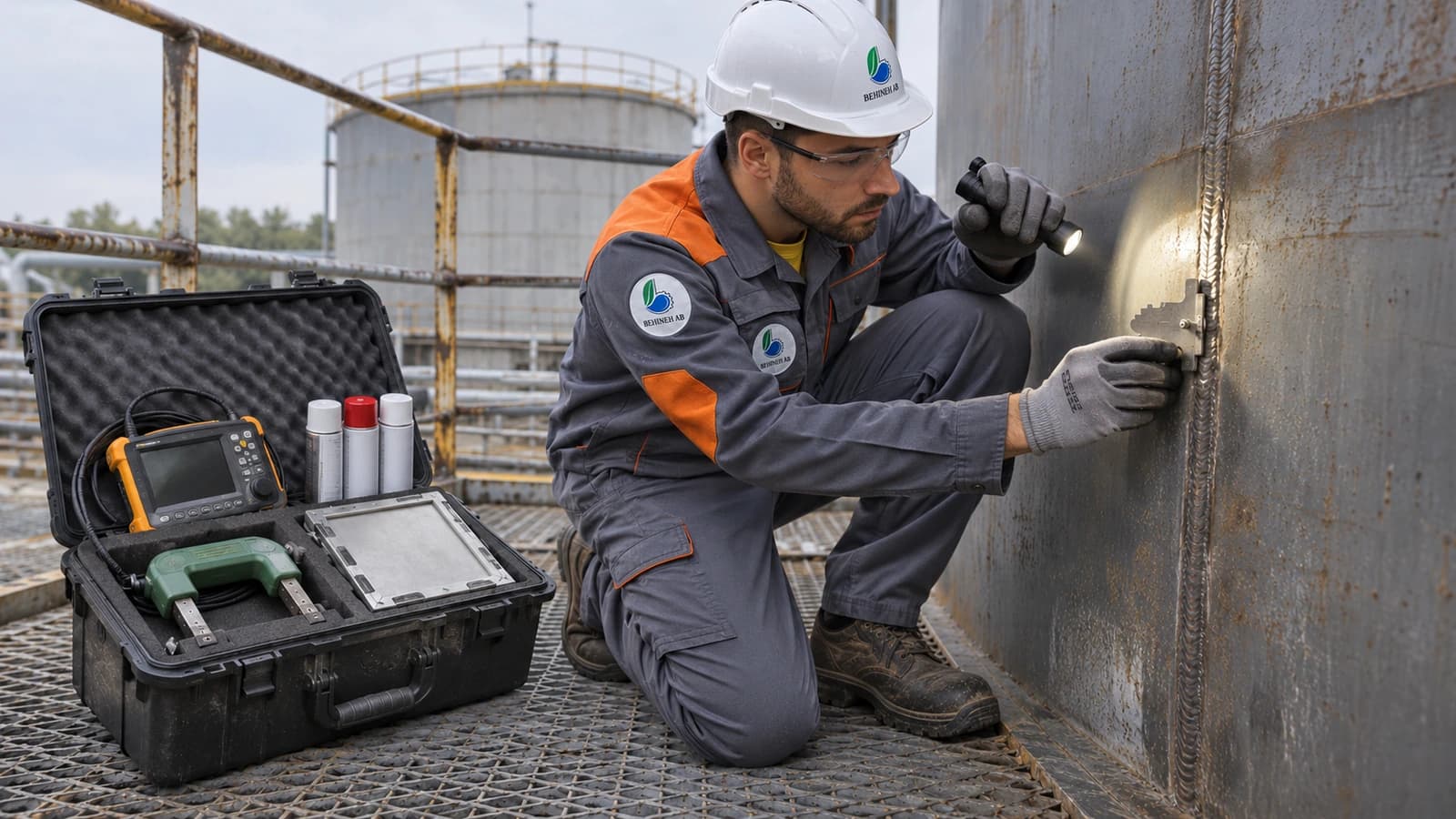
The coil size is not a guess. The amount of heat to be transferred in a given time, the temperature difference between the two fluids and the heat transfer coefficient set the area needed. In viscous fluids, without an agitator the heat only reaches the layer near the wall, which is why coil tanks often have agitators too. The body of these tanks is usually a stainless 304 or 316 tank, and the coil and nozzle welds are checked by liquid penetrant testing. If the fluid is viscous, a mixer tank with a coil or jacket is the better choice.

Calculated area
Coil area from the heat load and heating time
Hygienic
Stainless steel and a cleanable internal surface
Dual testing
Coil pressure test and a separate tank test

Types of heat transfer

Each method has its own advantages and limits

Stainless internal coil

Internal coil

A spiral pipe inside the tank, immersed directly in the fluid. It has the largest area and the fastest heat transfer, but makes cleaning the inside of the tank harder.

Heat transfer areaHigh
Internal cleaningHarder
Suited toBitumen, fuel oil, chemicals
Jacketed tank

Full jacket

A second shell around the body, with the heating fluid flowing in the gap between the two shells. The tank's internal surface stays completely smooth and is easy to clean.

Heat transfer areaMedium
Internal cleaningEasy
Suited toDairy, food, pharmaceuticals
Half-pipe jacket

Half-pipe jacket

A pipe split lengthwise and welded in a spiral around the body. It has faster flow and better heat transfer than a plain jacket and withstands higher pressure.

Heat transfer areaGood
Internal cleaningEasy
Suited toSteam and thermal oil at higher pressure

Technical specifications and design range

The main design parameters of a coil tank

Heating or cooling fluid
Hot water · steam · thermal oil · chilled water
Based on the required temperature
Tank and coil material
SS 304 · SS 316 · carbon steel
Stainless for food and chemical use
Coil area
Per thermal calculation
From the heat load and heating time
Agitator
If needed
Essential for viscous fluids
Insulation
Rock wool with stainless cladding
Less heat loss
Test
Coil pressure test · tank test
Each separately

Fabrication steps to delivery

From heat load to the final test

1
Thermal calculation and design
Setting the heat load, choosing the coil or jacket type, and calculating the area and tank thickness.
2
Building the tank and coil
Rolling and welding the body, bending the coil or building the jacket and half-pipe.
3
Separate testing
Pressure test of the coil or jacket and water-fill test of the tank, each separately.
4
Insulation, finishing and delivery
Insulation, surface polishing and passivation of the stainless steel, and delivery with documents.

Design and quality control

The coil or jacket usually has a higher pressure than the tank itself, especially when it works with steam. That is why each is designed and tested separately. In food tanks, weld quality and internal surface finish are as important as the thermal design.

Calculation of the heat transfer area
Jacket or coil designed for the heating fluid pressure
Separate coil pressure test and tank test
Polishing and passivation of the stainless surface
Workshop photo — testing the coil

Applications of coil tanks

Wherever the fluid temperature must be controlled

Food industry
Oil, chocolate, syrup and dairy
Chemical industry
Reaction and storage at controlled temperature
Bitumen and heavy fuel
Heating for pumpability
Pharmaceutical and cosmetics
Hygienic jacketed tanks

Speak directly with technical specialists

Tell us the fluid, required temperature, heating time and volume to receive the coil type and a tank price.

Frequently asked questions

The most common questions about coil and jacketed tanks

Price inquiry
coil tank

Enter your project details; our specialists will send a technical proposal and price within 24 business hours.

  • Written technical response with a proposed concept drawing
  • Site visit in Tehran and suburbs
  • 24-month fabrication & weld warranty
Direct line to engineering office
+98 21 4686 6276

Your information is confidential and used only to prepare a technical proposal.

All articles
  • Assembling the shell and head of a steel tank in the Behineh Ab tank fabrication workshop

    Steel Tank Manufacturing Steps, from Order to Delivery

    The steps of building a steel tank, from the data sheet to testing and dispatch. A 20,000-litre tank takes about three weeks; here is what that time is spent on.

    Read more
  • Inspector carrying out a non-destructive test on a steel tank shell weld

    Tank Tests: What Defect Does Each Test Find?

    Hydrotest, radiography, ultrasonic, liquid penetrant, magnetic particle and vacuum box. Each finds a particular defect and none can replace another. Here we compare them.

    Read more
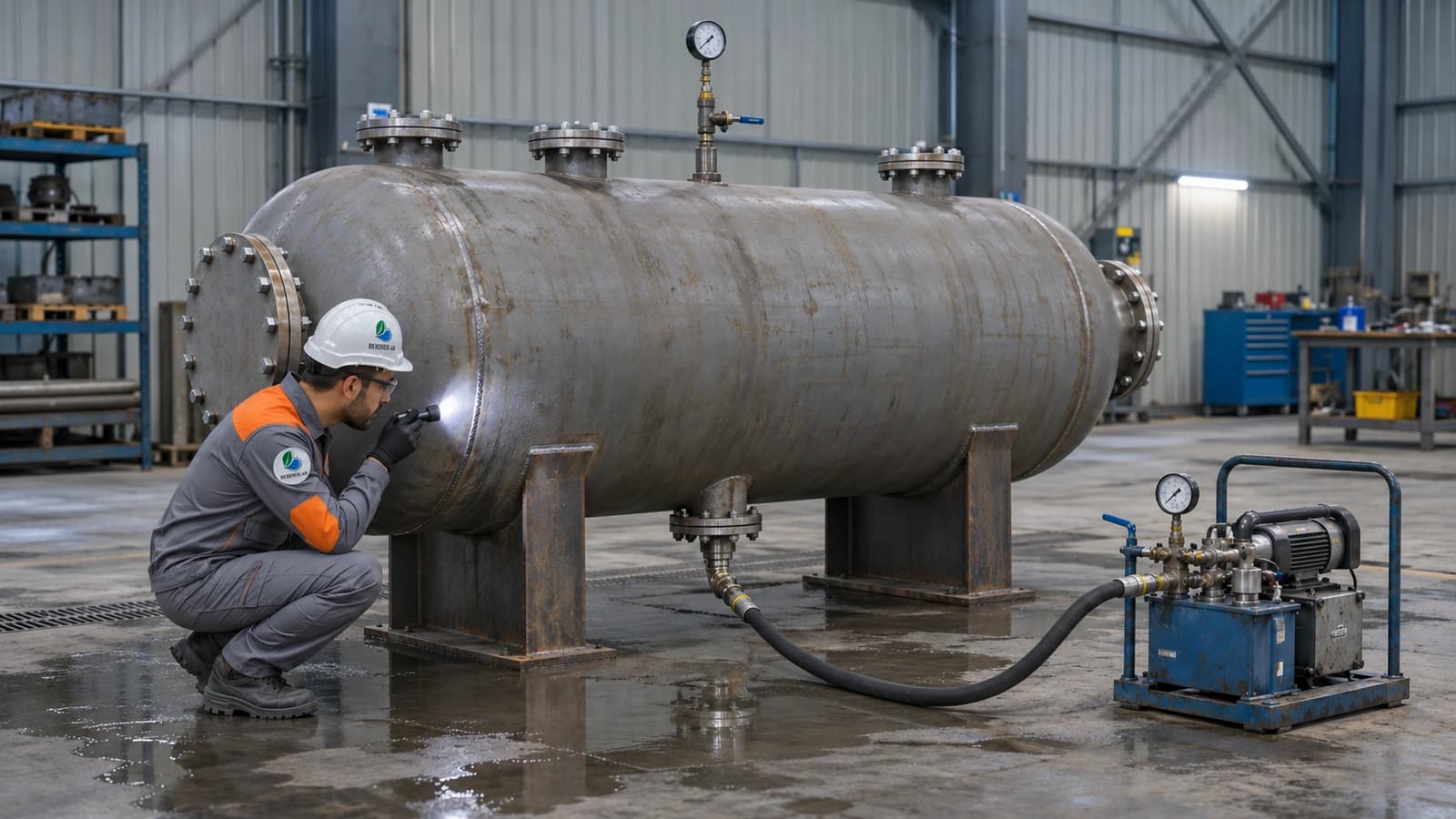
  • Pressure vessel under hydrostatic test with a pressure gauge in the Behineh Ab workshop

    Tank Hydrostatic Test, Step by Step

    The hydrotest is a tank's final exam before delivery, and we carry it out in our own factory. The test pressure, the work before filling, and the mistake that can ruin a tank while it is being drained.

    Read more
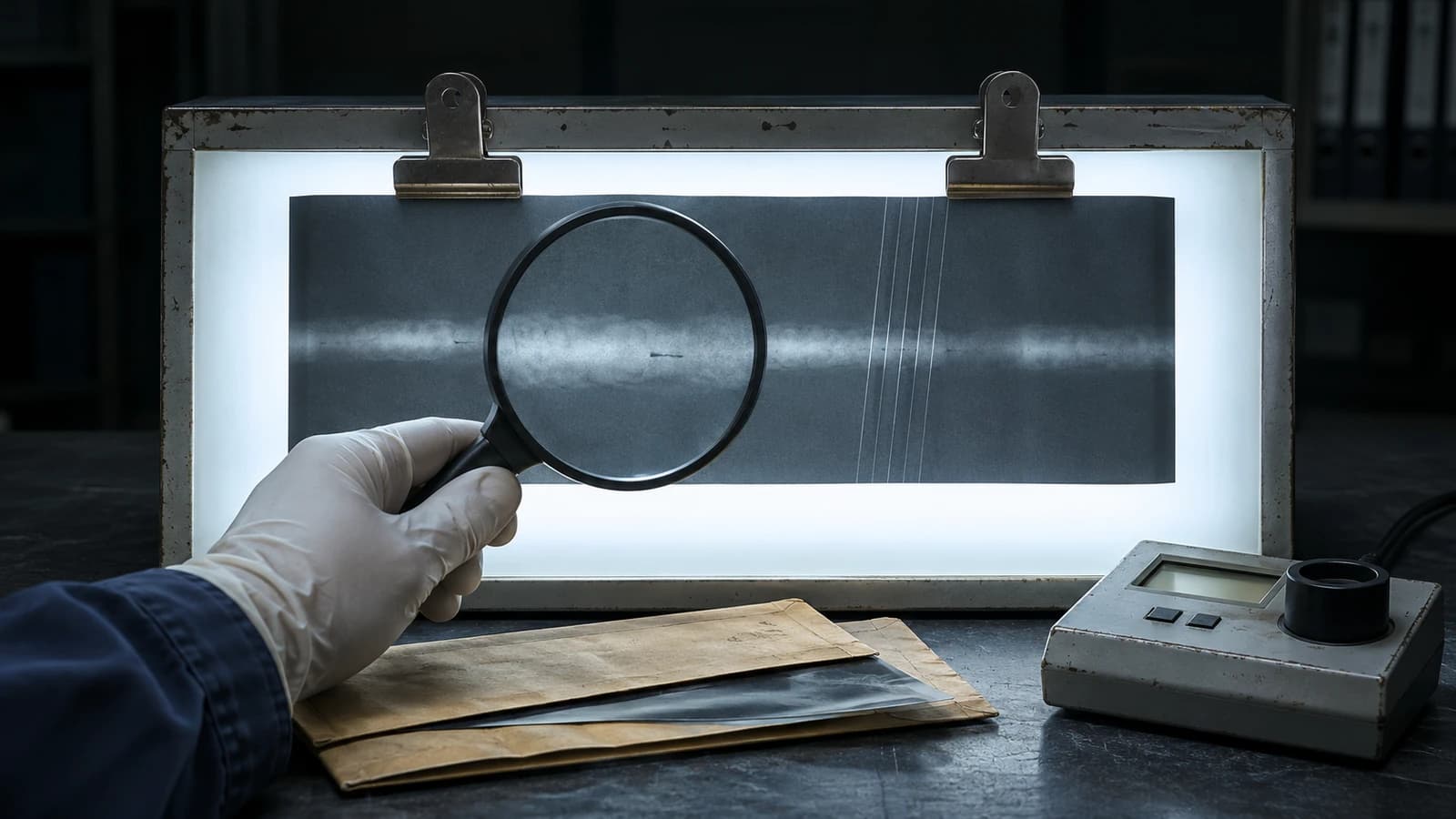
  • Radiography film of a tank shell weld on a film viewer

    Weld Radiography: What Percentage of Seams Must Be Tested?

    The radiography percentage sets the joint efficiency, and the joint efficiency sets the plate thickness. In other words, this decision directly affects the tank's weight and price.

    Read more