Chemical storage tank fabrication
Material chosen for chemical compatibility, not just price
Unlike a water tank, a chemical storage tank cannot be chosen on volume and budget alone. The shell material must be compatible with the stored chemical: carbon steel, 316L stainless steel, polyethylene and FRP each suit only a certain group of chemicals, and the wrong choice leads to early corrosion, leaks and product contamination.
Key features
Technical details
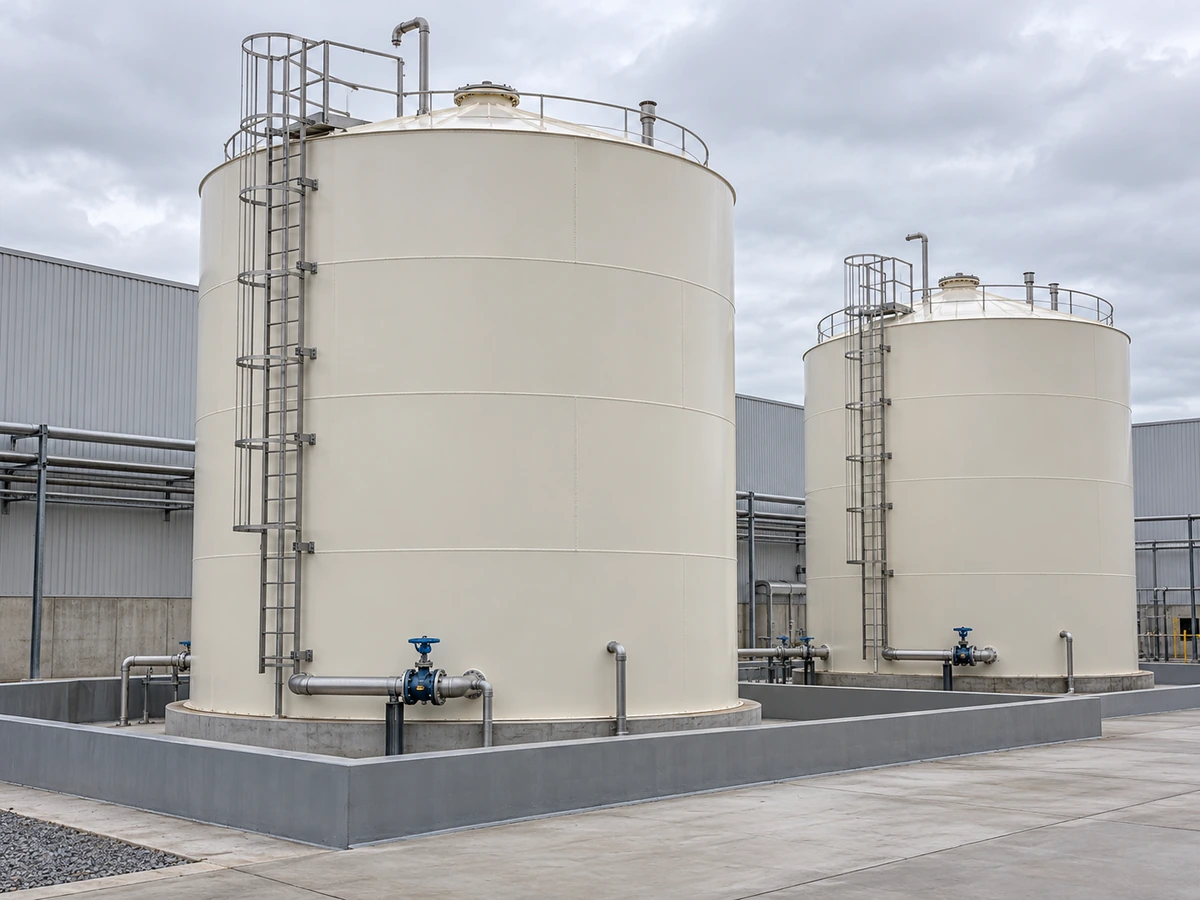
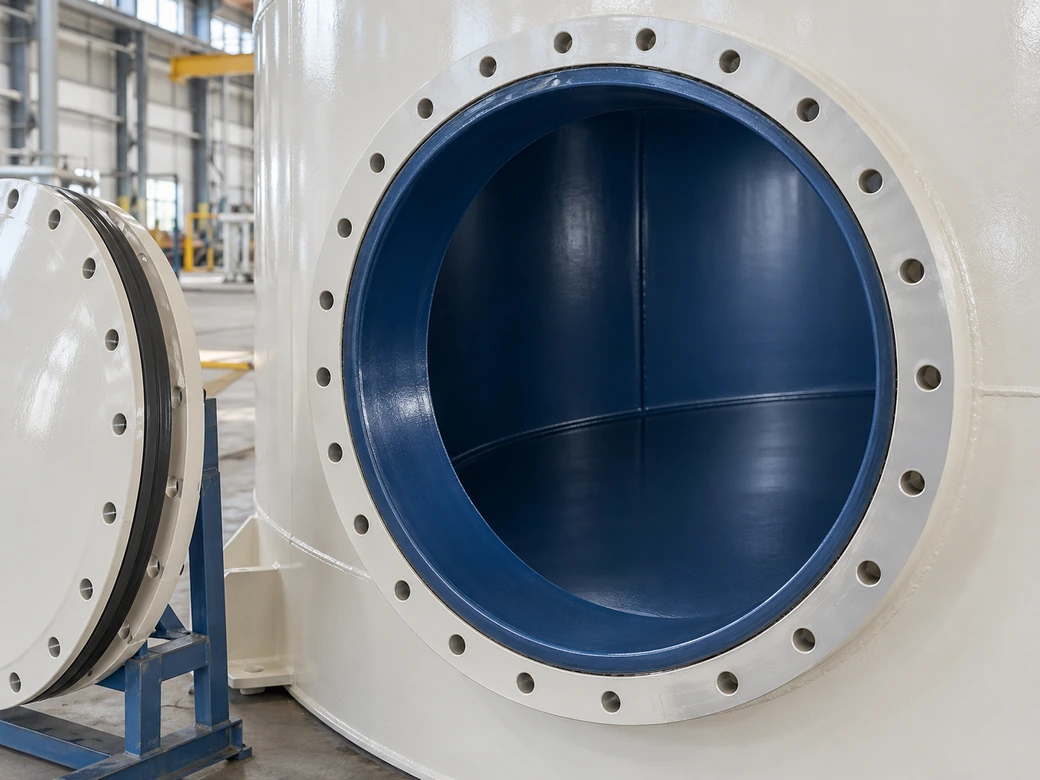
Besides the shell material, three other elements keep these tanks safe: an internal lining that resists chemical attack, a venting system to control vapour pressure inside the tank, and a secondary wall or containment basin to catch any leak before it reaches the environment.
Behineh Ab designs chemical storage tanks for the exact chemical, concentration, temperature and volume of each project, and gives the client material-compatibility documents before fabrication starts.
Technical specifications
Choosing tank material by chemical type
No single material suits every chemical. 316L stainless steel, thanks to the molybdenum in its composition, resists many dilute acids and chlorides well, but in long contact with hot concentrated acids it needs an internal lining. Polyethylene is an economical choice for alkalis and many salts, but it does not resist organic solvents and some oxidisers well enough.
The table below is a first selection guide; the final decision must always be based on the real concentration, temperature and contact time of the chemical with the shell.
Tank shape matters as much as material
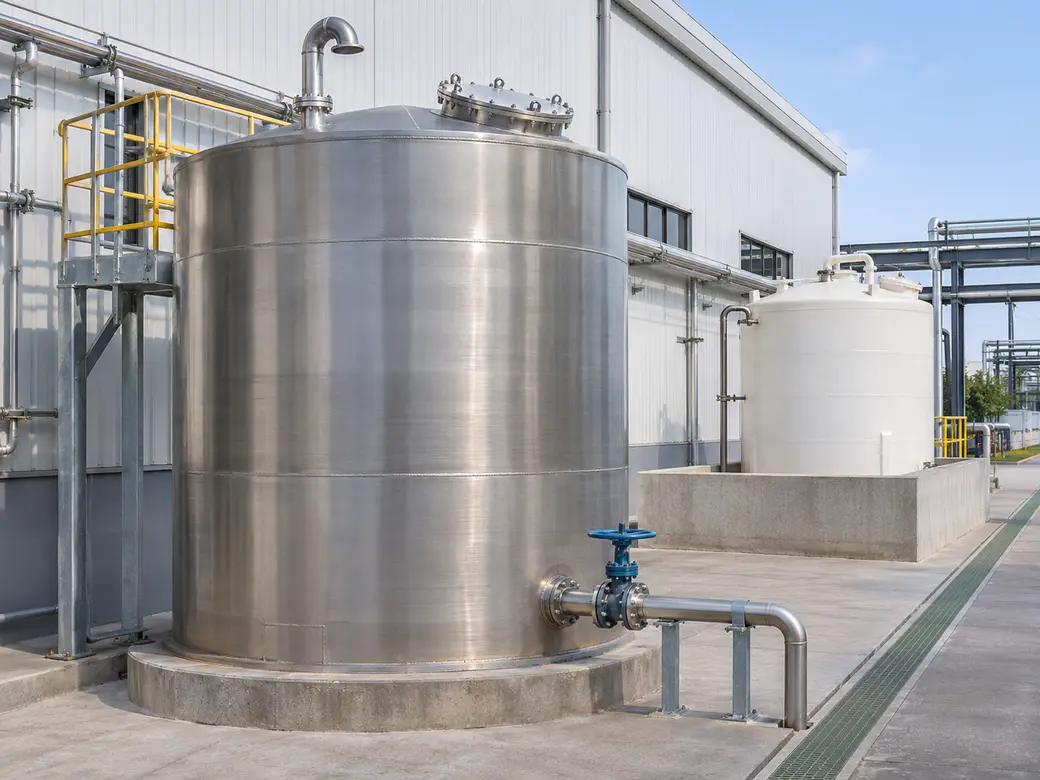
Besides material, the tank's shape must suit how the stored chemical behaves: a sloped-bottom tank for heavy, settling materials, an open-top tank for chemicals that need continuous mixing, a double-wall tank for highly corrosive chemicals, and portable modular IBC tanks for smaller volumes that move often between units.
Internal lining and secondary wall: two complementary safety layers
The internal lining and the secondary wall do different jobs and do not replace each other. The lining stops the chemical from touching the steel shell and extends the tank's life; the secondary wall assumes that a leak will happen one day, and its job is to contain that leak before it reaches soil or surface water.
For hazardous chemicals or large volumes, safety standards usually require a containment basin holding at least the volume of the main tank. Behineh Ab designs both layers for the hazard class of the stored chemical.
How to size a chemical storage tank
Chemical tank capacity is usually set not from net daily consumption alone, but with a margin for supply fluctuations, the reorder interval and safety freeboard above the liquid level. Freeboard prevents overflow from thermal expansion or filling errors.
Another factor is how the chemical reacts with air: some chemicals react with atmospheric moisture and need a closed tank with controlled venting, not an open one. This must be settled before the roof type is chosen.
Applications and industries
Photo gallery
Chemical storage tank gallery
Request a quote
Chemical storage tank fabrication
Enter the pressure, temperature and fluid; our engineers send a technical proposal and price within 24 working hours.
- Written technical reply with a proposed concept drawing
- Site visit in Tehran and surroundings
- 24-month warranty on fabrication and welding