Design and fabrication of
titanium tanks for advanced industries
Properties, design, fabrication and use in advanced industries
Titanium tanks are used in services where stainless steel is not enough, thanks to their outstanding corrosion resistance, high strength-to-weight ratio and biocompatibility.
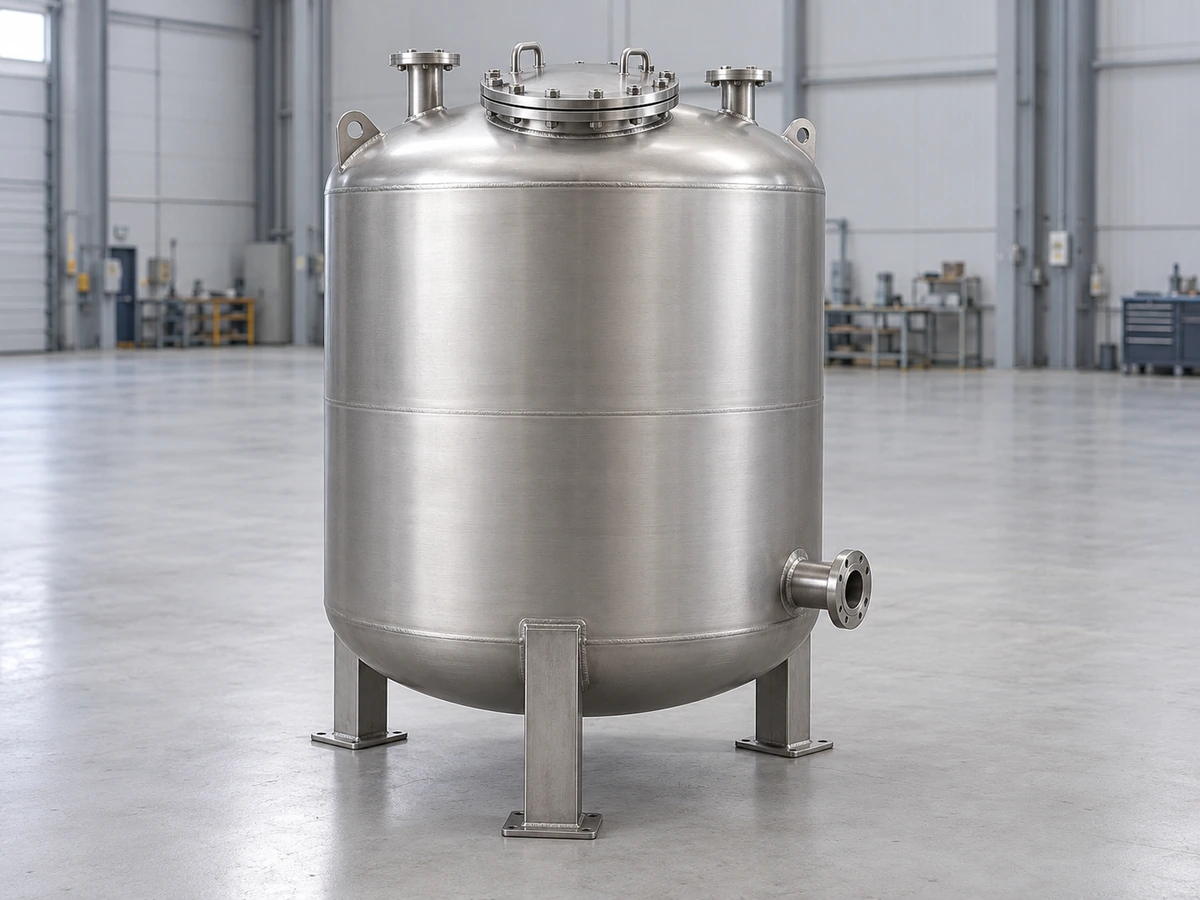
1. Introduction — the titanium vessel
Titanium vessels · advanced industries
Titanium vessels are process and storage equipment that, thanks to a unique combination of outstanding corrosion resistance, high strength-to-weight ratio and biocompatibility, have a special place in industries where stainless steel and nickel alloys fall short. They are used in petrochemicals (especially chloride and acid service), marine and shipbuilding, aerospace, medical equipment and biotechnology, and in recent years in the hydrogen and renewable-energy chain.
Unlike steel, which quickly suffers pitting and crevice corrosion in environments containing chlorine and oxidising acids, titanium performs exceptionally in such environments because it spontaneously forms a very stable protective oxide layer (TiO₂); this property justifies the metal's high initial cost in many critical applications.
2. Metallurgical properties and alloy classification
Titanium and its alloys are classified under ASTM/ASME in the following grades:
| Grade | Type | Main property | Typical use |
|---|---|---|---|
| Grade 1 | Commercially pure (CP) | Softest; highest toughness and formability | Parts with complex forming |
| Grade 2 | Commercially pure (CP) | Balance of strength and corrosion; most widely used | Tank shells, heat exchangers |
| Grade 5 (Ti-6Al-4V) | Alpha-beta alloy | Very high strength | Aerospace, high-pressure fittings |
| Grade 7 | CP + palladium | Superior corrosion resistance in reducing acids | Severe acid service |
| Grade 12 | Ti-0.3Mo-0.8Ni | More economical alternative to Grade 7 | Corrosive tanks and piping |
A strength-to-weight ratio about twice that of austenitic stainless steel, at about 60% of its density. Superior resistance to chloride, sea water, nitric acid, hypochlorite and most oxidising environments. High fatigue strength for its weight. Biocompatibility for medical and pharmaceutical equipment. Properties retained from cryogenic to moderately high temperatures (depending on grade).
High reactivity with oxygen, nitrogen and hydrogen at high temperature (especially during welding). Sensitivity to hydrogen embrittlement if contaminated during fabrication. Incompatible with some fluoride-containing acids and hot concentrated sulphuric acid. High raw-material price and machining cost compared with steel.
3. Design thickness ASME
Design is based on ASME Section VIII and titanium's allowable stress in Section II Part D; shell relations:
Titanium's modulus of elasticity is about half that of steel, so buckling under external pressure or vacuum must be checked more carefully, even when the thickness is adequate on allowable stress.
3. Principles of mechanical design
The design of titanium vessels follows thin-shell mechanics, with titanium-specific allowable stresses from ASME Section VIII and Section II Part D.
For highly corrosive service where full contact between the fluid and titanium is essential.
A carbon steel main shell carries the pressure load, with a thin titanium layer (usually 2 to 3 mm) as a corrosion-resistant inner lining; this cuts fabrication cost dramatically and is common in large process vessels.
4. The challenges of welding titanium
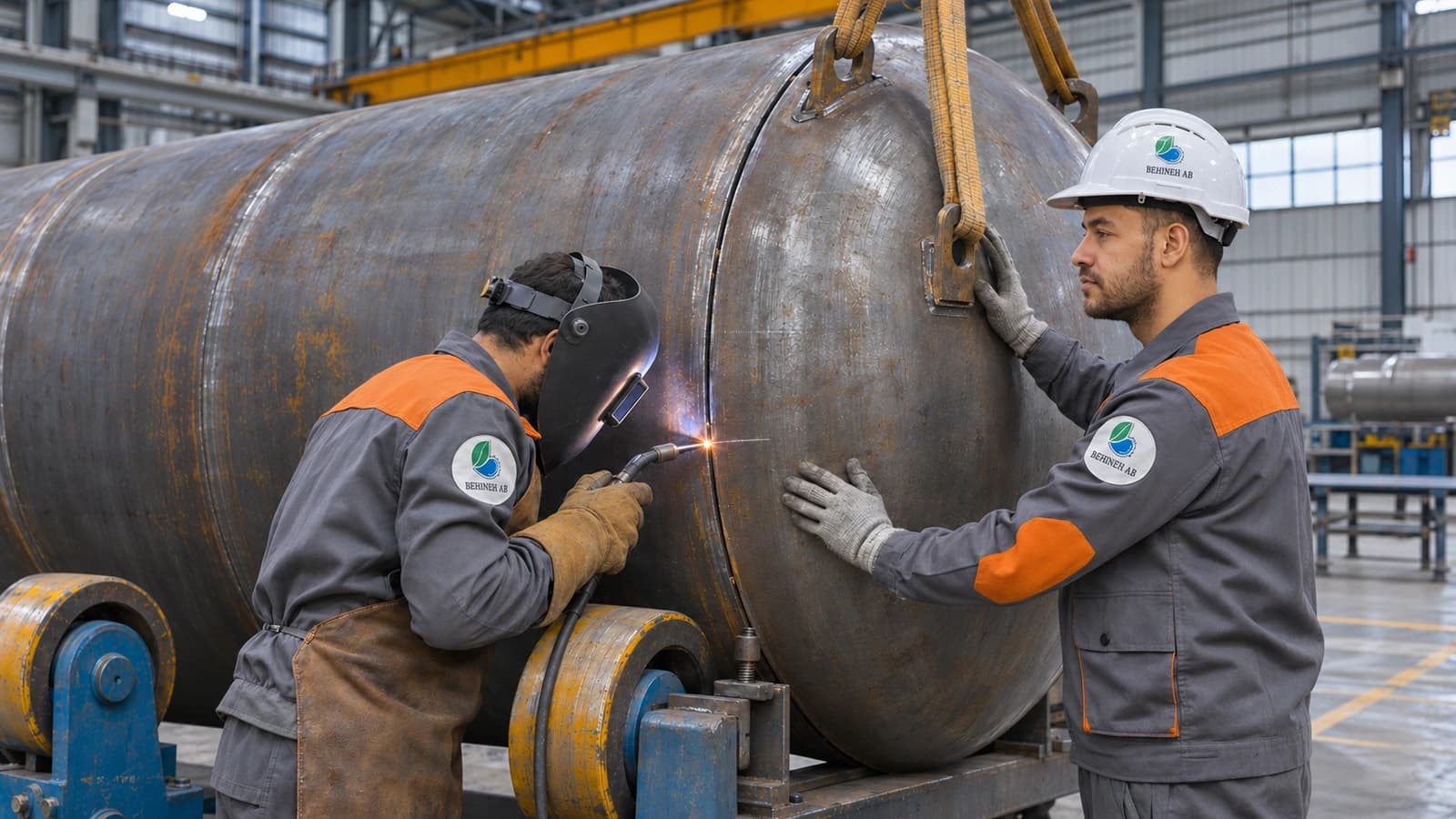
Because titanium reacts strongly with atmospheric gases at high temperature, welding is one of the most critical fabrication steps.
High-purity argon to cover the weld pool, the weld root (backing gas) and the cooling zone behind the weld (trailing shield) until the metal temperature falls below about 400 °C.
Mainly GTAW (TIG) for precision and atmosphere control; in mass production, electron-beam (EBW) or laser welding is also used.
Grease, oxide and contamination must be completely removed before welding (pickling and dedicated solvents). A silver or light straw colour shows good shielding; dark blue or a grey/white powdery surface shows contamination and the need to repair or remove the weld.
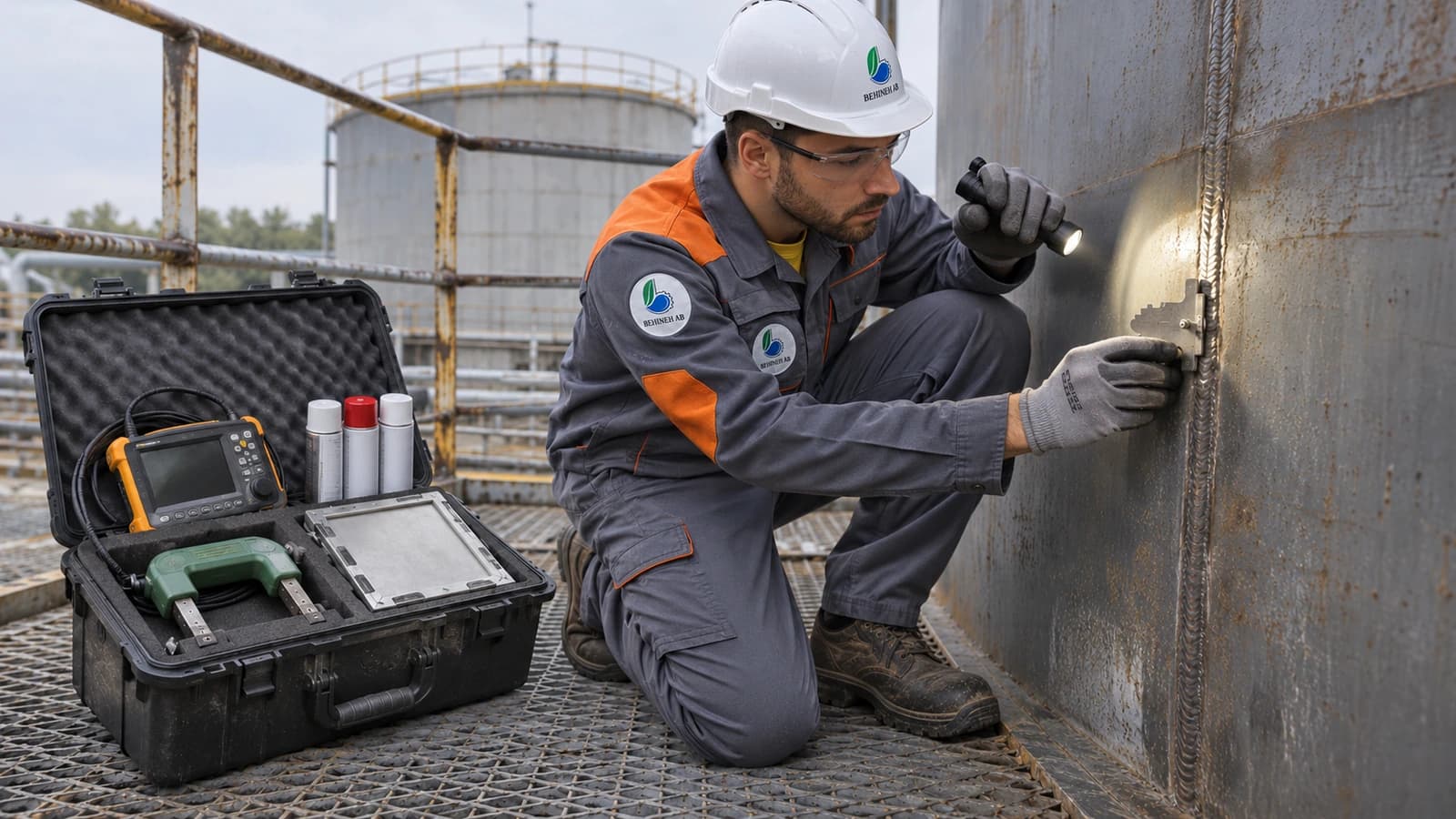
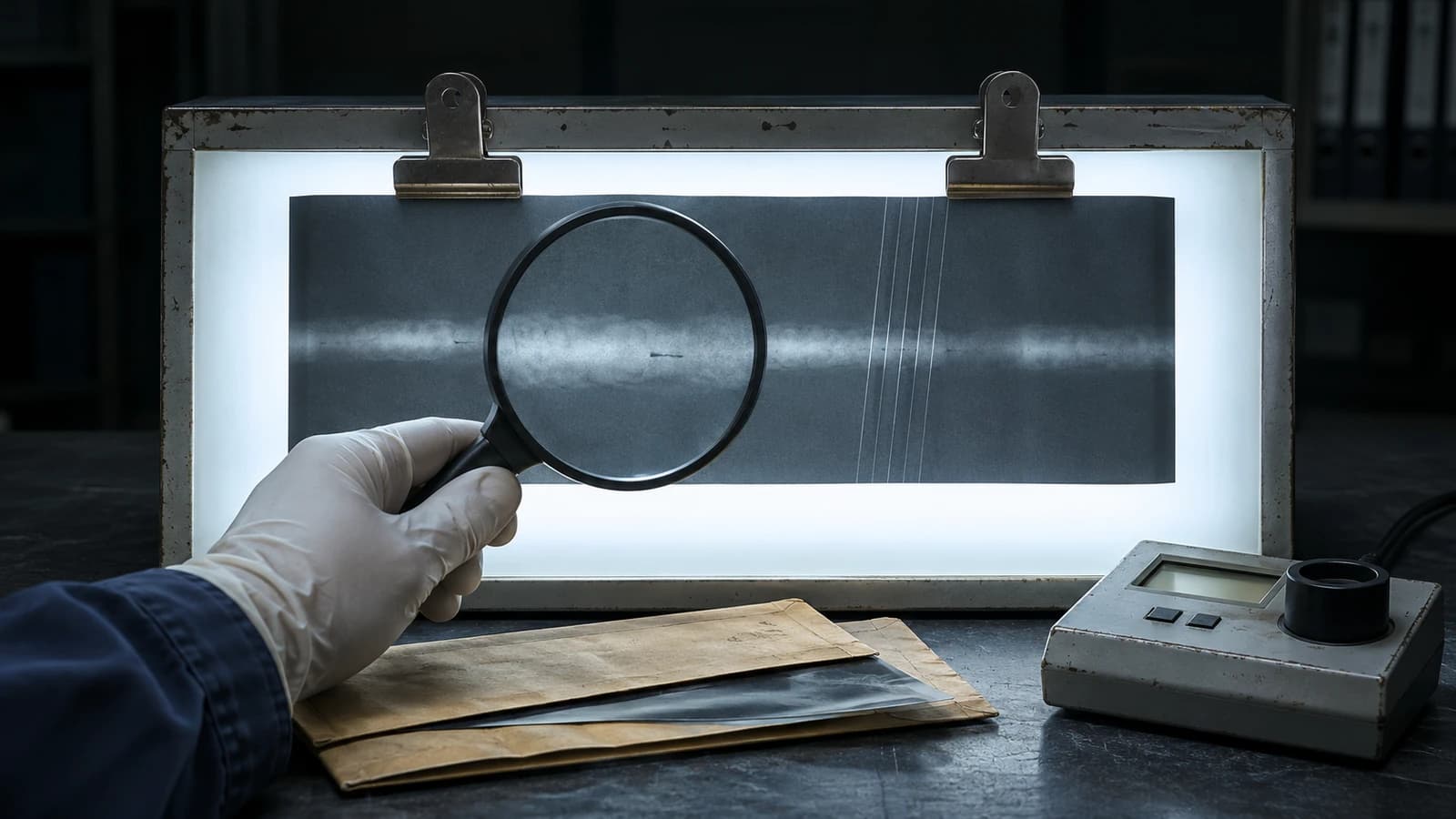
Besides RT, UT and PT, micro-hardness testing to confirm no hardness increase from absorbed oxygen or nitrogen, and visual inspection of oxide colour by a qualified inspector, are a standard part of weld acceptance.
5. Comparison with stainless steel
In a life-cycle cost analysis, despite the higher initial investment, titanium is often justified in highly corrosive service because it reduces replacements and maintenance shutdowns.
| Criterion | Titanium vessel | Stainless steel vessel (316L) |
|---|---|---|
| Corrosion resistance in chloride | Excellent | Limited (prone to pitting and crevice) |
| Raw-material cost | Very high (5 to 10×) | Moderate |
| Structural weight | Lighter (lower density) | Heavier |
| Fabrication and welding complexity | High (controlled atmosphere) | Moderate |
| Service life in corrosive service | Longer; lower LCC | Shorter in corrosive service |
| Availability and lead time | More limited | Widely available |
6. Main industrial applications
Reaction vessels, heat exchangers and reactors in contact with chlorine, hydrochloric acid, sodium hypochlorite and concentrated chloride solutions.
Submarine hulls, sea-water piping and pressure vessels in direct contact with salt water.
Heat-exchanger tubes and shells in contact with warm, chlorinated sea water.
Fuel and oxidiser tanks in rockets and satellites because of the exceptional strength-to-weight ratio.
Process tanks and bioreactors because of biocompatibility and a non-reactive surface.
Some high-pressure hydrogen storage tanks and compressors; requires careful review of grade and service conditions with regard to hydrogen embrittlement.
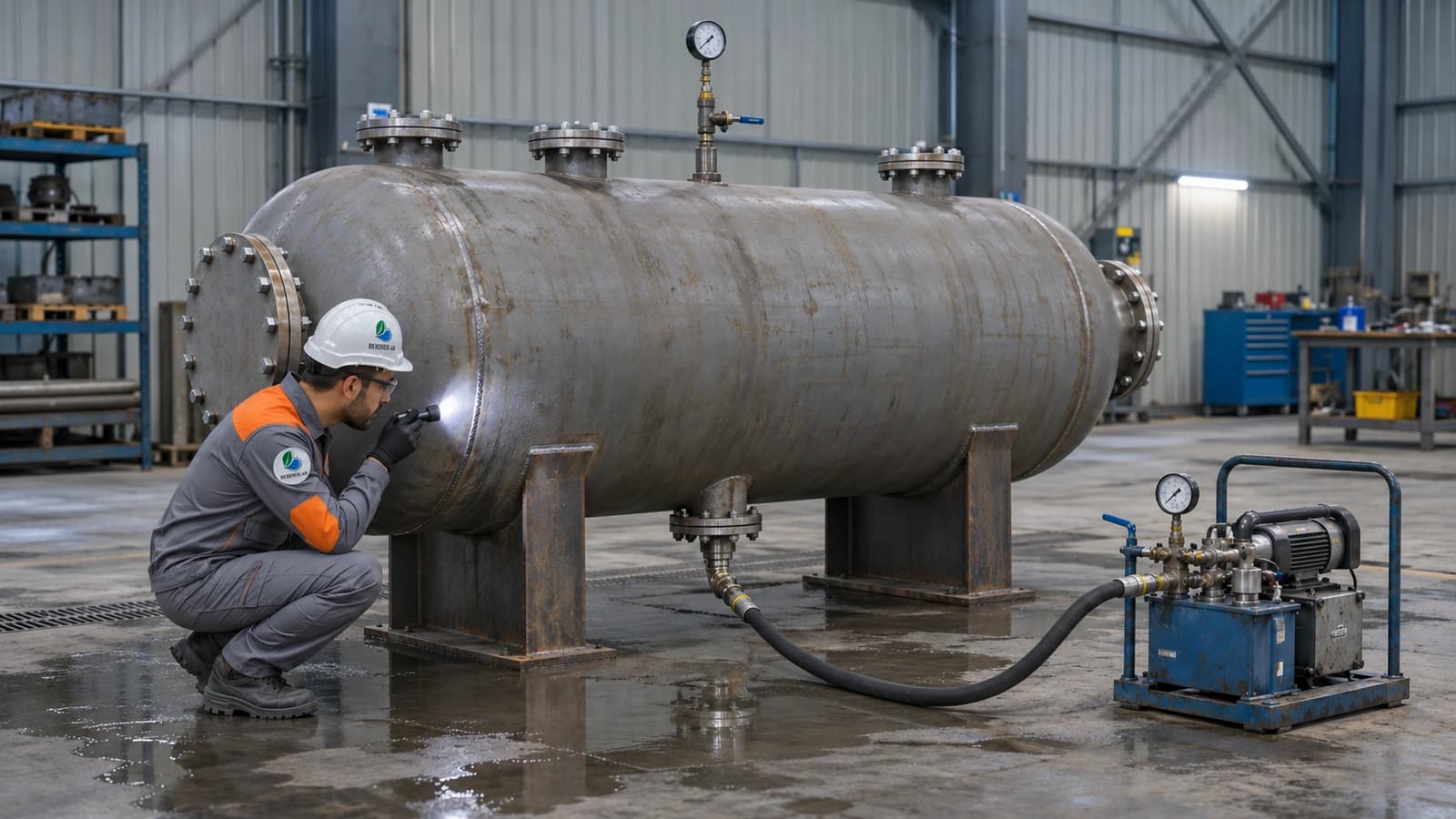
7. Inspection and maintenance
Titanium vessels generally need less maintenance than steel vessels in similar service, but the following must be included in the inspection programme:
Periodic monitoring at flange joints and seals, especially at high temperatures and in highly chloride environments.
Visual inspection and UT to find cracks caused by contamination during fabrication, which may appear in the early stages of operation.
Avoid direct contact between titanium and dissimilar metals in the presence of an electrolyte.
Precise temperature control; some corrosive environments beyond the grade's permitted range can increase the corrosion rate sharply.
8. Conclusion
Despite their high initial investment, titanium vessels are unrivalled where outstanding corrosion resistance, light weight or biocompatibility is the deciding criterion. Success in building them depends heavily on precise control of the welding process and the shielding atmosphere; the slightest contamination during welding can seriously weaken mechanical properties and corrosion resistance. As the hydrogen, desalination and biotechnology industries grow, demand for these vessels is expected to rise in the coming decades, and additive manufacturing with titanium may open new ways to cut the cost of complex parts.
This article was prepared for mechanical and metallurgical engineers and technical inspectors.
Technical specifications
Why titanium when stainless steel exists?
316L stainless steel is enough for many industrial uses, but in environments with high chloride concentrations (such as warm sea water) or where acid and chlorine are present together, it is prone to pitting and stress corrosion cracking. Titanium performs steadily and predictably in exactly these conditions because of the kind of protective oxide layer it forms.
That is why titanium is usually not the first choice for general use, but the solution where stainless steel has failed early or is expected to.
Common industrial uses of titanium
In the marine industry, titanium is used for heat exchangers and tanks in direct contact with sea water. In petrochemicals it is used in units with chlorine or oxidising acids. The pharmaceutical industry also uses it in sensitive equipment because titanium does not react with most drug and biological compounds.
The challenges of fabricating and welding titanium
At welding temperatures titanium readily absorbs oxygen, nitrogen and hydrogen from the air, which can make the weld metal brittle. That is why titanium must be welded with argon shielding in three zones (the weld pool, the back of the weld and the cooling zone), not just over the pool as in ordinary steel welding.
These requirements make titanium tank fabrication dependent on special equipment and expertise not found in ordinary steel welding.
Applications and industries
Photo gallery
Titanium tank gallery
Frequently asked questions
Request a quote
Titanium tank fabrication
Enter the pressure, temperature and fluid; our engineers send a technical proposal and price within 24 working hours.
- Written technical reply with a proposed concept drawing
- Site visit in Tehran and surroundings
- 24-month warranty on fabrication and welding