Agitated (mixer) tank fabrication
Design, components, mixing calculations and uses in water and wastewater · process engineering unit
An agitated tank uses an impeller, shaft, gearbox and motor to circulate the fluid for blending, dissolving, suspending solids, or coagulation and flocculation.
Design revolves around the choice of impeller (turbine, propeller, anchor), standard baffles, a drive with VFD, and calculations of Re, Np and the velocity gradient G.
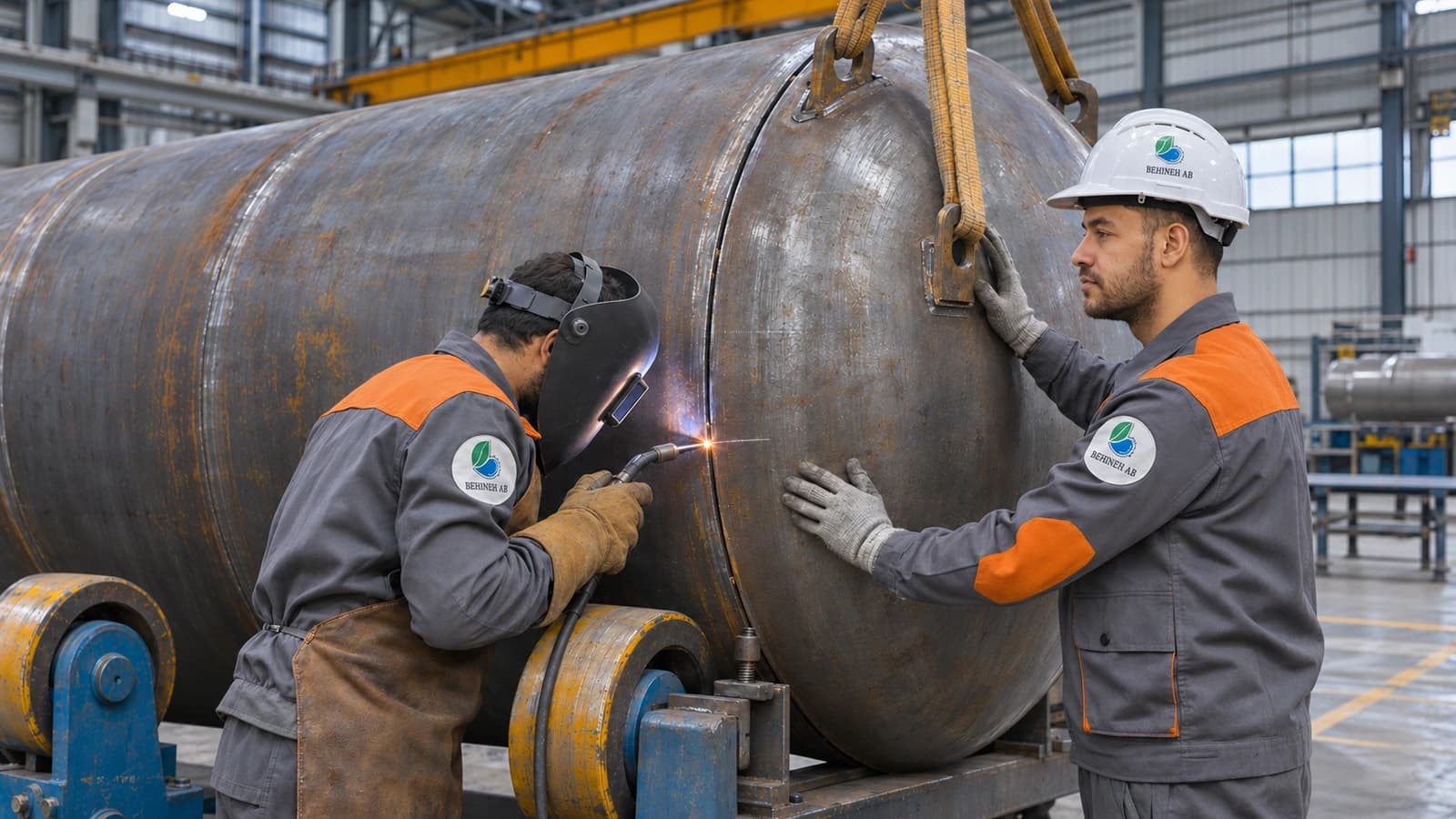
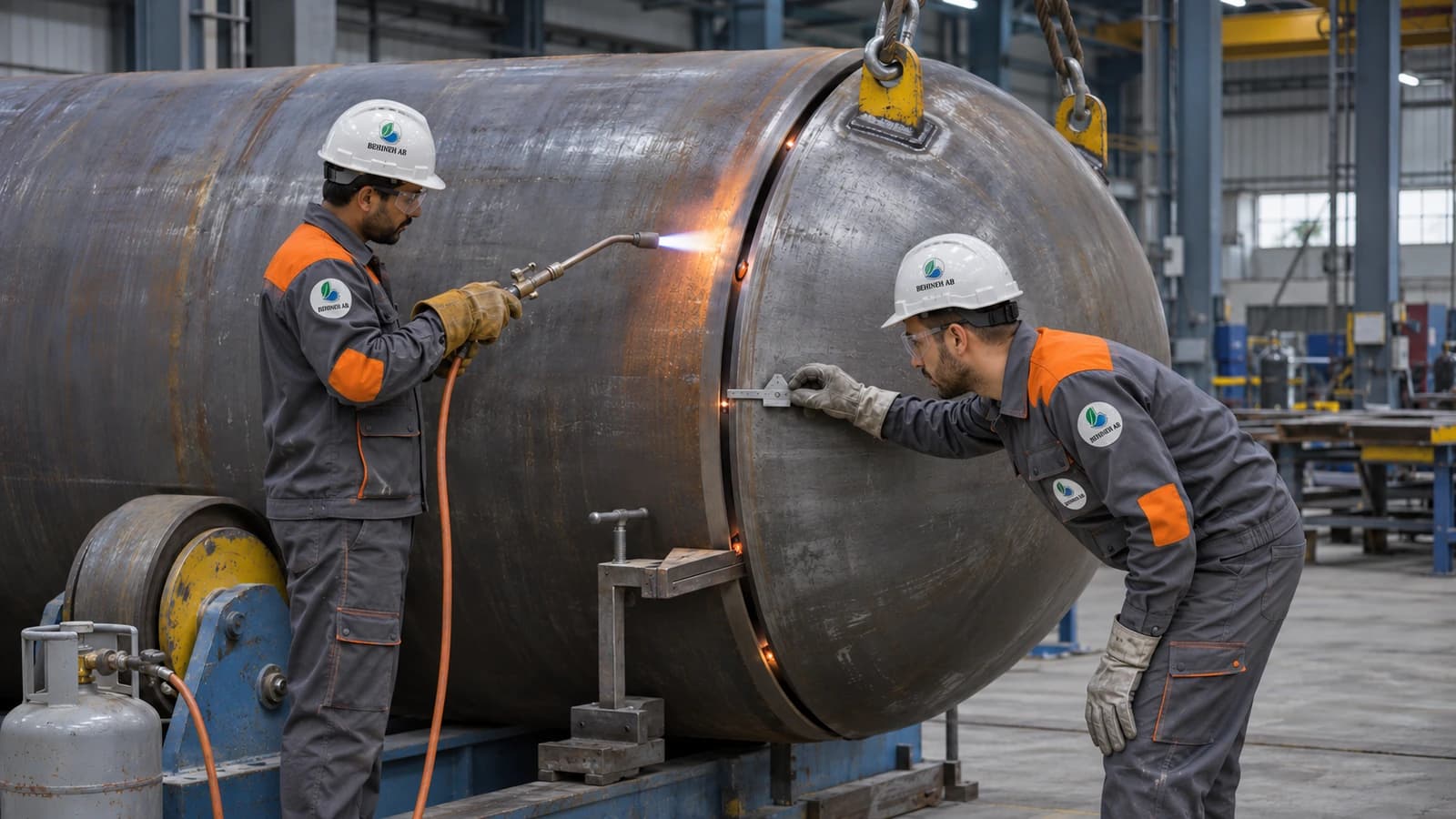
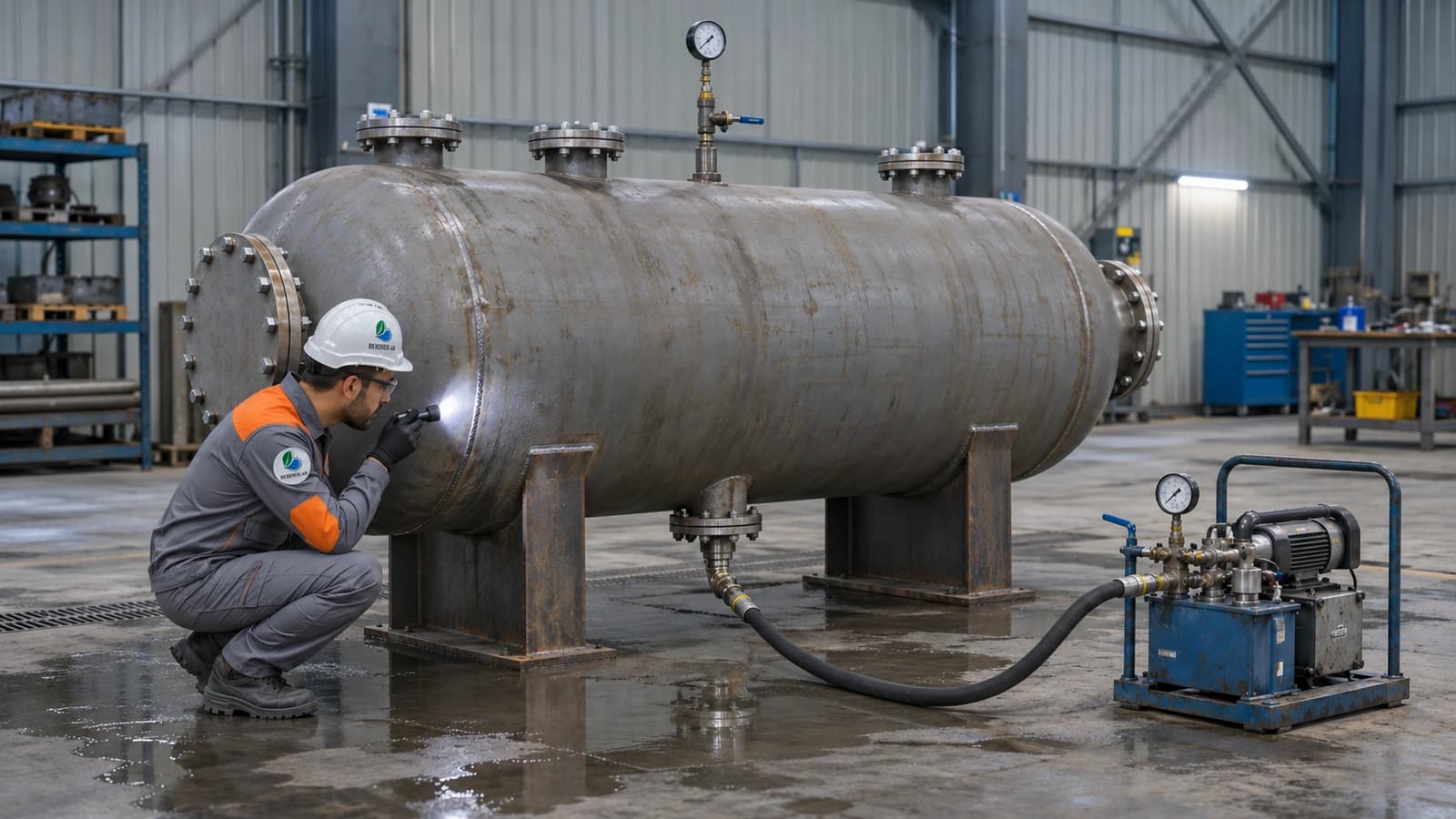
Behineh Ab designs and builds agitated tanks for water treatment, chemical preparation and process industries to suit each project.
- What kind of agitator suits my fluid?
- It depends on viscosity and the mixing goal: turbine for high shear, propeller for blending water-like fluids, and anchor for viscous fluids.
- Can the agitator motor speed be controlled?
- Yes; with a VFD or a multi-speed gearbox the mixing intensity can be adjusted — essential in flocculation.
- Why are baffles needed?
- Without baffles a central vortex reduces real mixing; four standard baffles create effective axial/radial flow.
- What is G in coagulation and flocculation?
- Rapid-mix coagulation usually 700 to 1,000⁺ s⁻¹; flocculation 20 to 75 s⁻¹ with a residence time of 20 to 45 minutes.