Built from ST37 · Galvanized · SS304

Design and fabrication of
rectangular tanks is our speciality!

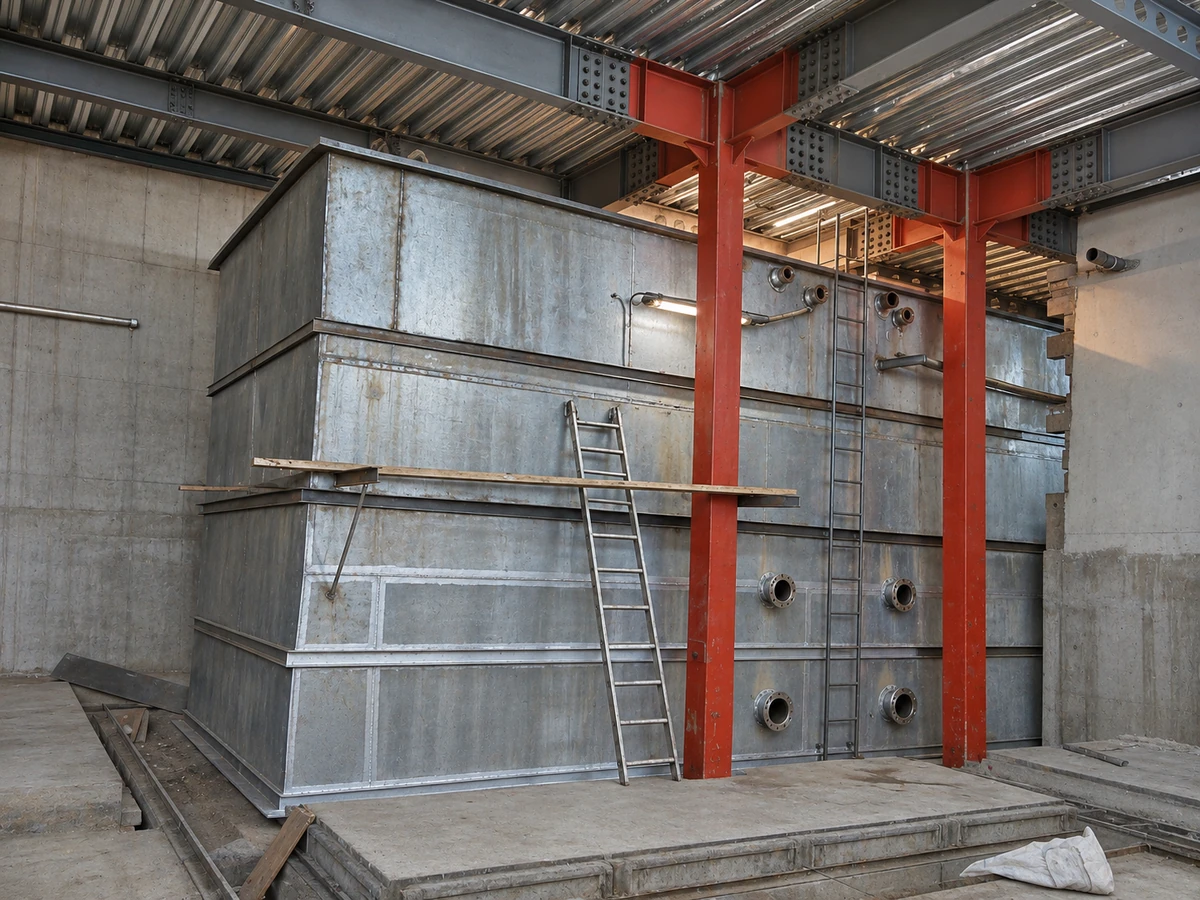
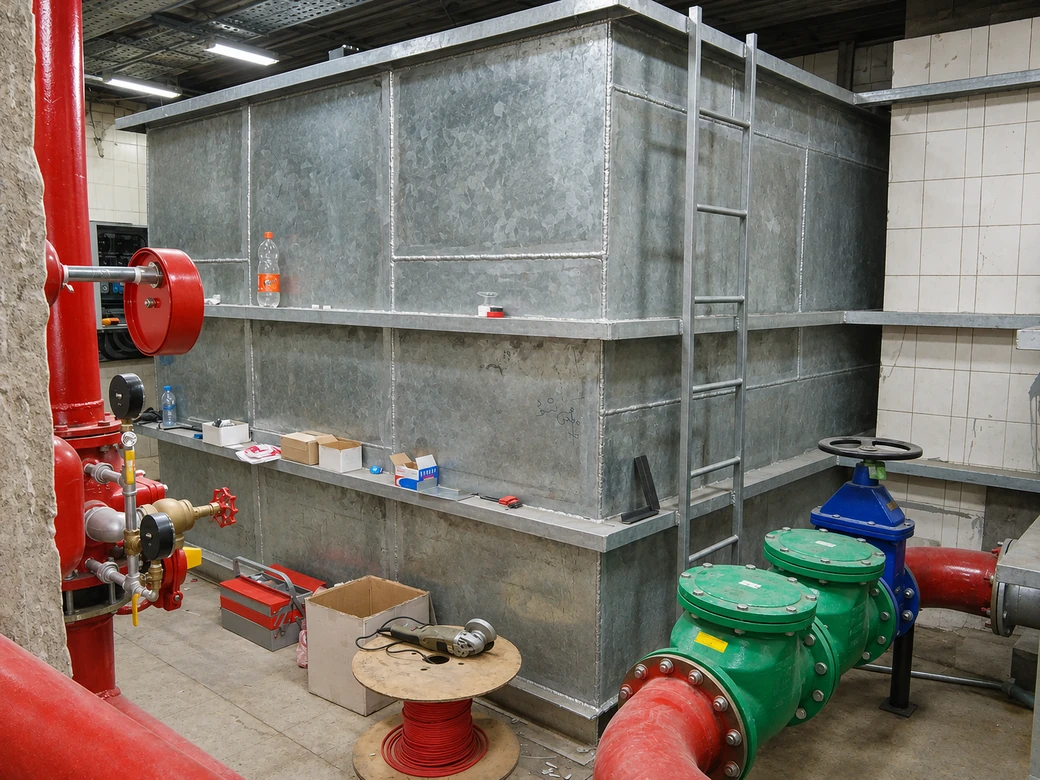
Cubic and rectangular metal tanks for places where a cylindrical tank will not fit: plant rooms, basements, rooftops and along walls. They fill the space completely and are simple to install, but their flat walls bulge under water pressure, which is why they are designed with stiffening sections and tie rods.

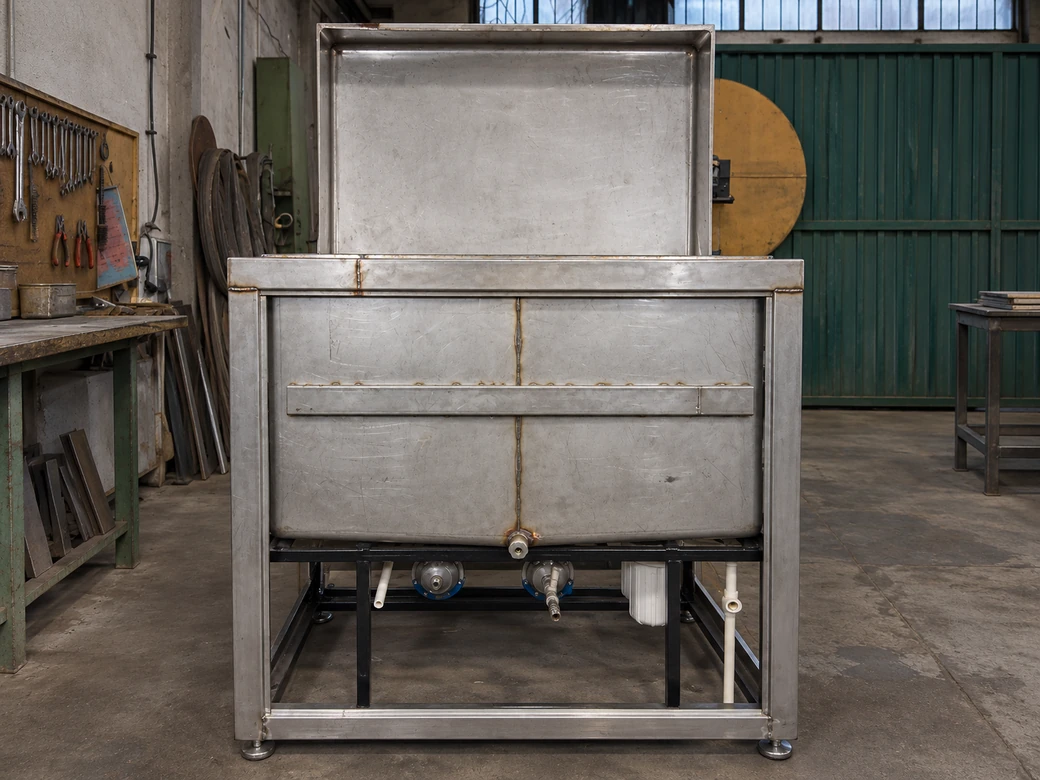
Product photo — rectangular metal tank
Suited to
Limited space
Material
Steel · galvanized · stainless
Stiffening
Sections and tie rods
Fabrication warranty
24 months
Full use of space
Stiffening sections
Tie rods
Welded or panel
Steel, galvanized, stainless
Water-fill test

1. Why a flat wall needs stiffening

Bending instead of tension

In a cylindrical tank, the water pressure pulls on the plate like a hoop, and even thin plate carries this tension well. A flat plate does not have this option; the water pressure bends it like a beam, and the bending stress in the plate is much higher than the tensile stress in a cylinder of the same thickness.

The solution is to shorten the span. Horizontal and vertical sections divide the wall into small panels, and each panel behaves like a small plate with close supports. In large tanks, internal tie rods tie opposite walls together so that the force on the whole wall is carried by tension in the rods instead of by the sections.

2. Key design parameters

The figures that set the thickness and stiffening of a rectangular tank:

Volume
L × W × H
Pressure at depth h
p = ρ · g · h
Pressure per metre of water
≈ 0.1 bar
Plate thickness
From the panel size
Workshop note

Pressure is higher at the bottom of the wall; that is why the sections are spaced closer at the bottom of the tank and further apart at the top.

3. Rectangular or cylindrical

FeatureRectangular tankCylindrical tank
Use of spaceCompleteThe corner space is left empty
Weight per litreMoreLess
Wall stiffeningSections and tie rodsUsually not needed
Installation in tight spacesPossible with the panel typeMore difficult

4. Installation and transport

A tank full of water is heavy: each cubic metre of water weighs a tonne. On a rooftop or upper floors, the tank must sit on beams that transfer the load to columns or load-bearing walls. This must be coordinated with the structural engineer before ordering.

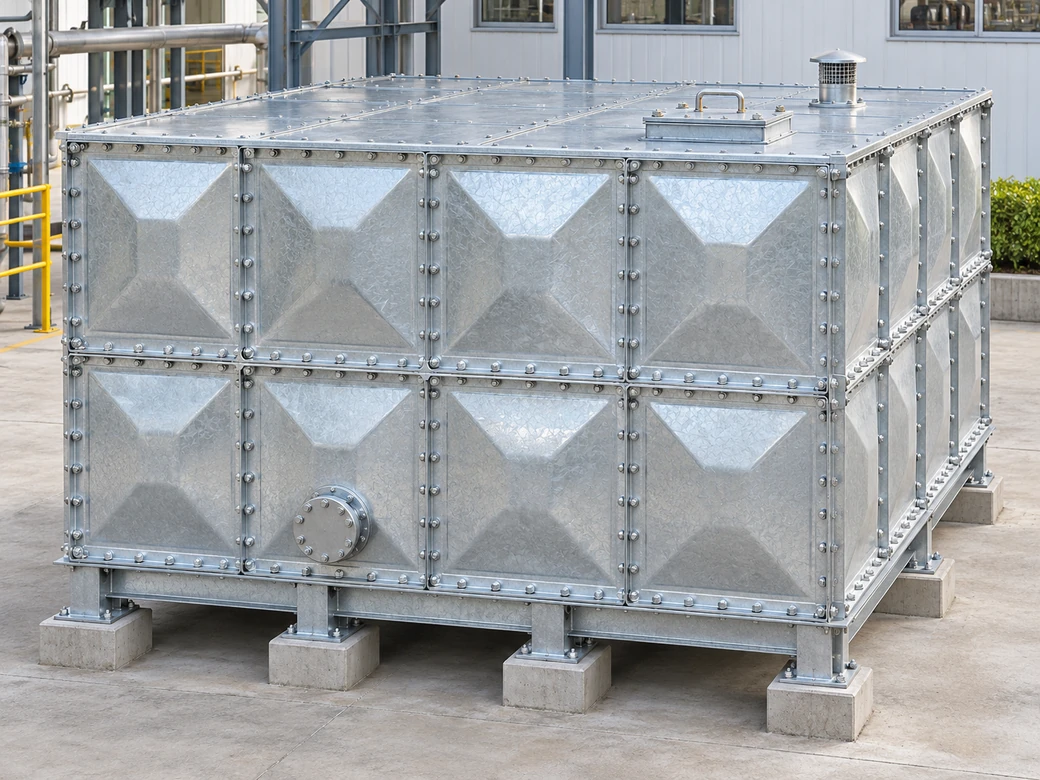
If the transport route or plant room door is narrow, a galvanized panel tank is the best option. The panels are transported separately and assembled on site.

Features of our rectangular tanks

A flat wall only stays sound with correctly designed stiffeners

Calculation of wall thickness and panels
Horizontal and vertical stiffening sections
Tie rods for large tanks
Bottom and roof beams
Painted carbon steel, galvanized or stainless
Food-grade coating for drinking water
Inspection hatch and ladder
Water-fill test before delivery
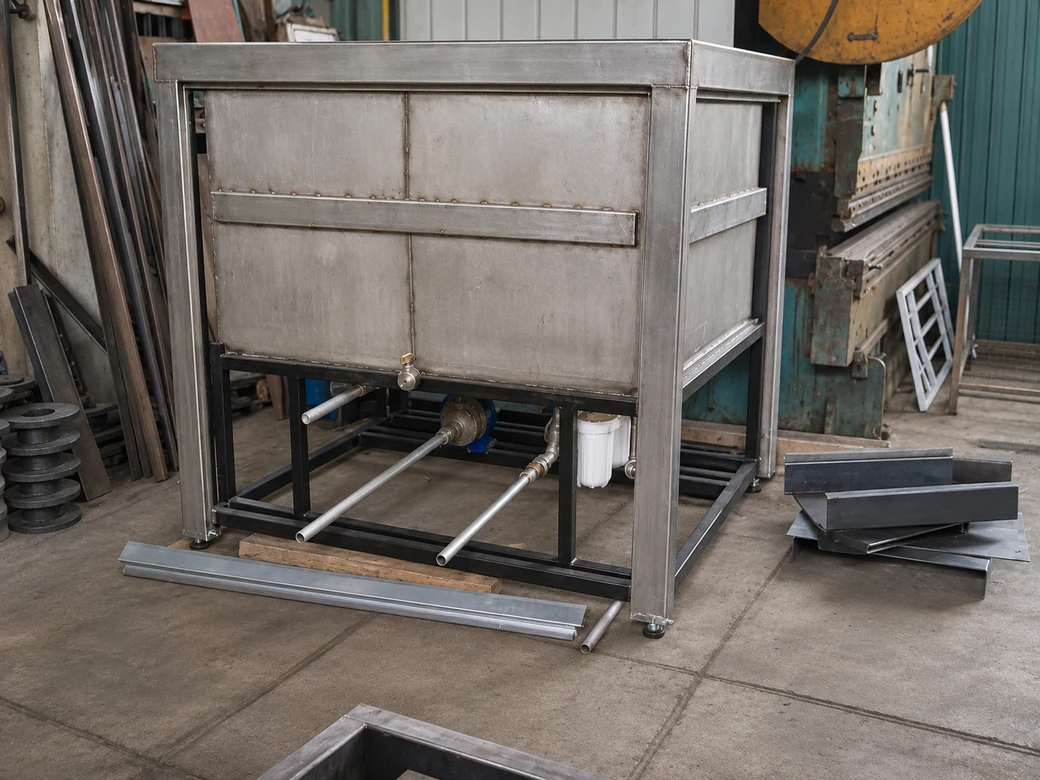
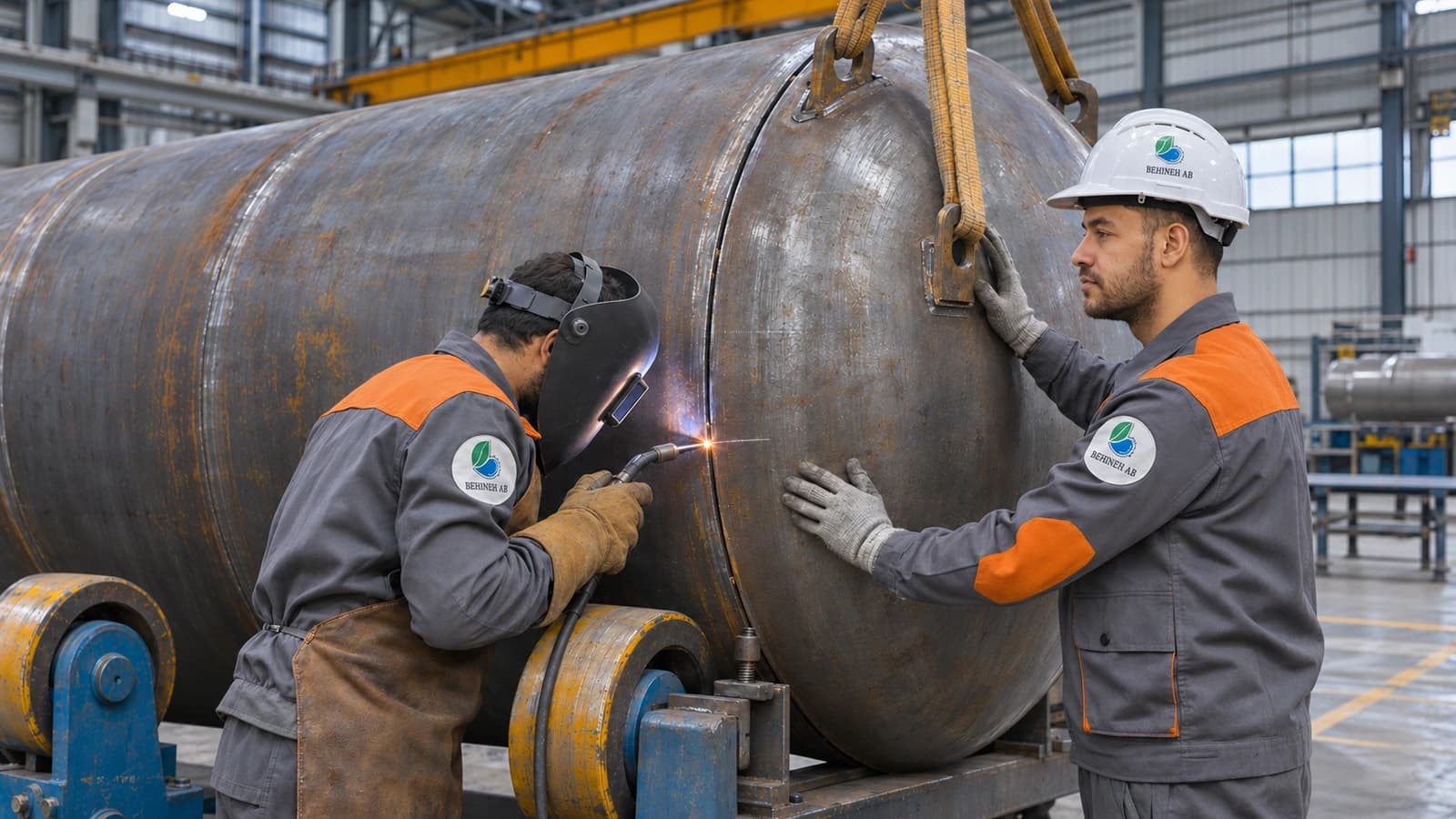
Workshop photo — building a rectangular tank

Rectangular tanks: when?

A cylindrical tank needs the least plate for a given volume, but it does not always fit. In a plant room with a low ceiling and space along a wall, or on a rooftop where the load must be spread across the beams, a rectangular tank fills the space better and the pipe connections are simpler too.

The price of this convenience is more weight. A cylinder carries the water pressure through tension in the plate; a flat plate has to carry it in bending, which is why it bulges. Stiffening sections divide the wall into smaller panels, and the plate thickness is calculated from the size of these panels and the water pressure. We give the volume and wall pressure formulas in the article on rectangular tank volume calculation, and the online rectangular tank calculator works out the thickness and weight. If the tank is for drinking water, also see the water tank construction method and its food-grade coating.

Full use of space
Suited to plant rooms, basements and rooftops
Stiffened walls
Horizontal and vertical sections and tie rods
Water-fill test
Leak check before delivery

Types of rectangular tank

Chosen by volume, use and transportability

Welded rectangular tank

Welded rectangular tank

Built in one piece in the factory and shipped ready to install. For small and medium volumes that fit through the door and along the transport route.

VolumeSmall to medium
ConstructionShop-welded
Common materialPainted steel or stainless
Panel rectangular tank

Bolted panel rectangular tank

Galvanized panels are made separately and assembled on site with bolts and sealing tape. There is no size limit and it passes through narrow routes too.

VolumeMedium to large
ConstructionAssembled on site
Common materialHot-dip galvanized
Stainless rectangular tank

Stainless rectangular tank

For drinking water, the food industry and places where an internal coating is undesirable. No paint and low maintenance.

VolumeSmall to medium
ConstructionWelded
MaterialStainless 304 / 316

Technical specifications and design range

The main design parameters of a rectangular tank

Water pressure on the bottom
About 0.1 bar per metre
Pressure rises linearly from the water surface to the bottom
Material
ST37 · galvanized · stainless
Based on the water and installation site
Wall stiffening
Horizontal and vertical sections
Section spacing from calculation
Restraint
Internal tie rods
In larger tanks
Coating
Food-grade epoxy · galvanized
Drinking water needs a water-contact certificate
Test
Water-fill test
Before delivery

Fabrication steps to delivery

From the space dimensions to the water-fill test

1
Dimensions and design
Measuring the space and transport route, calculating wall thickness, section spacing, tie rods and bottom beams.
2
Building the body and stiffeners
Cutting the plate, welding the walls and bottom, and fitting the sections and tie rods.
3
Coating and accessories
Painting or galvanizing, inspection hatch, ladder, inlet, outlet and overflow.
4
Testing and delivery
Water-fill test and leak check, transport and installation.

Design and quality control

The wall of a rectangular tank is a flat plate under distributed pressure. The plate thickness is calculated from the size of the panel between sections and the water pressure at that depth, and the sections themselves are designed for bending. The water-fill test is the last check before delivery.

Calculating wall thickness from the panels
Design of the sections and tie rods
Weld and dimensional checks
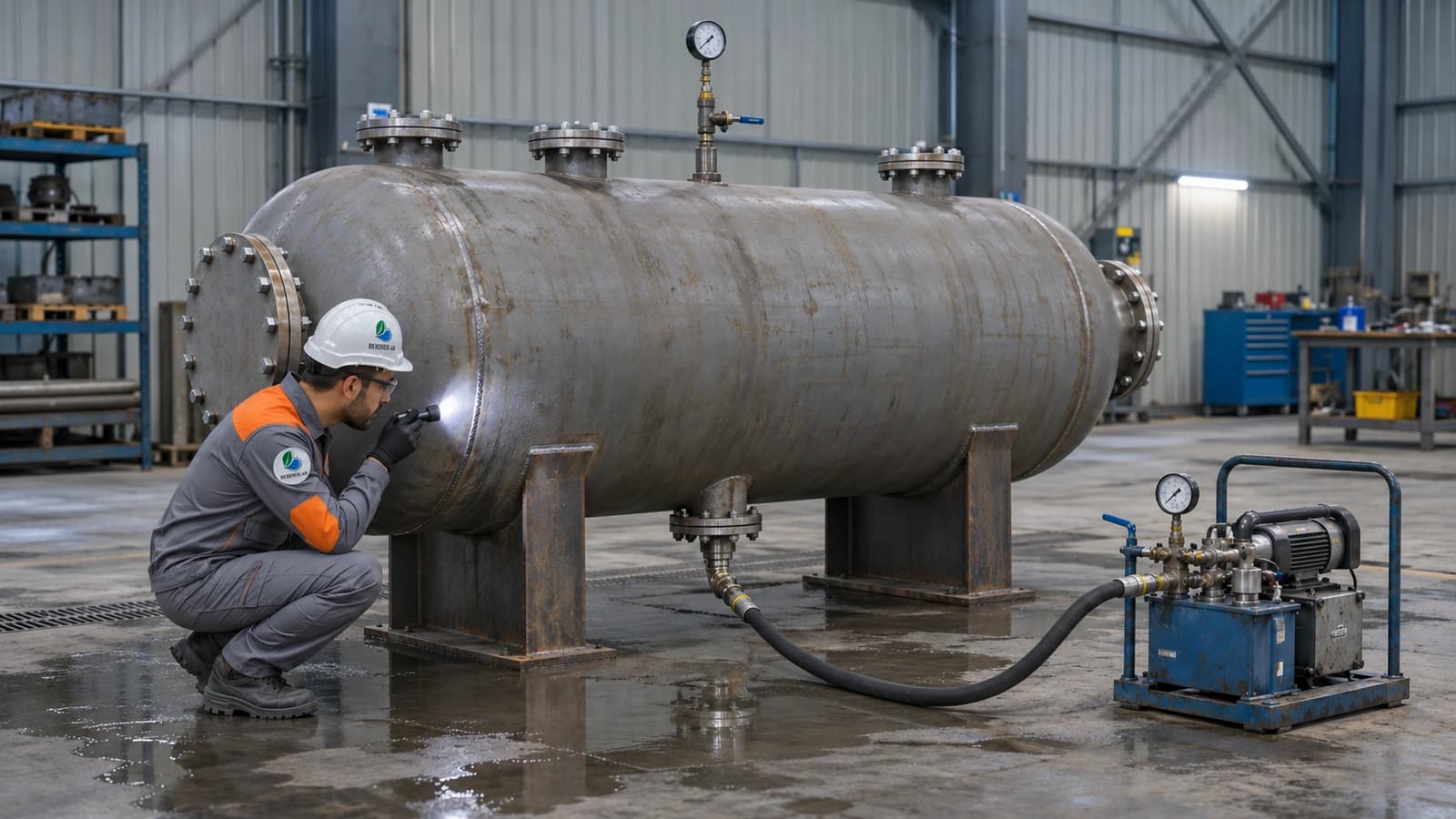
Water-fill test before delivery
Workshop photo — water-fill test of a rectangular tank

Applications of rectangular tanks

Where space is limited

Buildings and plant rooms
Supply and storage water tanks
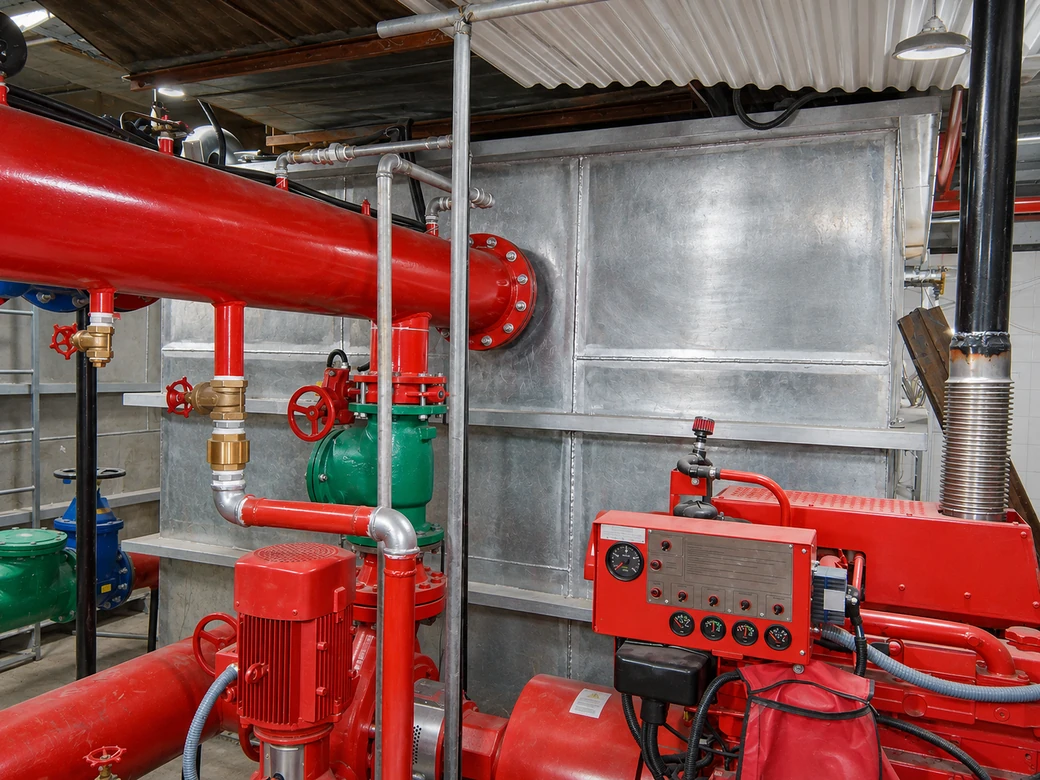
Fire fighting
Fire water storage in limited space
Industry
Process fluids and treatment tanks
Food industry
Stainless rectangular tanks

Speak directly with technical specialists

Tell us the space dimensions, volume and transport route to receive proposed dimensions and a price for a rectangular tank.

Frequently asked questions

The most common questions about rectangular tanks

Price inquiry
rectangular tank

Enter your project details; our specialists will send a technical proposal and price within 24 business hours.

  • Written technical response with a proposed concept drawing
  • Site visit in Tehran and suburbs
  • 24-month fabrication & weld warranty
Direct line to engineering office
+98 21 4686 6276

Your information is confidential and used only to prepare a technical proposal.

All articles
  • Assembling the shell and head of a steel tank in the Behineh Ab tank fabrication workshop

    Steel Tank Manufacturing Steps, from Order to Delivery

    The steps of building a steel tank, from the data sheet to testing and dispatch. A 20,000-litre tank takes about three weeks; here is what that time is spent on.

    Read more
  • Inspector carrying out a non-destructive test on a steel tank shell weld

    Tank Tests: What Defect Does Each Test Find?

    Hydrotest, radiography, ultrasonic, liquid penetrant, magnetic particle and vacuum box. Each finds a particular defect and none can replace another. Here we compare them.

    Read more
  • Pressure vessel under hydrostatic test with a pressure gauge in the Behineh Ab workshop

    Tank Hydrostatic Test, Step by Step

    The hydrotest is a tank's final exam before delivery, and we carry it out in our own factory. The test pressure, the work before filling, and the mistake that can ruin a tank while it is being drained.

    Read more
  • Radiography film of a tank shell weld on a film viewer

    Weld Radiography: What Percentage of Seams Must Be Tested?

    The radiography percentage sets the joint efficiency, and the joint efficiency sets the plate thickness. In other words, this decision directly affects the tank's weight and price.

    Read more