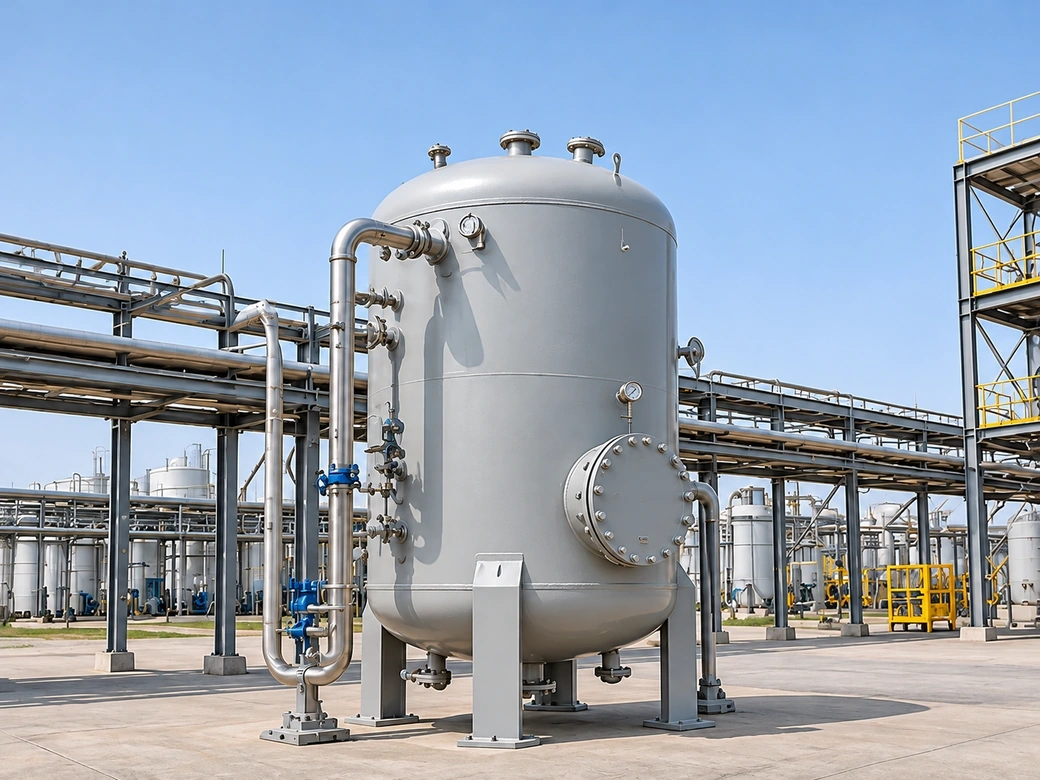
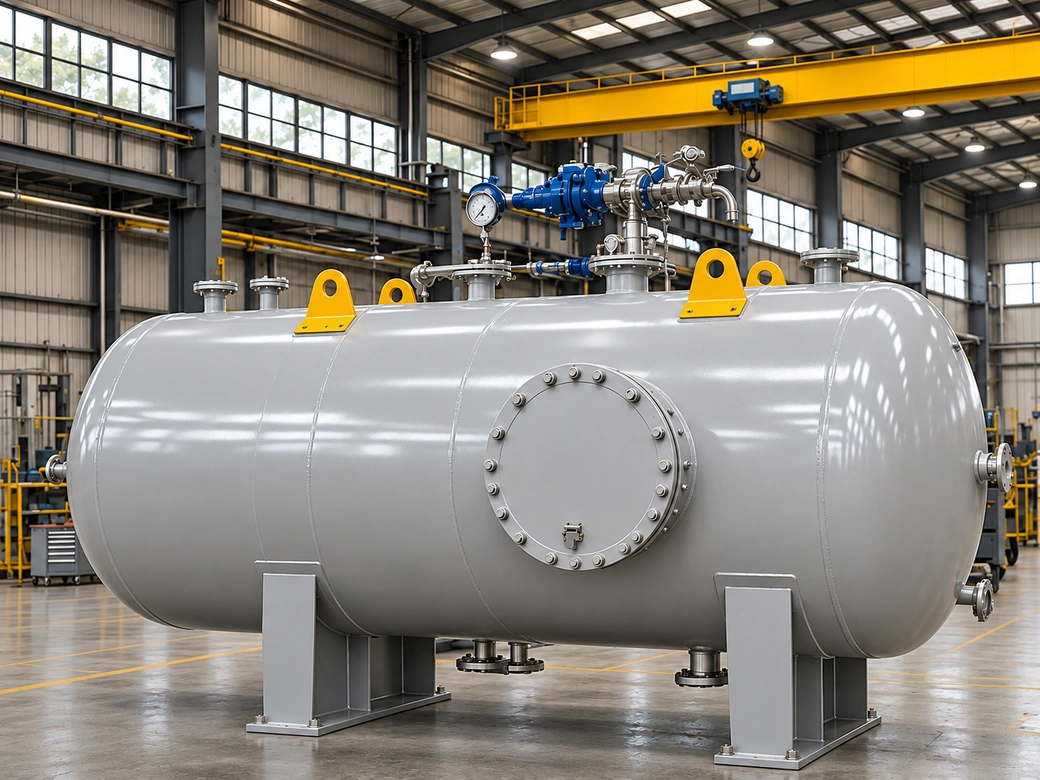
Central vacuum system tank
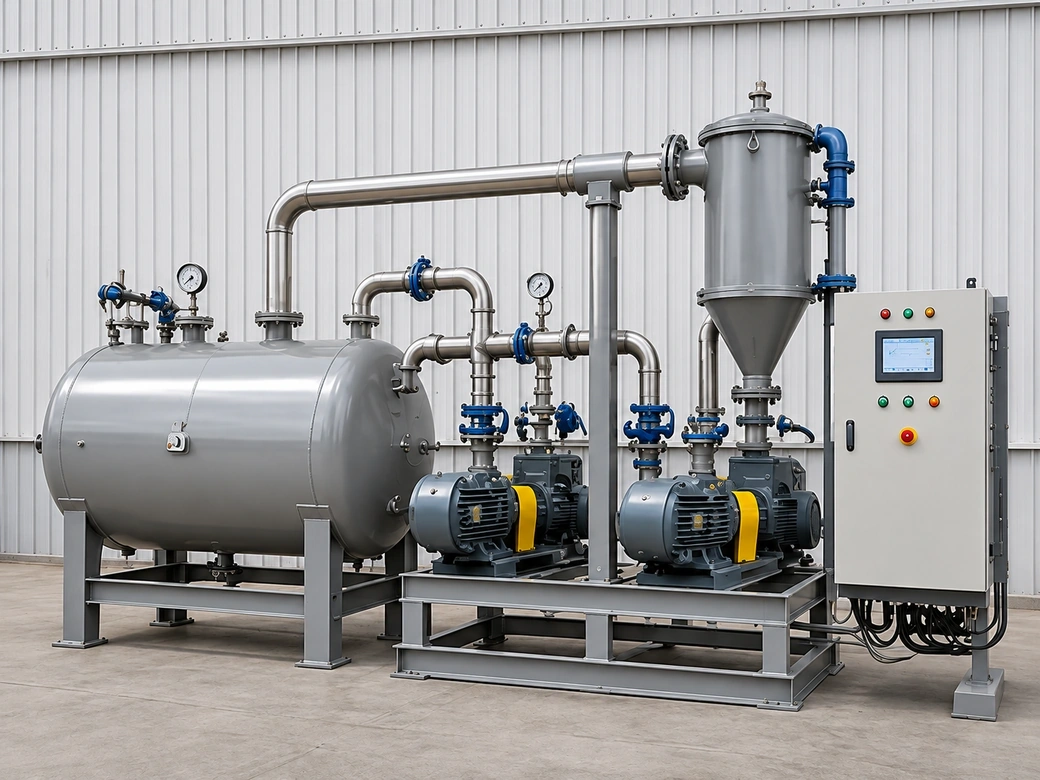
A vacuum buffer between the vacuum pump and the users; like an air receiver in a compressed air network, it absorbs fluctuations and reduces how often the pump runs.
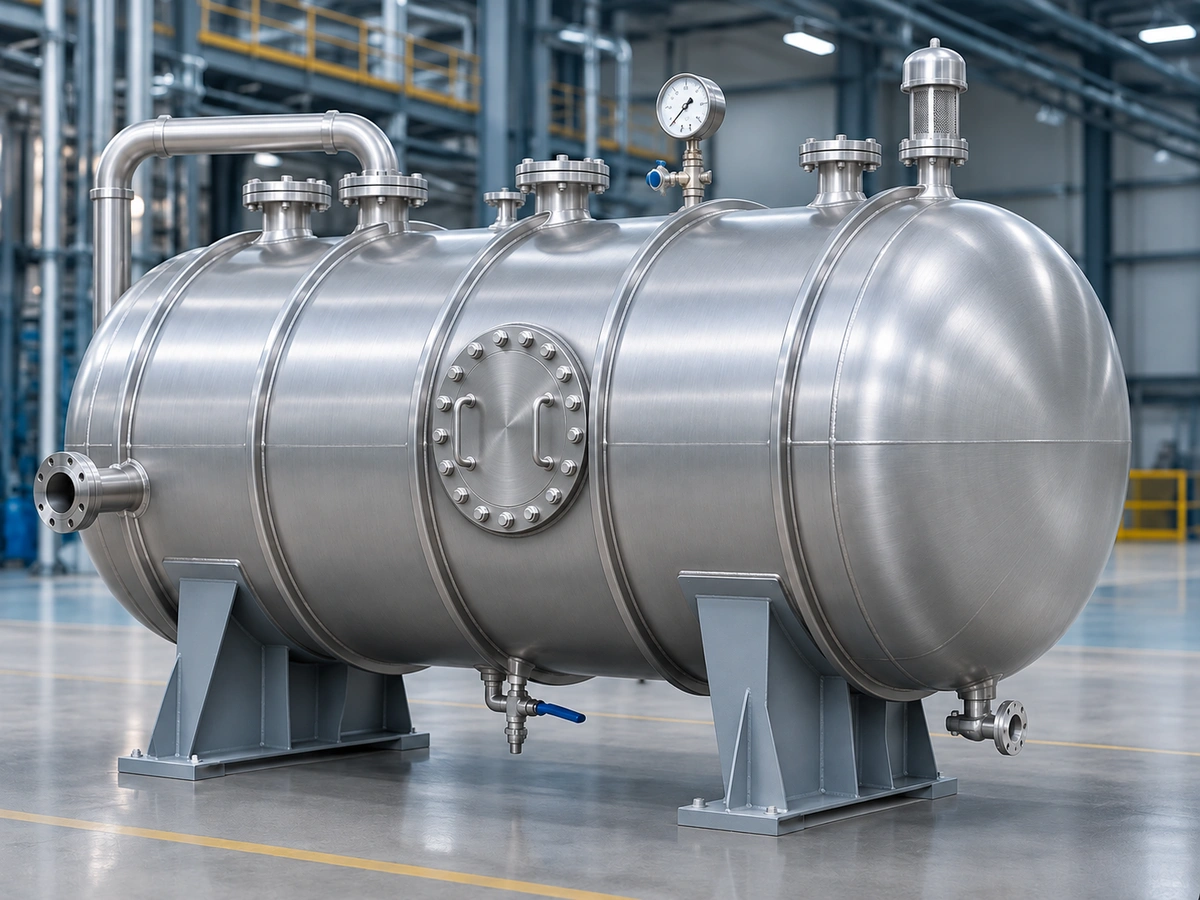
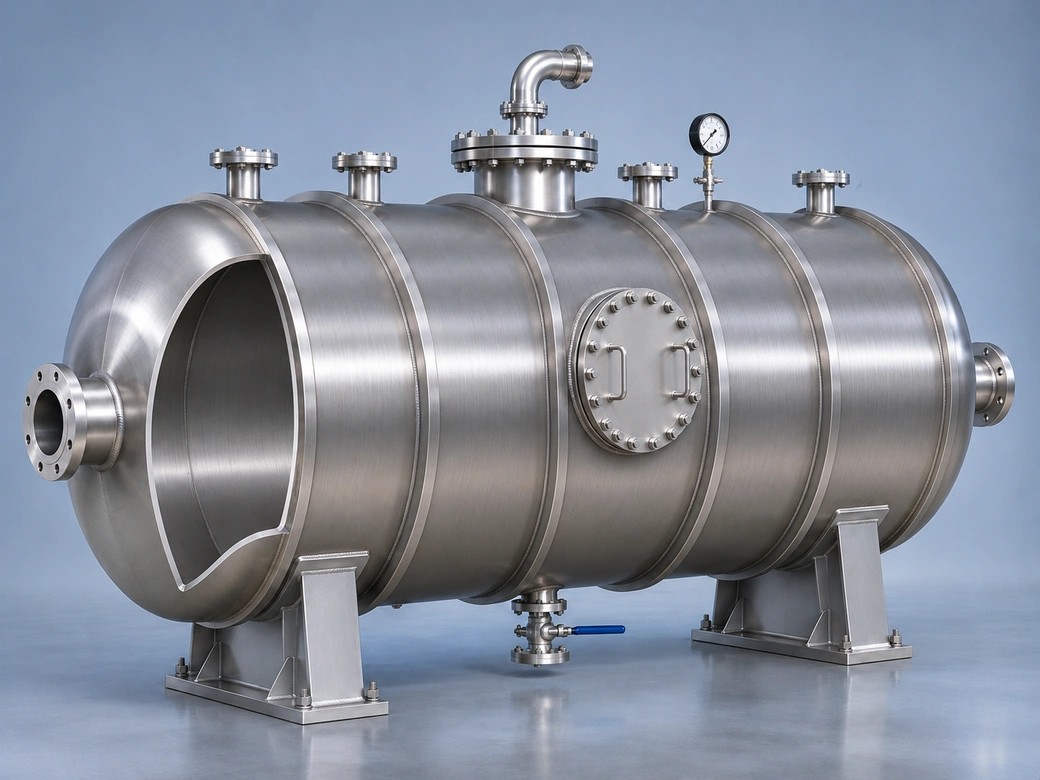
Vacuum tanks are built for central vacuum systems, pneumatic conveying, suction and processes under vacuum. The main danger in these tanks is not bursting but buckling, which is why they are designed for external pressure and with stiffening rings.

A cylindrical shell under internal pressure resists through tension in the plate, and its behaviour is predictable. Under external pressure, however, the shell loses its round shape in an instant and collapses inwards. This is called buckling, and it happens at a pressure far below the bursting pressure.
Resistance to buckling depends on three factors: plate thickness, diameter and the unsupported length of the shell. The simplest way to raise the resistance is to shorten the unsupported length with circumferential stiffening rings, which is much cheaper than thickening the whole shell.
The figures that determine the design of a vacuum vessel:
If a vessel works both under pressure and under vacuum, calculate both conditions separately and take the greater thickness.
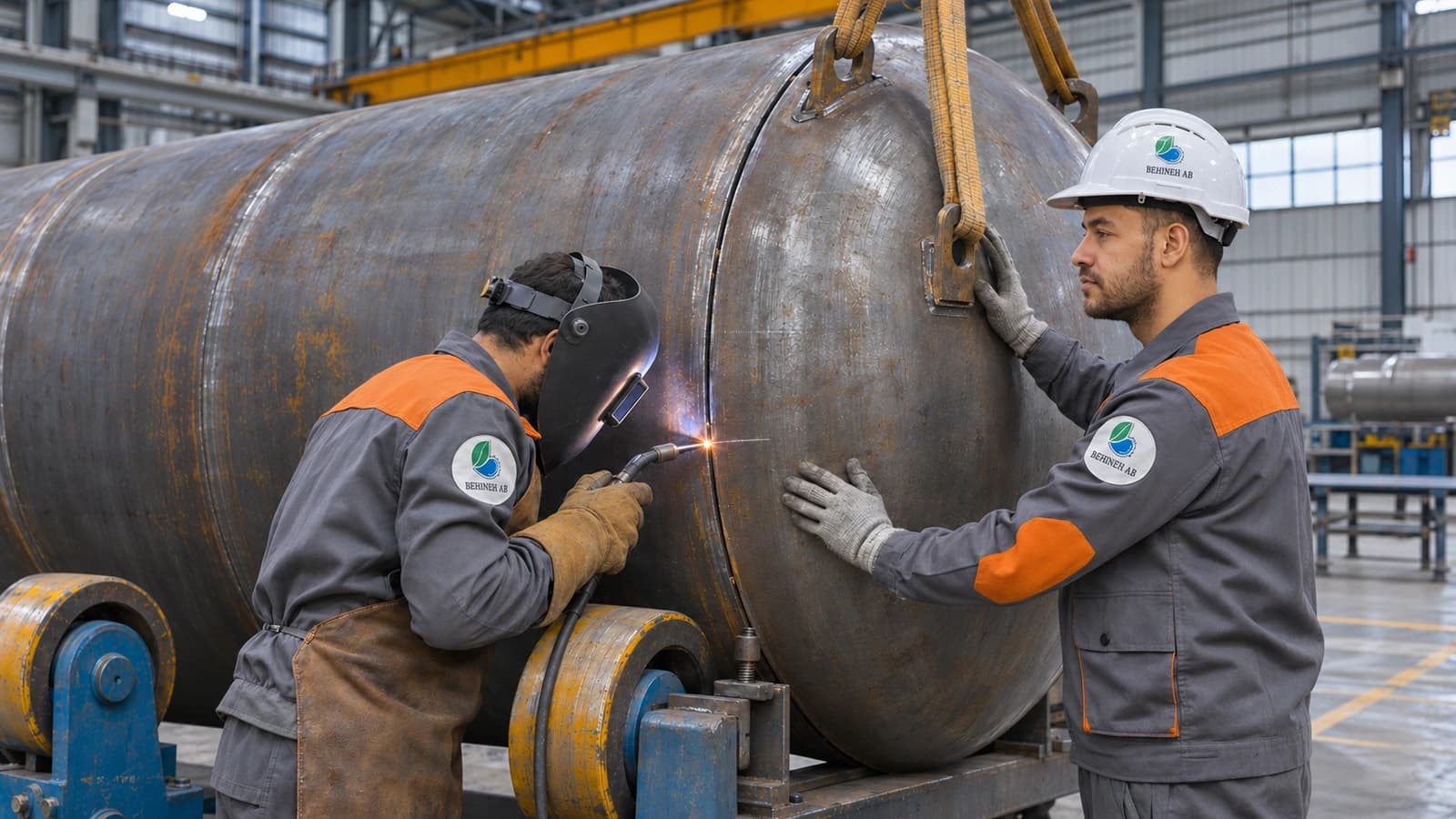
A stiffening ring is a steel section or flat bar welded around the shell. Each ring divides the shell into two shorter parts and raises the buckling pressure of each part. The size and spacing of the rings come from calculation, and the ring itself must also be stiff enough.
In tall vessels, several equally spaced rings are usually the most economical solution. The heads are also checked for external pressure, because elliptical and torispherical heads behave differently under vacuum.
Much vacuum damage happens in tanks that were never designed for vacuum:
If a water or fuel tank is emptied with its vent closed or blocked, a vacuum forms inside.
A tank that has been cleaned with steam and then closed draws a vacuum as the steam inside cools.
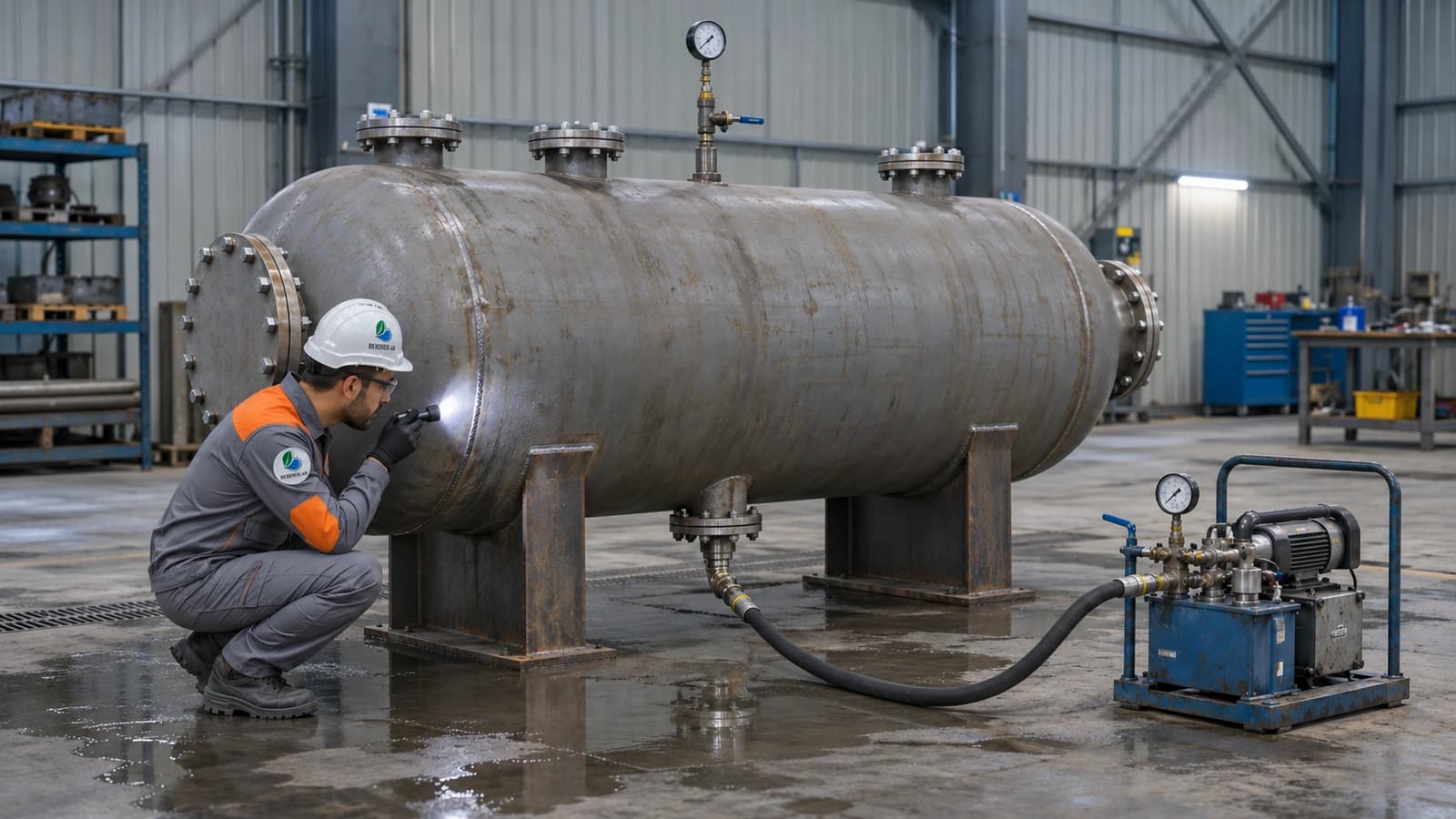
Either the tank is designed for vacuum, or it has a proper vent and vacuum breaker valve. During the hydrotest, the vent must also be opened before draining.
What keeps a tank sound under vacuum

In most tanks the pressure inside is higher than outside and the shell is pulled outwards. In a vacuum tank it is the other way round: atmospheric pressure pushes the shell inwards from outside. A shell that is perfectly adequate for internal pressure may crumple like a drinks can under a simple vacuum.
At full vacuum the external pressure is about one bar; not a large figure, but a thin shell behaves far more weakly under external pressure than under internal pressure. The design criterion here is buckling, and the unsupported length of the shell is decisive. Stiffening rings shorten this length. Many process vessels are both pressure vessels and must withstand vacuum; in that case both conditions are checked in the thickness calculation and the vessel is hydrotested before delivery.
By application and pressure conditions

A vacuum buffer between the vacuum pump and the users; like an air receiver in a compressed air network, it absorbs fluctuations and reduces how often the pump runs.

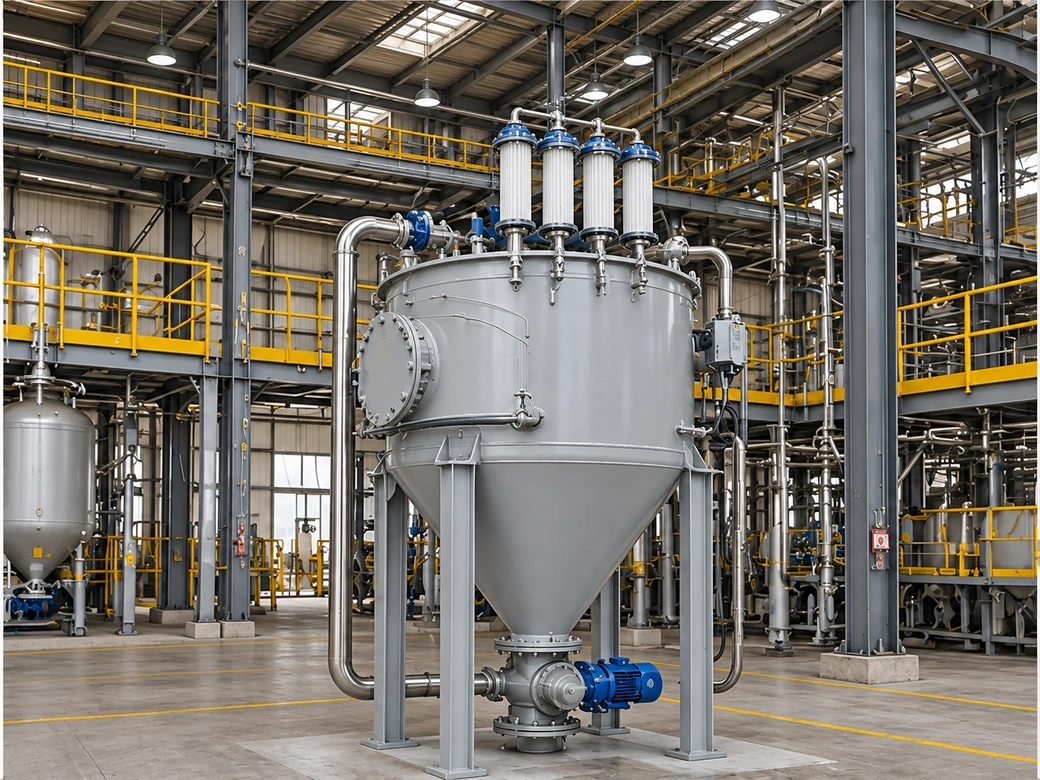
In suction systems for powders and granules, or sewage suction, the tank under vacuum collects the material. Abrasion and easy discharge matter in this design.

Vessels that work sometimes under pressure and sometimes under vacuum, such as reactors and distillation vessels. Both conditions are checked in the thickness calculation.
The main design parameters of a vacuum tank
From the vacuum condition to the final test
ASME Section VIII has a separate method for vessels under external pressure, which depends on the thickness, diameter and unsupported length of the shell. Checking shell roundness after rolling is part of the same requirements, because an out-of-round shell buckles sooner.

Where vacuum is part of the process
Tell us the volume, level of vacuum and any internal pressure to receive the design and a price for a vacuum tank.
The most common questions about vacuum tanks
Enter your project details; our specialists will send a technical proposal and price within 24 business hours.