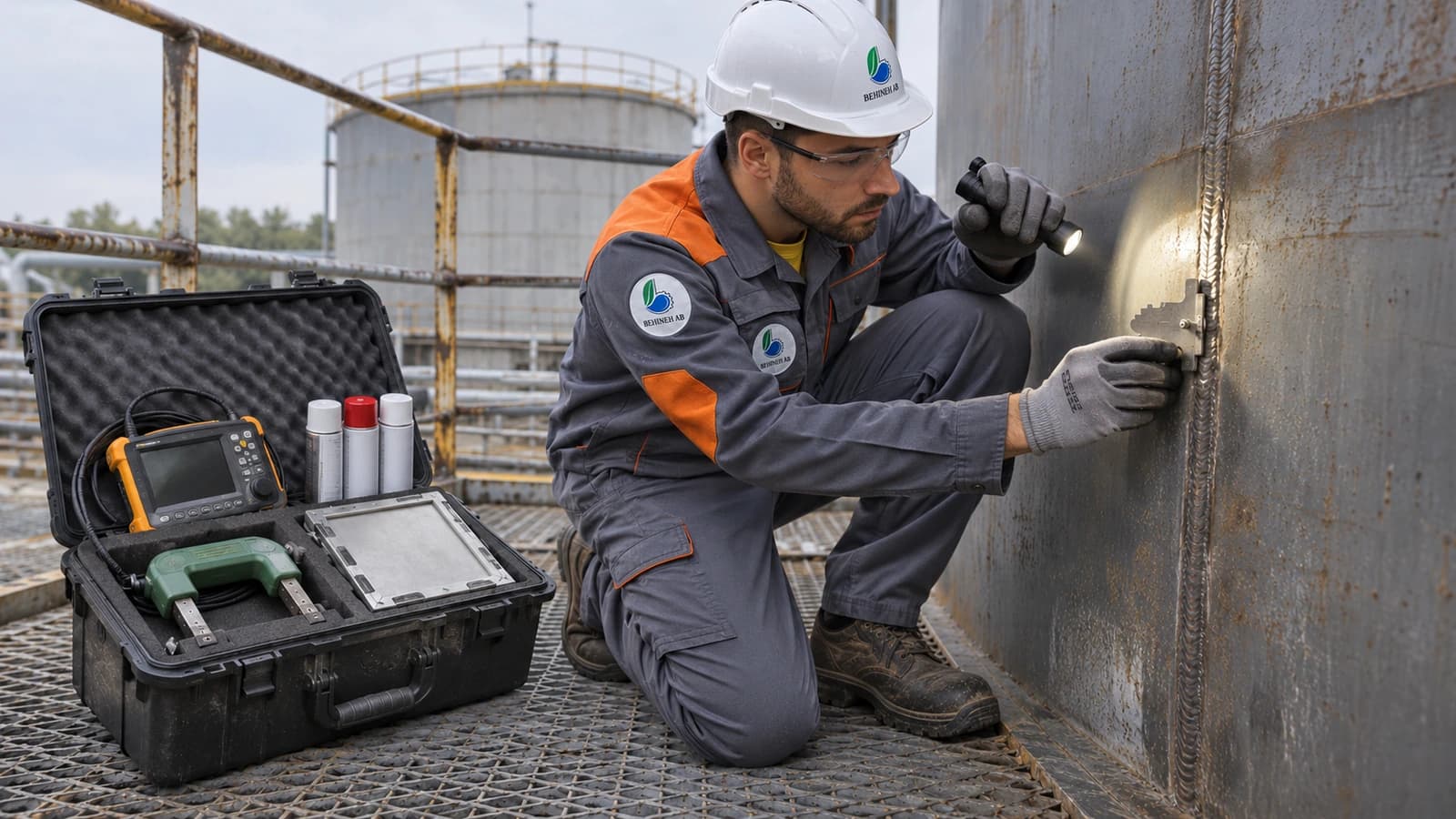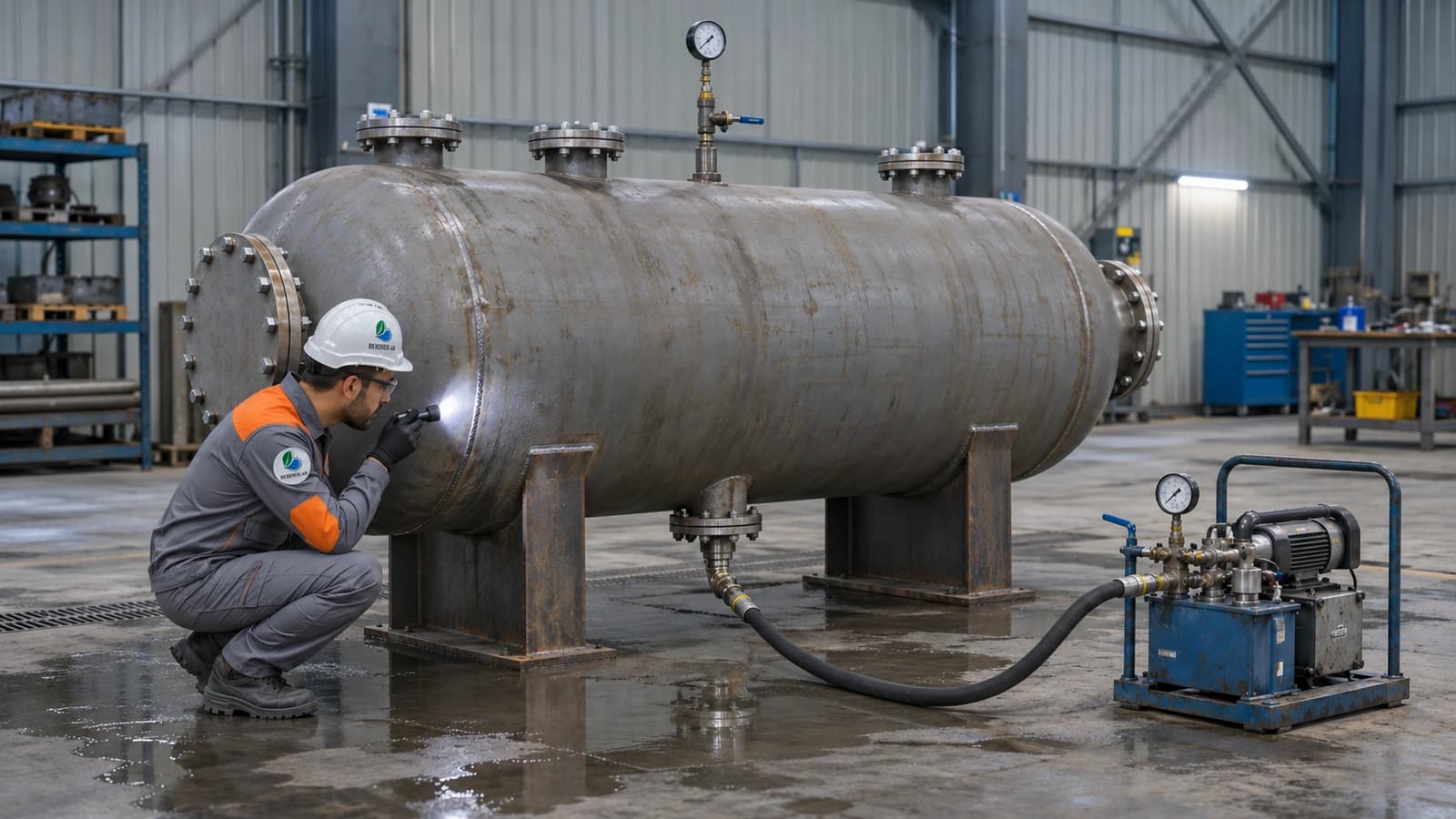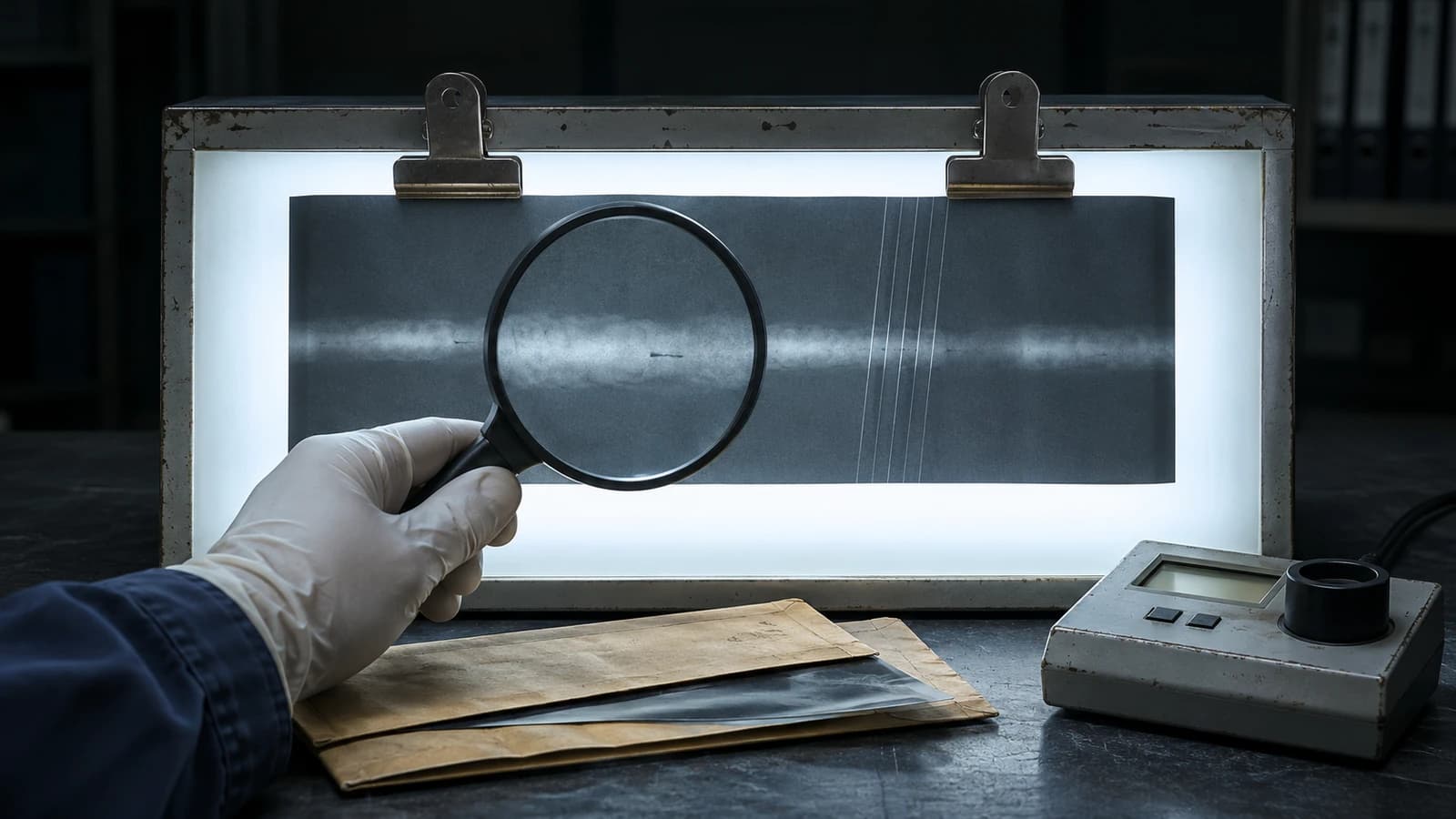
The simplest and cheapest non-destructive test, and often the best option for stainless welds. Provided you know what it does not see.
How does liquid penetrant reveal a crack?
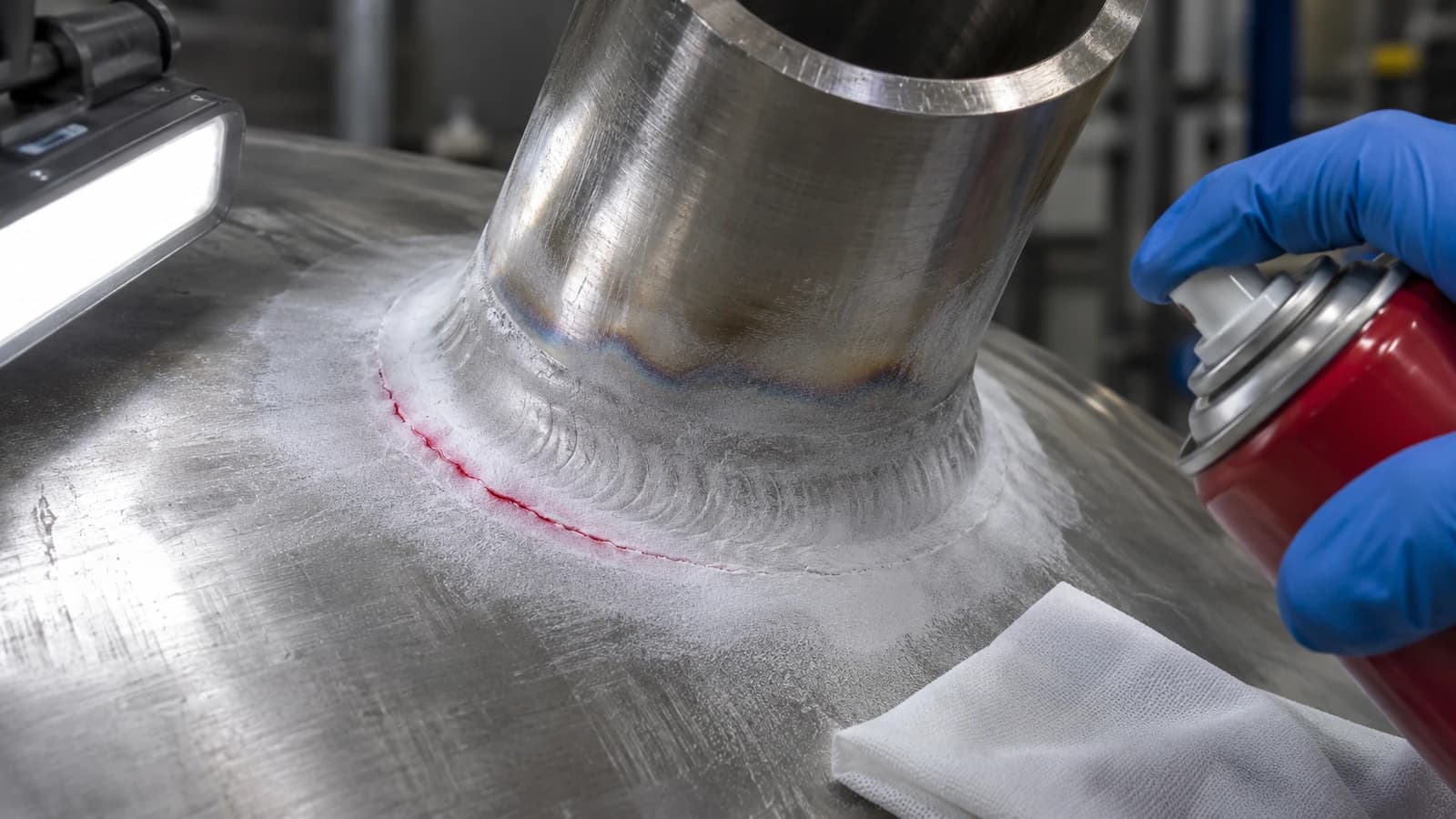
A liquid with low surface tension, usually red or fluorescent, is applied to the weld surface and, through capillary action, enters fine cracks. Then the surface is cleaned and a layer of white powder (the developer) is applied. The liquid left inside the crack bleeds out and forms a red line or dot on the white background that can be seen with the naked eye.
Where is it used in tank fabrication?
Its main use is on stainless welds, because magnetic particle testing does not work on austenitic stainless steels such as 304 and 316. Nozzle welds, reinforcing pads, support-to-shell welds and the root pass before the rest of the weld is filled are also usually checked with PT.
The knuckle area of heads after cold forming is also sometimes checked with liquid penetrant to find surface cracks caused by forming.
Steps of the test
- Surface cleaning: removing slag, oil, paint and weld spatter
- Applying the penetrant and waiting (the dwell time, usually at least 5 minutes)
- Removing excess penetrant with a cloth and solvent, without spraying directly on the surface
- Applying a thin, even layer of developer
- Examining the indications after the development time, under adequate light
- Recording the result and final cleaning of the surface
If the mouth of a crack is filled with slag, paint or oil, the penetrant cannot enter it and the crack is not seen. Most false PT results come from incomplete cleaning.
Limitations
Liquid penetrant only finds a defect that has reached the surface. A crack, porosity or lack of fusion below the surface cannot be seen with this method; radiography or ultrasonic testing is needed for that. On porous and very rough surfaces the result is not reliable either.
Surface temperature also matters. Standard procedures are defined for a range of about 10 to 52 °C; outside this range the procedure must be qualified separately. For stainless steel, low-chlorine and low-sulphur materials are used.
PT is cheap and quick and does not need much equipment, but it only sees the surface. At Behineh Ab this test, like the other non-destructive tests, is carried out by a third-party inspection company.