2:1 elliptical head (Elliptical 2:1)
The golden ratio between stress distribution, plate use and fabrication cost
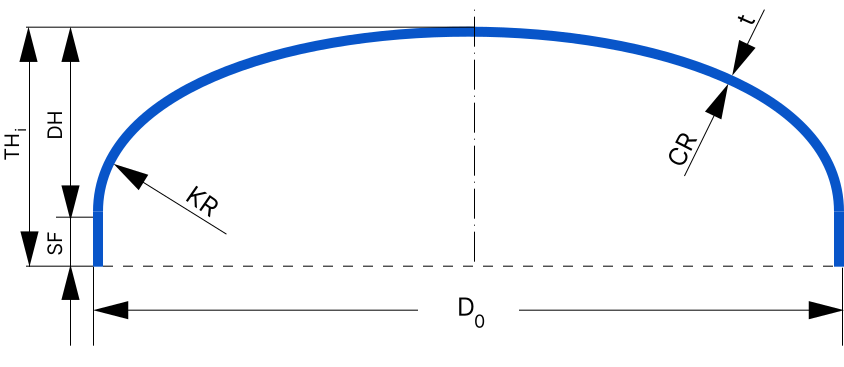
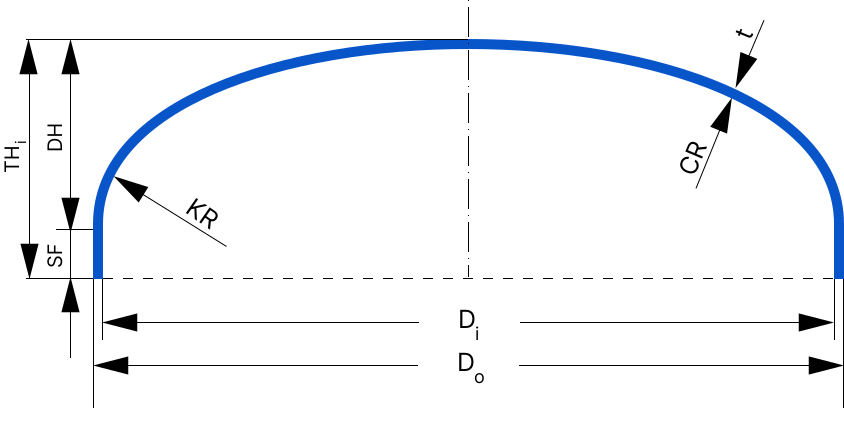
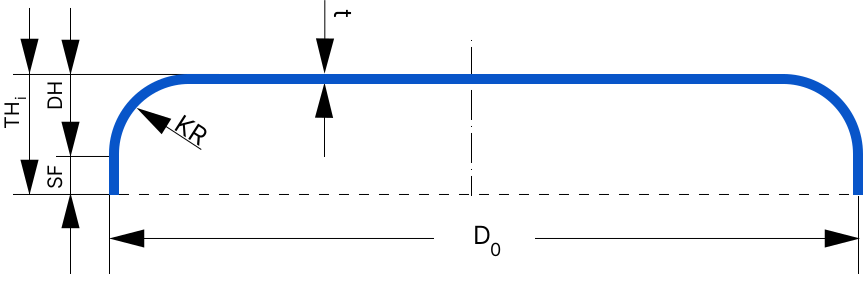
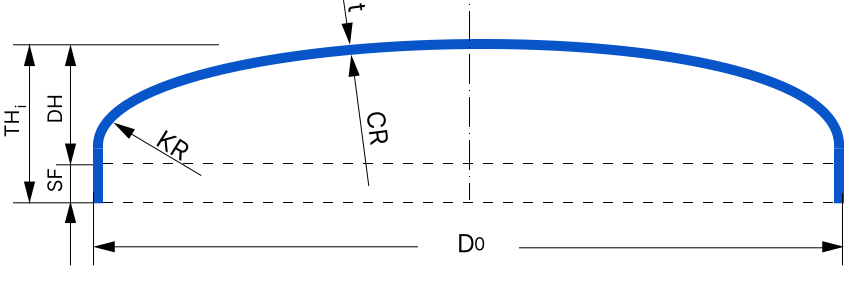
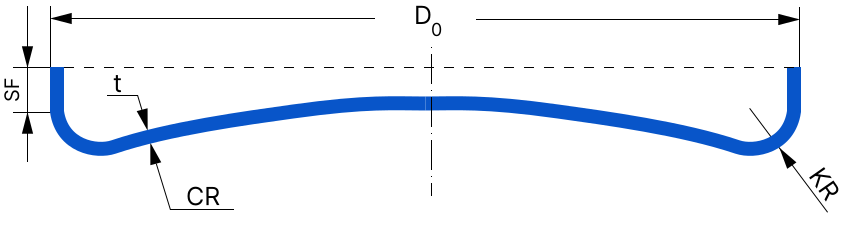
The name "2:1" comes from the ratio of inside diameter to head depth: the head depth is exactly one quarter of the inside diameter (DH = 0.25×Di), i.e. 1 unit of depth for every 2 units of diameter. This geometric ratio approximates a true semi-ellipse, which in terms of stress distribution is very close to a sphere.
What is a 2:1 elliptical head?
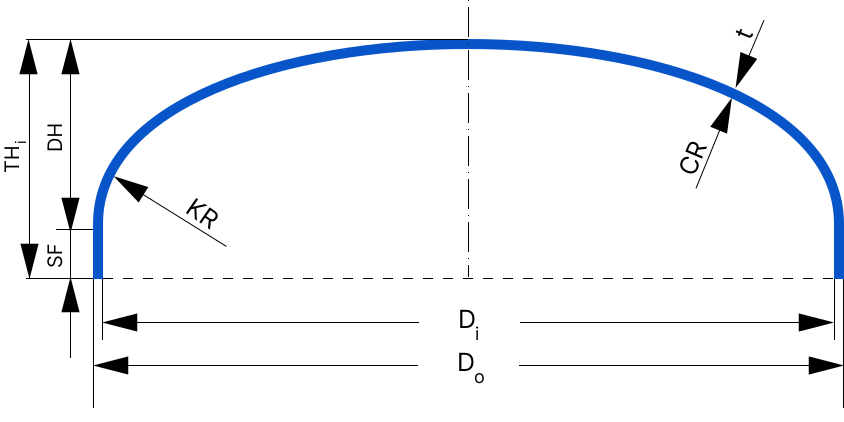
The name "2:1" comes from the ratio of inside diameter to head depth: the head depth is exactly one quarter of the inside diameter (DH = 0.25×Di), i.e. 1 unit of depth for every 2 units of diameter. This geometric ratio approximates a true semi-ellipse, which in terms of stress distribution is very close to a sphere.
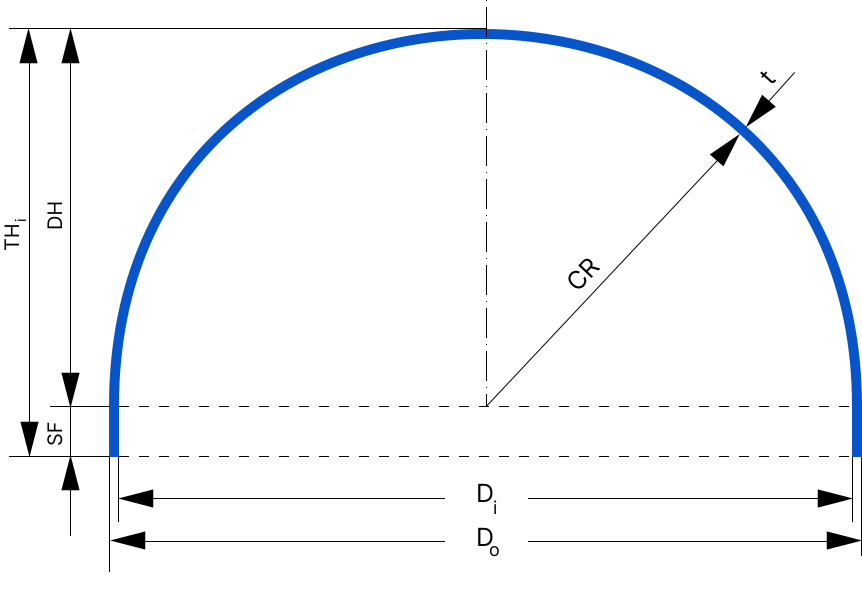
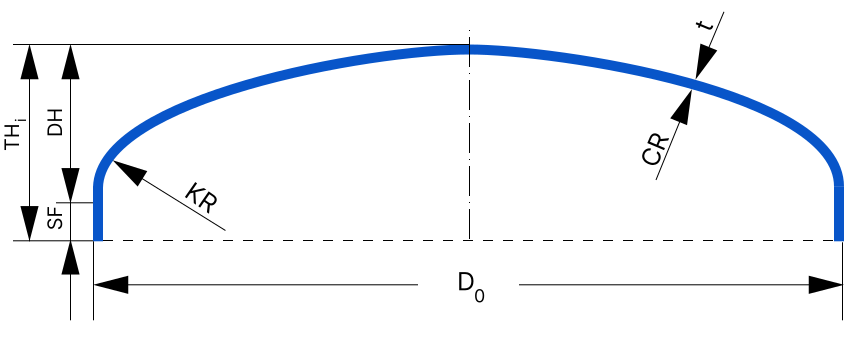
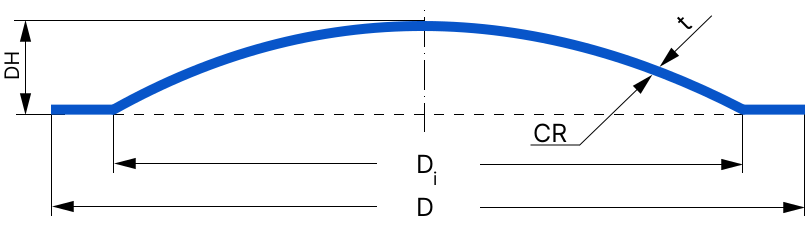
The crown radius (CR) of 0.9×Di and the knuckle radius (KR) of 0.17×Di are set by the 2:1 ellipse geometry itself. This has made the 2:1 elliptical head the most common choice for pressure vessels designed to ASME Sec. VIII.
Geometry formulas of the 2:1 elliptical head
The three main parameters derive directly from the 2:1 ellipse geometry and are the basis of this page's calculator:
At high pressures, the stress concentration in the knuckle of a torispherical head can call for more thickness. The 2:1 elliptical geometry, with its more even stress distribution, often allows less thickness for the same design pressure.
Online calculation
See the head's dimensions, volume and weight for a real diameter and thickness
2:1 elliptical head (Elliptical 2:1)
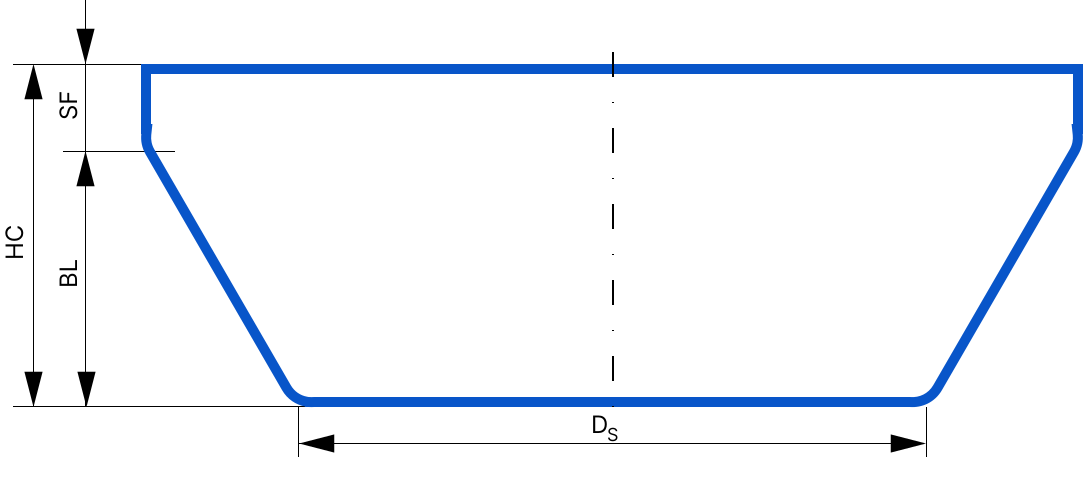
Liquid level and volume inside this head
How the head is mounted
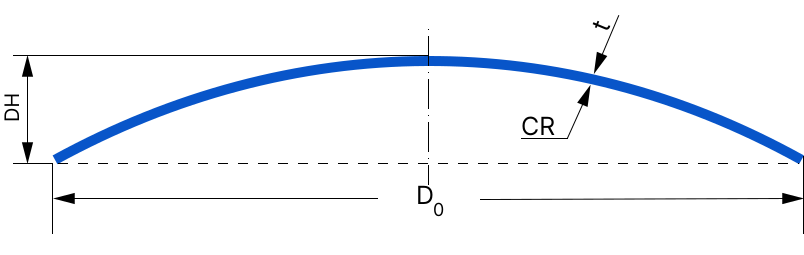
Development of this head (flat blank before forming)
The diameter of a flat plate of the same thickness and material that weighs the same as the formed head — an initial workshop estimate based on equal weight, not allowing for thickening or extra stretching at the knuckle.
The vessel head production process
From calculating the blank diameter to final edge preparation — the steps of making a vessel head in the workshop
Calculating the blank diameter
Cutting a disc from plate with the diameter and thickness calculated for the head type and vessel diameter
Cutting the plate blank
Precise cutting of steel or stainless plate by plasma, laser or gas according to the technical drawing
Pressing the head
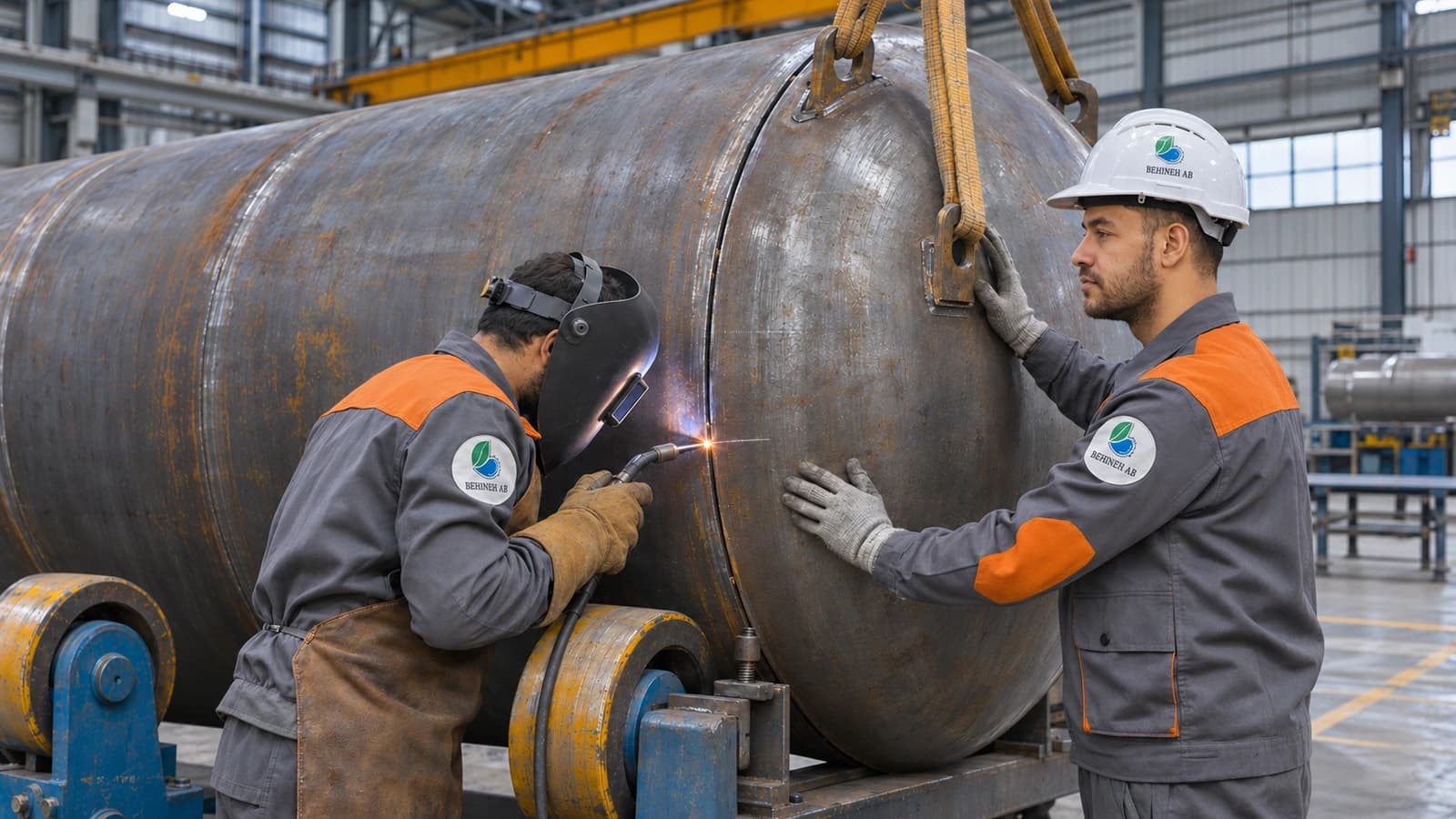
Hot or cold forming of the disc with a die and industrial press until it reaches the final head profile
Edge preparation
Machining the edge, bevelling and preparing the weld area for fitting to the vessel shell
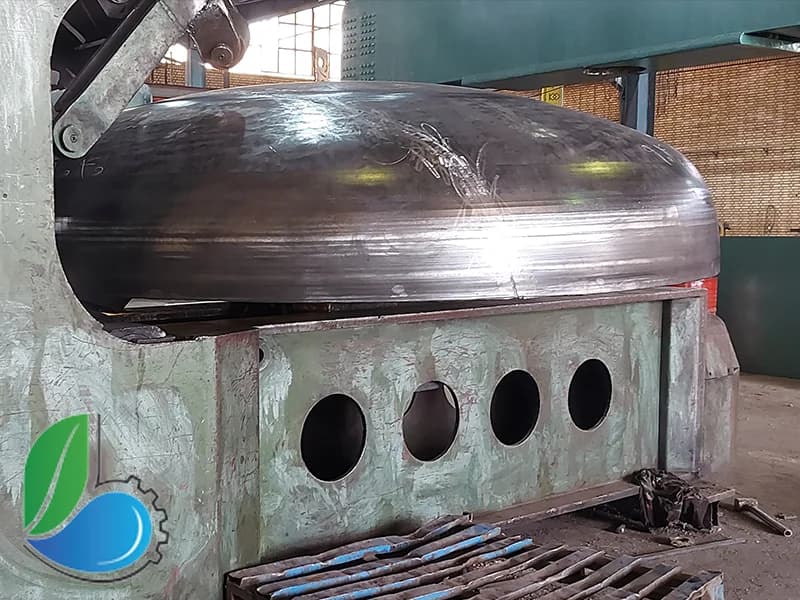 Video coming soon
Choosing a head: the balance between pressure, cost and time
At high design pressures, the stress concentration at the knuckle of a torispherical head can call for more thickness. The 2:1 elliptical geometry, with more even stress distribution, in many cases allows less thickness for the same design pressure; that is why, despite more complex forming, it is more economical overall at high pressure.
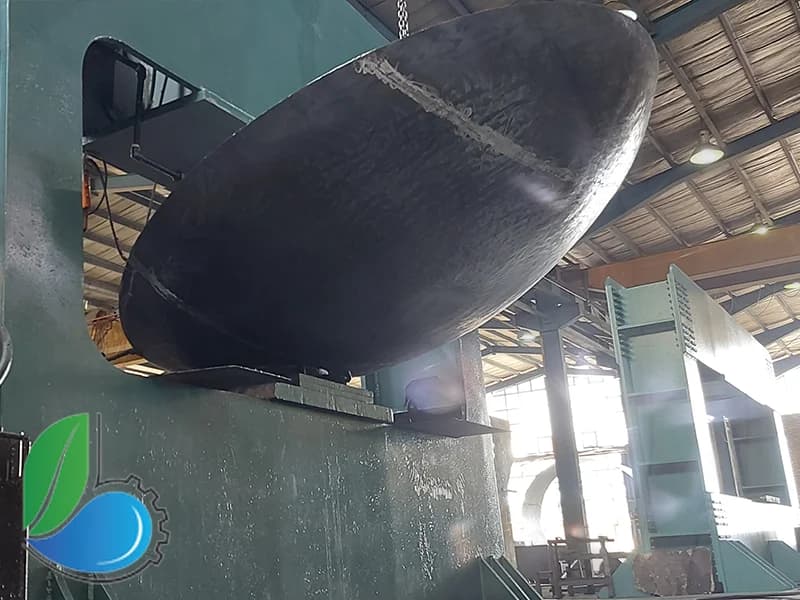
Gallery of heads we have made
2:1 elliptical head gallery



Applications and industries served


Buying heads from Behineh Ab
Six steps from first contact to delivery
Give the outside diameter, plate thickness, head type and required material.
The calculated weight, unit price and delivery time are sent the same business day.
Plate is supplied with the mill certificate and inspected on arrival before cutting.
Cutting the disc, hot or cold pressing depending on thickness, and checking dimensions with a template.
Machining the cylindrical edge and bevelling it ready for welding to the shell.
Packing, issuing the part identification sheet and shipping nationwide.
What sets us apart
Price inquiry
vessel head
Enter the diameter, thickness and head type; you will receive the calculated weight and unit price.
- Quotation with the exact weight of the part
- Standard heads delivered in 7 business days
- Shipping nationwide