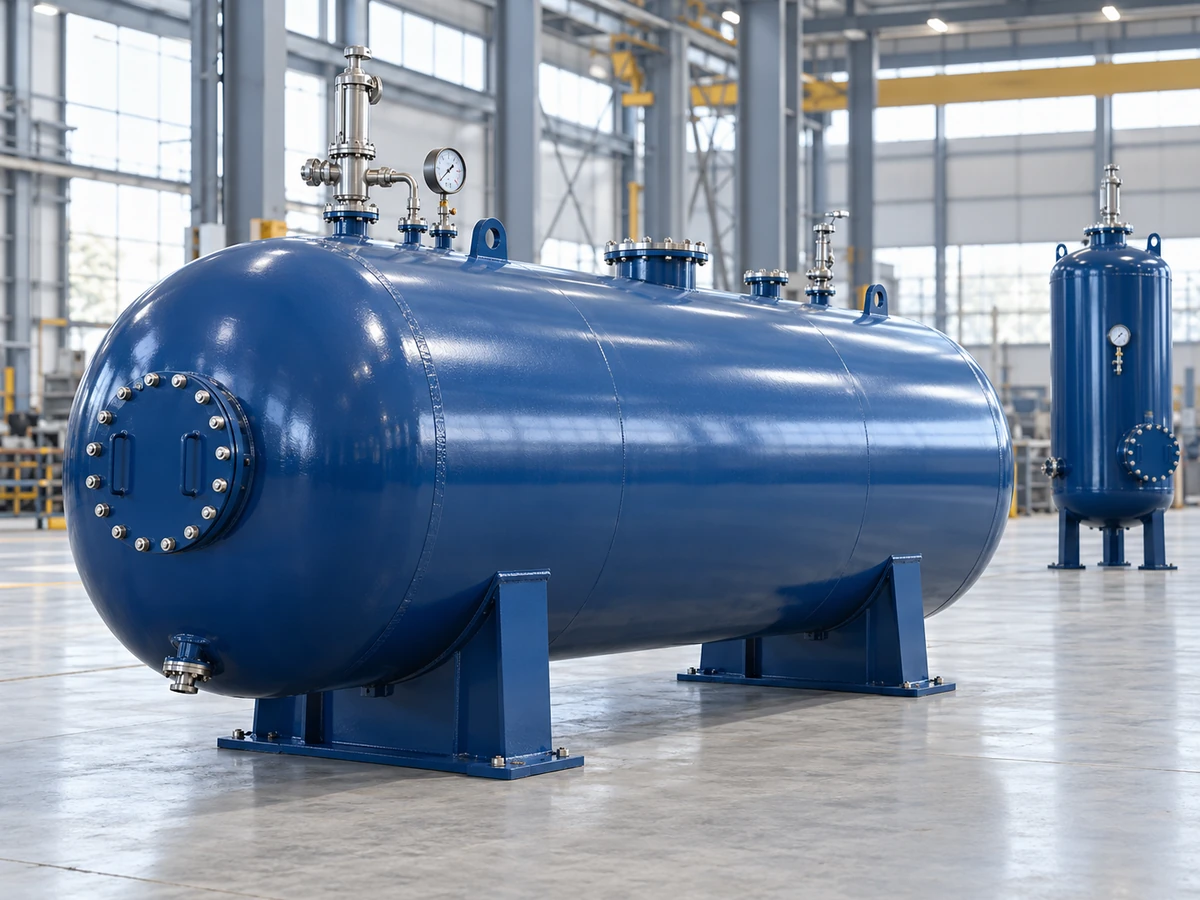
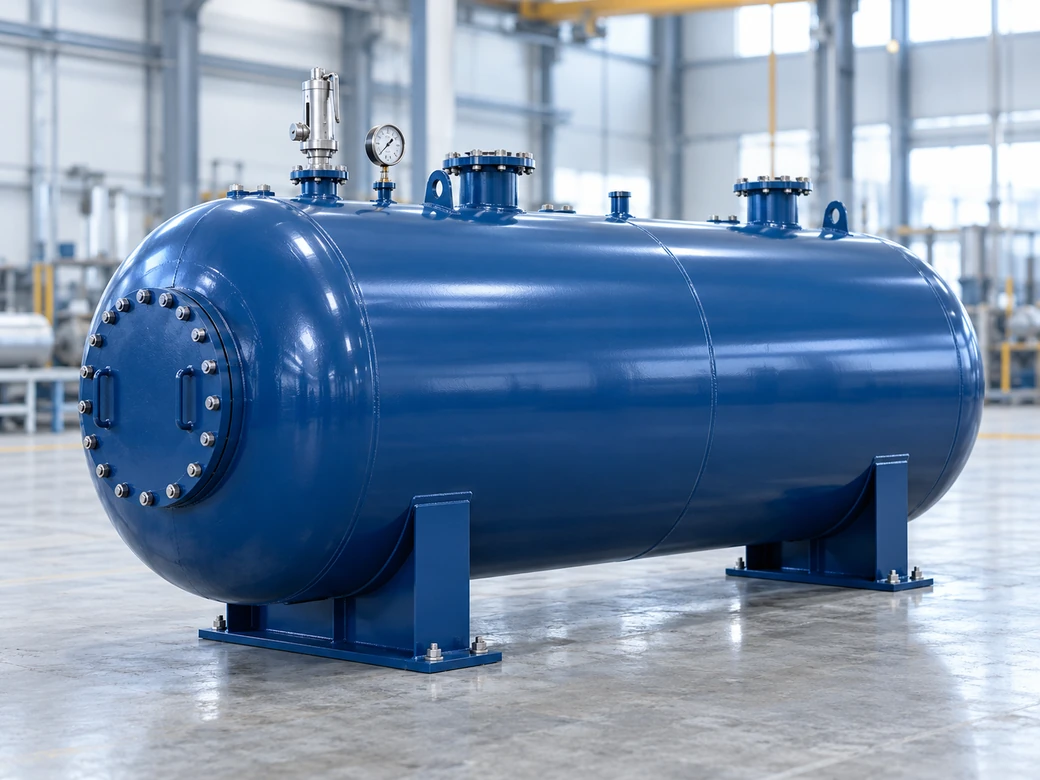
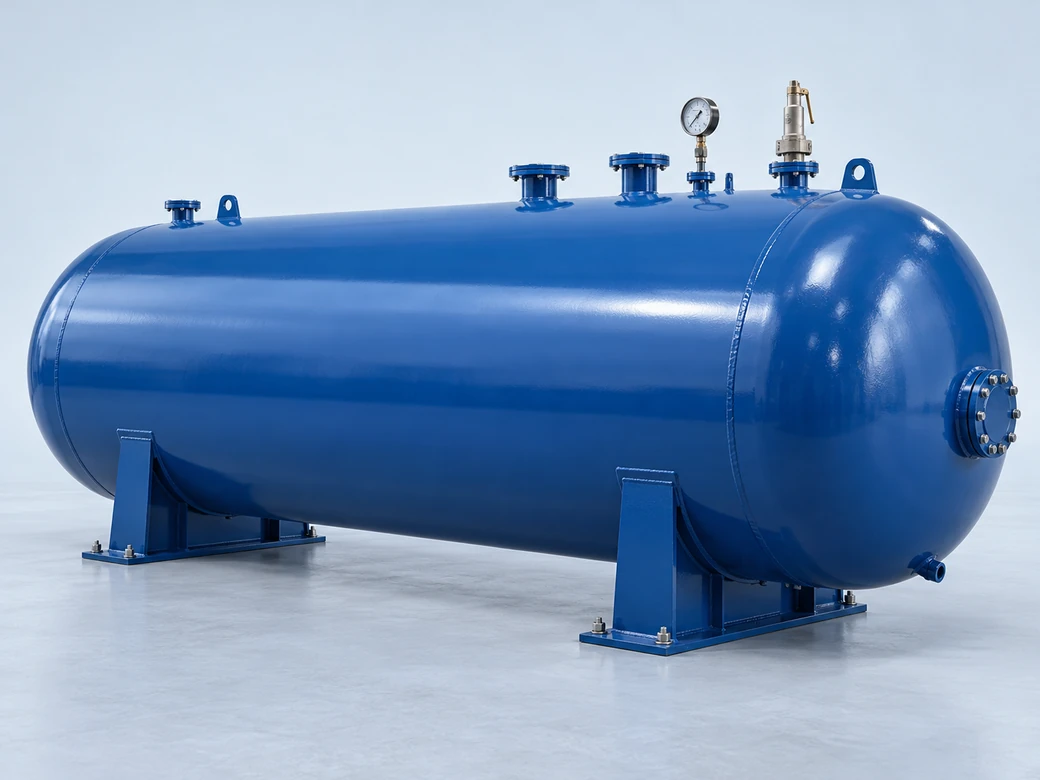
Horizontal LPG tank
The most common form for storing propane and butane at factories, residential estates and filling stations. It is mounted on two saddles, with the nozzles and valves on top of the tank.
Liquefied petroleum gas (LPG) tanks, nitrogen tanks, oxygen tanks and storage tanks for industrial gases. The design pressure of every gas tank is set by the gas itself, and its safety depends on correct design, a safety valve, internal cleanliness and full testing.

In a water tank the water height sets the pressure, and in an air receiver the compressor does. In an LPG tank, the pressure inside is the vapour pressure of the liquid: as long as there is liquid in the tank, the pressure depends on temperature, not on the amount of gas. A half-full tank and a full tank have the same pressure at the same temperature.
That is why an LPG tank is never filled completely. The liquid expands as it warms, and if there is not enough vapour space the tank fills with liquid and the pressure rises rapidly. The maximum permitted fill percentage is set in the operating regulations.
The main figures in gas tank design:
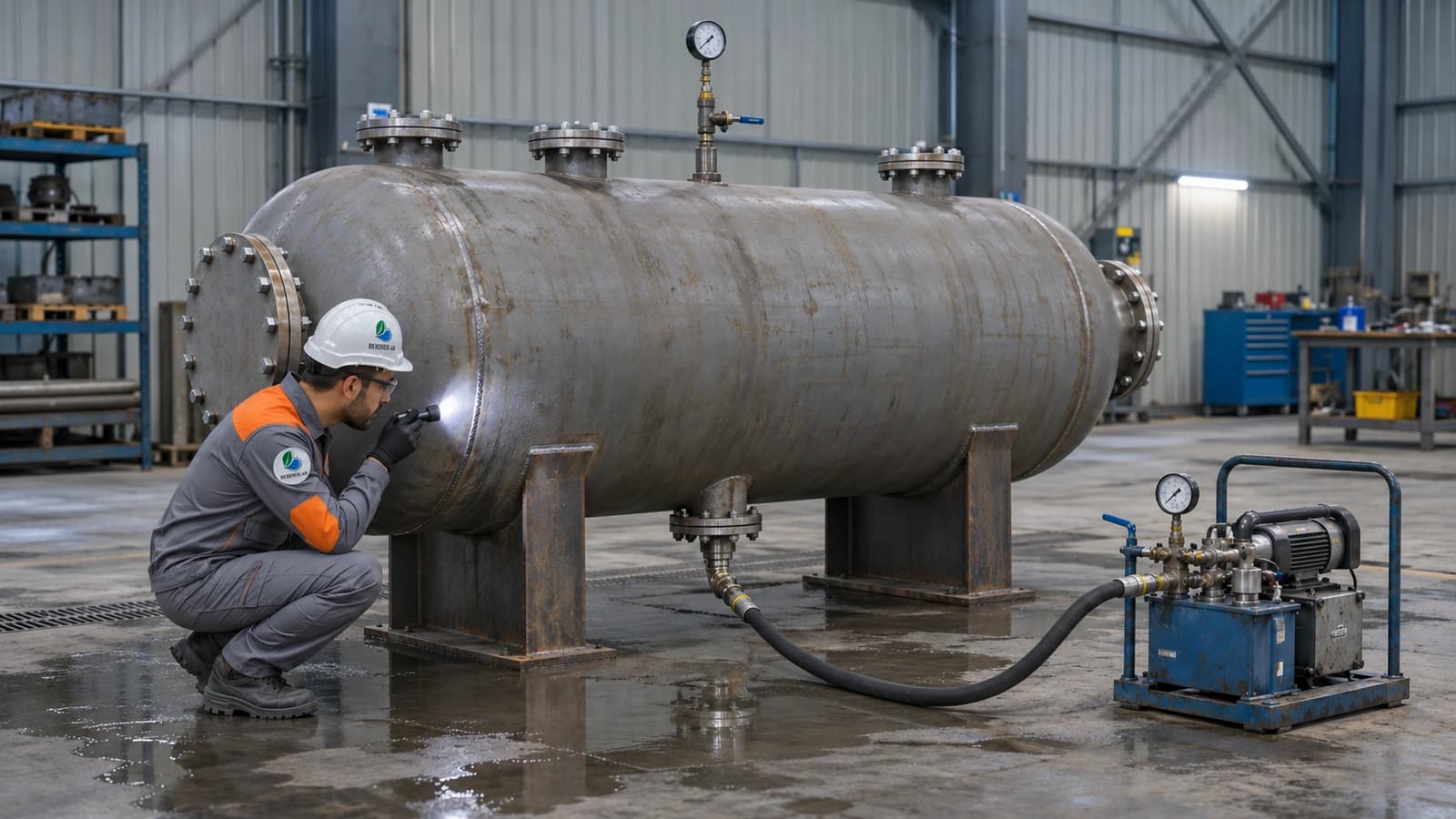
After the hydrotest, a gas tank must be completely drained and dried. Remaining water mixes with the gas and causes problems in valves and regulators.
| Gas | Storage state | Design note |
|---|---|---|
| Propane / butane (LPG) | Liquid under pressure | Vapour pressure at maximum ambient temperature; partial filling |
| Nitrogen (gas) | Compressed gas | System working pressure |
| Oxygen (gas) | Compressed gas | Complete degreasing; compatible materials |
| Liquid nitrogen and oxygen | Cryogenic liquid | Double-walled with vacuum insulation; separate design |
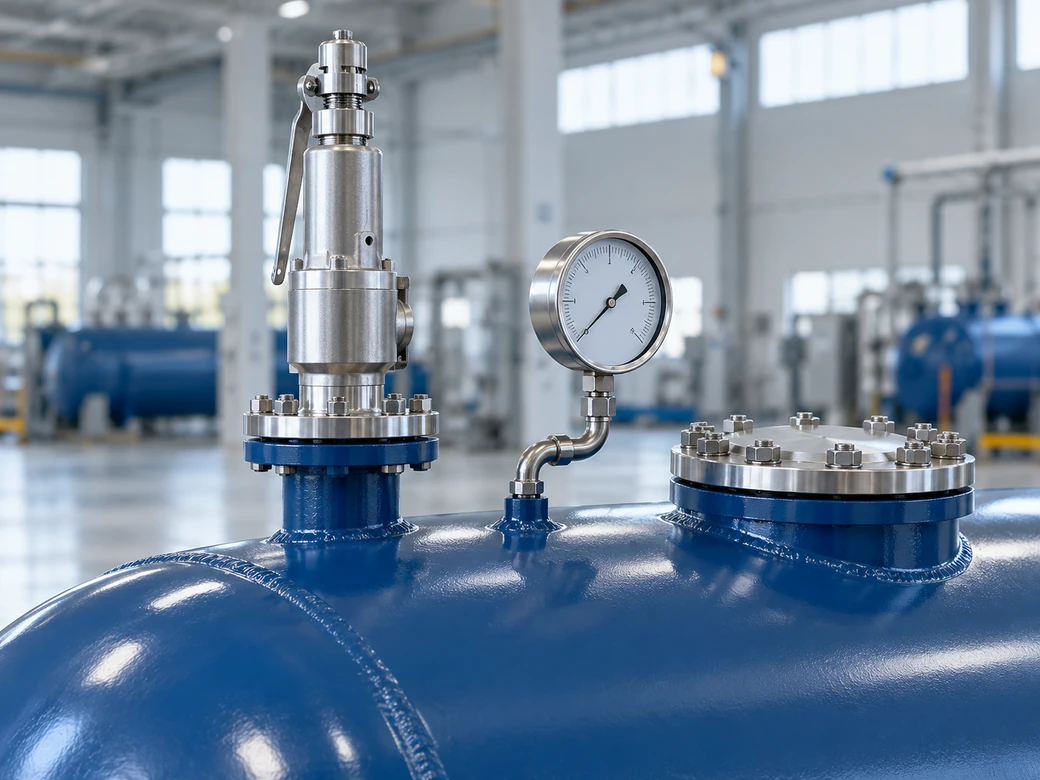
Set at no more than the design pressure, and its relieving capacity must be sufficient for the fire scenario.
Essential for controlling the maximum fill percentage in an LPG tank.
Prevents static electricity from building up during filling and emptying.
A gas tank's installation site requires safety distances from buildings and sources of ignition. These distances are set in national regulations and must be checked before design.
Gas tank safety starts with design and ends with complete documents

The first figure in gas tank design is the design pressure, and it is set by the gas, not the customer. In liquefied gases such as propane and butane, the pressure inside the tank is the vapour pressure of the liquid, which rises with temperature. A tank standing in the summer sun must be designed for the vapour pressure at the highest ambient temperature; for propane this is usually about 17 to 18 bar.
In compressed gases such as nitrogen and air, the system's working pressure is decisive. Liquid oxygen and nitrogen, however, are stored below minus 180 degrees and need a double-walled cryogenic tank with vacuum insulation; these tanks are assessed separately. The main welds of a gas tank are inspected by radiography, and for very large volumes a spherical tank is the most economical shape.
Chosen by gas type, volume and installation site

The most common form for storing propane and butane at factories, residential estates and filling stations. It is mounted on two saddles, with the nozzles and valves on top of the tank.

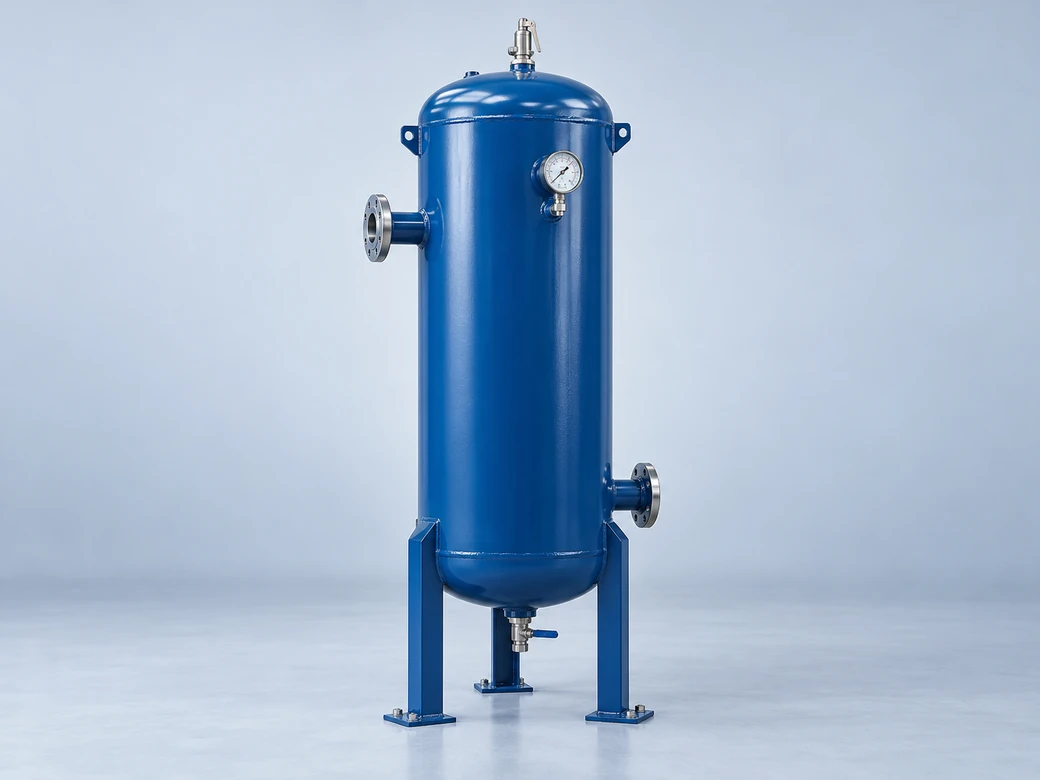
For storing nitrogen, air and industrial compressed gases at system pressure. Usually vertical and on legs, with a safety valve and pressure gauge.

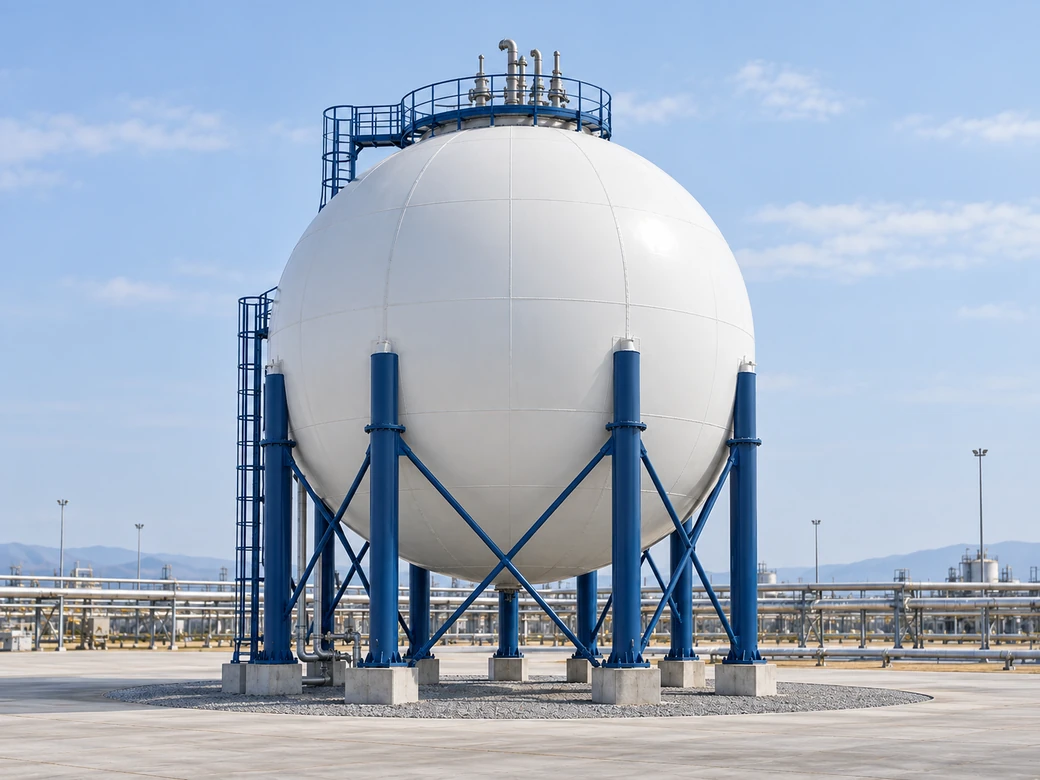
For very large volumes, a sphere, with the least thickness and surface, is the most economical shape. It is built from pressed petals and welded and tested on site.
The main design parameters of a gas tank
From gas type to nameplate
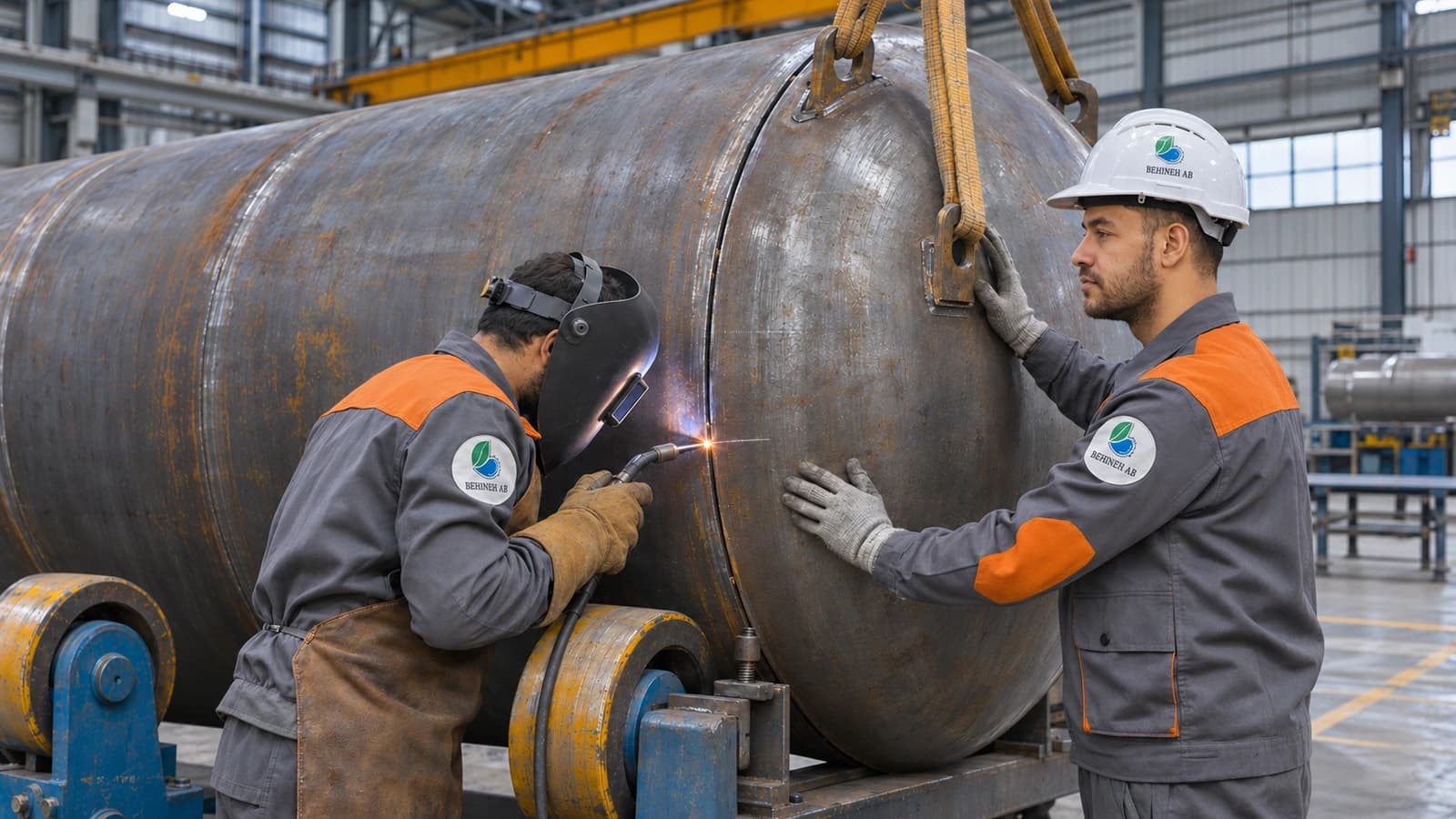
A gas tank is one of the most sensitive pressure vessels. Design and fabrication to ASME Section VIII, radiography of the welds, the hydrotest and a correct safety valve are its minimum safety requirements. After the hydrotest the tank must be dried completely so that moisture does not mix with the gas.

Gas storage for industry, residential estates and filling stations
Tell us the gas type, volume and installation site to receive the design pressure, dimensions and tank price.
The most common questions about gas tanks
Enter your project details; our specialists will send a technical proposal and price within 24 business hours.