A complete technical guide to
galvanized elevated tanks
A complete technical guide: design, fabrication, installation and maintenance
Bolted panel and welded plate tanks with hot-dip galvanizing — steady pressure and reliable water storage for municipal and rural networks.
1. Introduction — the galvanized elevated tank
Bolted panel and welded plate tanks with hot-dip galvanizing
Steady pressure and reliable water storage are the two pillars of operating municipal and rural water networks. In many projects, especially where reliable power is limited or pumping-station operating costs must be kept down, the elevated tank is a technical and economical solution. Placed at the right height, it supplies the network's gravity pressure without pumps running continuously, and at the same time acts as an emergency reserve in a crisis.
The main challenge for these tanks is constant exposure to the weather. Sunlight, rain, humidity, temperature swings and pollutants all speed up the corrosion of steel surfaces. That is why choosing the right protection system is decisive for the tank's life and life-cycle cost. Hot-dip galvanizing, one of the most effective ways to protect steel against atmospheric corrosion, is examined in detail in this article.
This article is written for engineers and covers the hydraulic principles of design, details of the galvanizing process and coating thickness, a comparison of shell construction technologies, support-structure design under wind and seismic loads, maintenance and troubleshooting, the relevant standards and frequently asked questions.
2. What is a galvanized elevated tank and how does it work?
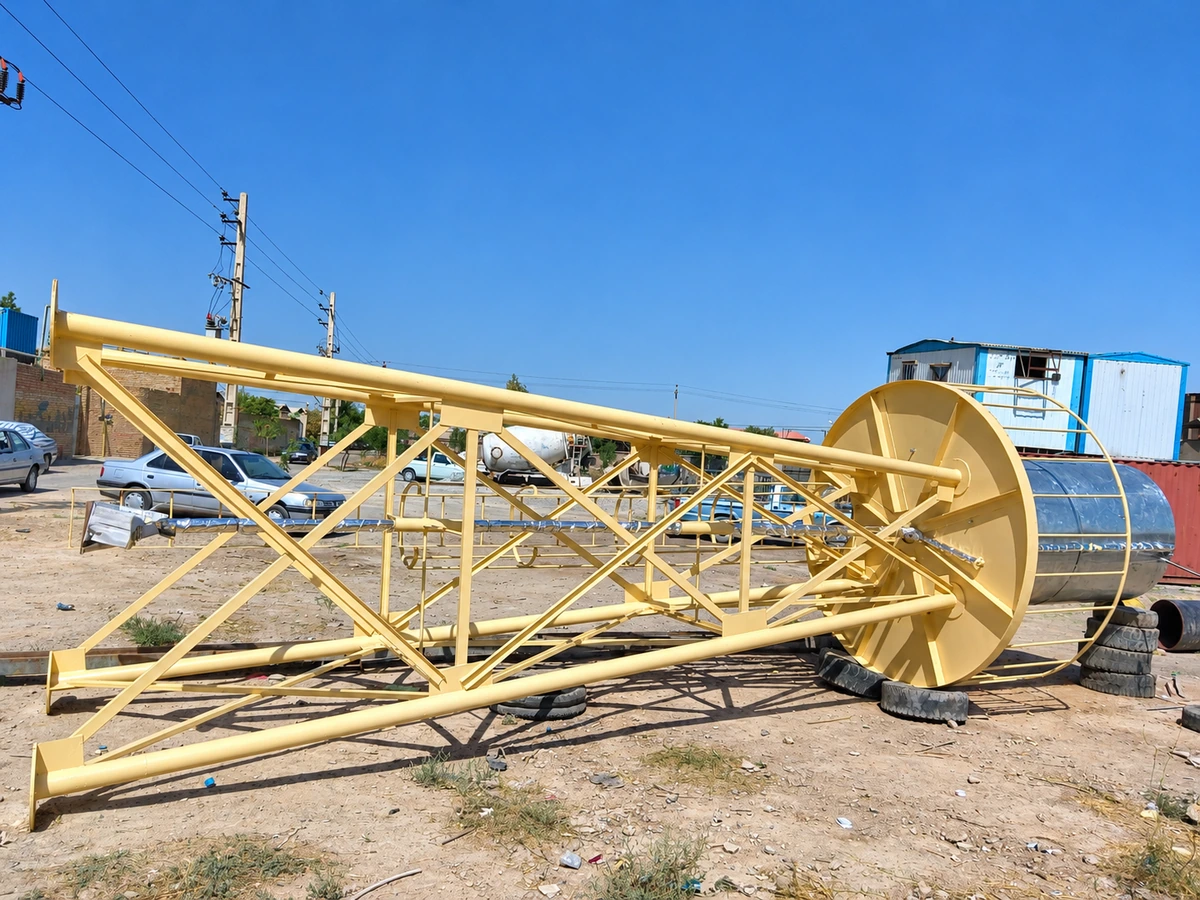
An elevated water tank is installed on a tall structure or supporting tower so that the height difference from the points of use provides the network's gravity pressure. 'Galvanized' refers to coating the steel surfaces of the tank and structure with a layer of zinc by hot-dip galvanizing, to protect the steel against corrosion over the long term.
An elevated tank works on the simple principle of hydrostatic pressure. The water column in the tank creates pressure at its base through its own weight, directly proportional to the height of the column. The basic relation is P = ρ × g × h.
An elevated tank system is made up of the following parts:
The main water-holding vessel, built of bolted panels or welded plate.
The steel or concrete structure that holds the tank at height.
A reinforced concrete foundation that carries the structure's loads to the ground.
Inlet, outlet, overflow and drain lines and control equipment.
Access ladder, inspection platform, safety guards, manway and venting system.
2-1. The principle of gravity pressure
The basic hydrostatic pressure relation; every 10.2 m of water column gives about 1 bar:
P is pressure (pascals), ρ the density of water (about 1,000 kg/m³), g gravitational acceleration (9.81 m/s²) and h the effective height of the water column (m). In practice every 10.2 m of water column gives roughly one bar (100 kPa) of pressure.
3. Hot-dip galvanizing and resistance to atmospheric corrosion
Hot-dip galvanizing is a metallurgical process in which a steel part, after surface preparation, is dipped in a bath of molten zinc and a continuous, uniform zinc layer forms on its surface. Unlike industrial paints, which are only a surface layer, the galvanized coating bonds metallurgically with the steel and forms zinc–iron alloy layers.
Degreasing: removing oil, grease and organic contamination in an alkaline or acid solution. Pickling: removing rust and mill scale with hydrochloric or sulphuric acid. Fluxing: dipping in zinc ammonium chloride to prevent re-oxidation before immersion. Immersion in molten zinc: dipping the part in a zinc bath at about 440–460 °C, forming the alloy layers. Cooling and inspection: cooling the part and checking coating thickness, continuity and adhesion.
A hot-dip galvanized coating is made of several layers of different composition and hardness. From the steel surface outwards come the gamma, delta and zeta layers — zinc–iron alloys with decreasing iron content — and finally the outer eta layer of pure, ductile zinc. The inner alloy layers are usually harder than the steel itself and give the coating high abrasion resistance.
Barrier protection: the zinc layer is a physical barrier that cuts off moisture and oxygen from the steel. Cathodic/sacrificial protection: if the coating is scratched or locally damaged, zinc — having a more negative electrochemical potential — oxidises before the steel and, acting as a sacrificial anode, prevents the base metal from corroding. This is galvanizing's fundamental advantage over paint.
Coating thickness decides how long galvanizing lasts, and it is set by the thickness of the steel part and the standard's requirements:
| Steel part thickness | Minimum coating thickness (µm) | Minimum coating mass (g/m²) |
|---|---|---|
| Under 1.5 mm | 45 | 325 |
| 1.5 to 3 mm | 55 | 395 |
| 3 to 6 mm | 70 | 505 |
| Over 6 mm | 85 | 610 |
The relationship between coating thickness and life is roughly linear; each micron of coating can give years of protection in low to medium corrosivity environments:
| Corrosivity category | Environment | Zinc corrosion rate (µm/year) |
|---|---|---|
| C1 – C2 | Rural / dry indoor | Below 0.7 |
| C3 | Urban and moderate industrial | 0.7 to 2.1 |
| C4 | Industrial and coastal | 2.1 to 4.2 |
| C5 | Heavy industrial / marine | 4.2 to 8.4 |
Approximate coating life = coating thickness (µm) ÷ annual corrosion rate of the environment. For example, an 85 µm coating in a C3 urban environment with a corrosion rate of 1.5 µm/year gives about 56 years of protection. This calculation is the basis for choosing the protection class in design.
Uniform protection over every surface, including edges, corners and hard-to-reach spots that painting usually covers poorly. Long life and a big cut in maintenance cost over the tank's life cycle. High mechanical and abrasion resistance of the alloy layers against knocks and wear during transport and installation. Simple visual inspection: thinning and colour change of the coating are a visible indicator of its protective state.
4. Bolted panel tank vs. welded plate tank
Choosing the shell construction technology is a key decision in an elevated tank project and directly affects coating quality, speed of construction, transportability and cost. The two common technologies are the bolted panel tank and the welded plate tank.
Here the tank shell is made of steel panels, each hot-dip galvanized separately in the factory under controlled conditions. On site the panels are joined with galvanized bolts and sealing gaskets (such as EPDM sealing strips or polysulphide mastic). Since no welding is done on site, the galvanized coating stays intact and uniform.
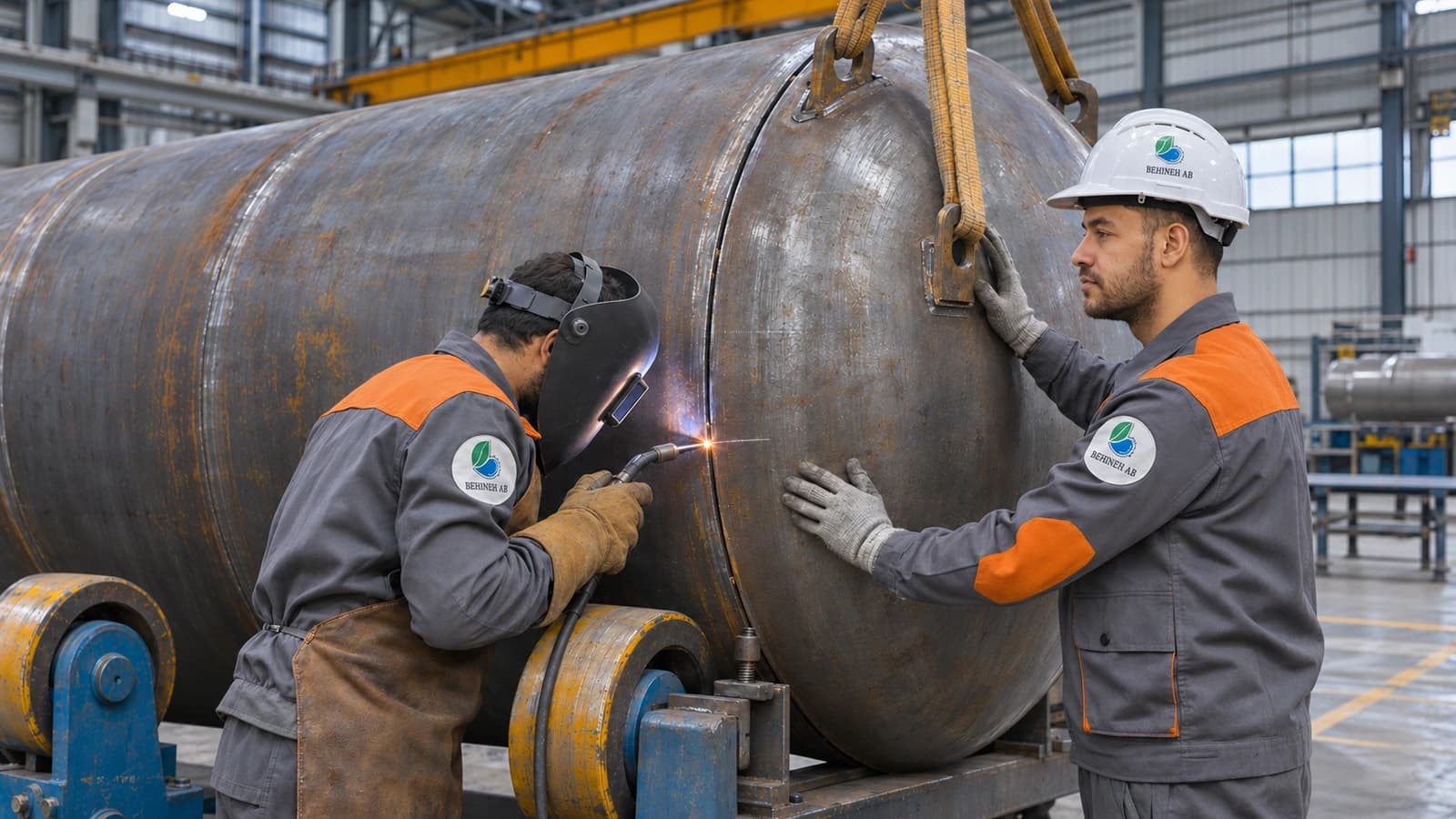
Here the steel plates are joined by welding into a continuous shell with no bolted seams. The main challenge is that welding and galvanizing do not mix: if the parts are galvanized before welding, the welding heat burns off the zinc along the seam, which must then be repaired by cold methods (zinc-rich paint or zinc metal spray) that never match the original hot-dip coating. If they are galvanized after welding, the size of the shell makes dipping it in the zinc bath practically impossible.
| Criterion | Bolted panel tank | Welded plate tank |
|---|---|---|
| Galvanizing quality | Uniform, factory-applied | Local damage at weld seams |
| Installation speed | High | Medium to slow |
| Transport to remote areas | Easy (separate, light parts) | Difficult |
| Expandable capacity | Yes | No |
| Sealing | Gaskets and bolts | Continuous weld seam |
| Can be dismantled and moved | Yes | Limited |
| Skilled welders needed on site | No | Yes |
| Coating quality control | In the factory, precise | Depends on manual repair |
| Project delivery time | Shorter | Longer |
Where uniform coating quality, speed, transport to remote areas and expandability matter, the bolted panel tank is the preferred option. The welded plate tank is still used where the client requires a fully continuous shell with no bolted seams.
6. Use in pressurising rural and municipal water networks
In rural areas, which often face unreliable power and need low-maintenance solutions, a galvanized elevated tank stores water during low-demand hours and supplies gravity pressure at peak hours, reducing reliance on continuously running pumps and making supply more reliable. The light weight and portability of the panel tank make it economical to build in remote and hard-to-reach areas.
In municipal networks, the elevated tank regulates pressure, balances demand swings and provides emergency storage. During power cuts or pump failures, the stored water can hold network pressure for a while and prevent a sudden loss of service.
Supplying water and pressure for fire-suppression systems in industry and large complexes. Storing process water in industrial and agricultural units. Supplying water to large residential, commercial and agricultural complexes.
7. Maintenance, inspection and troubleshooting
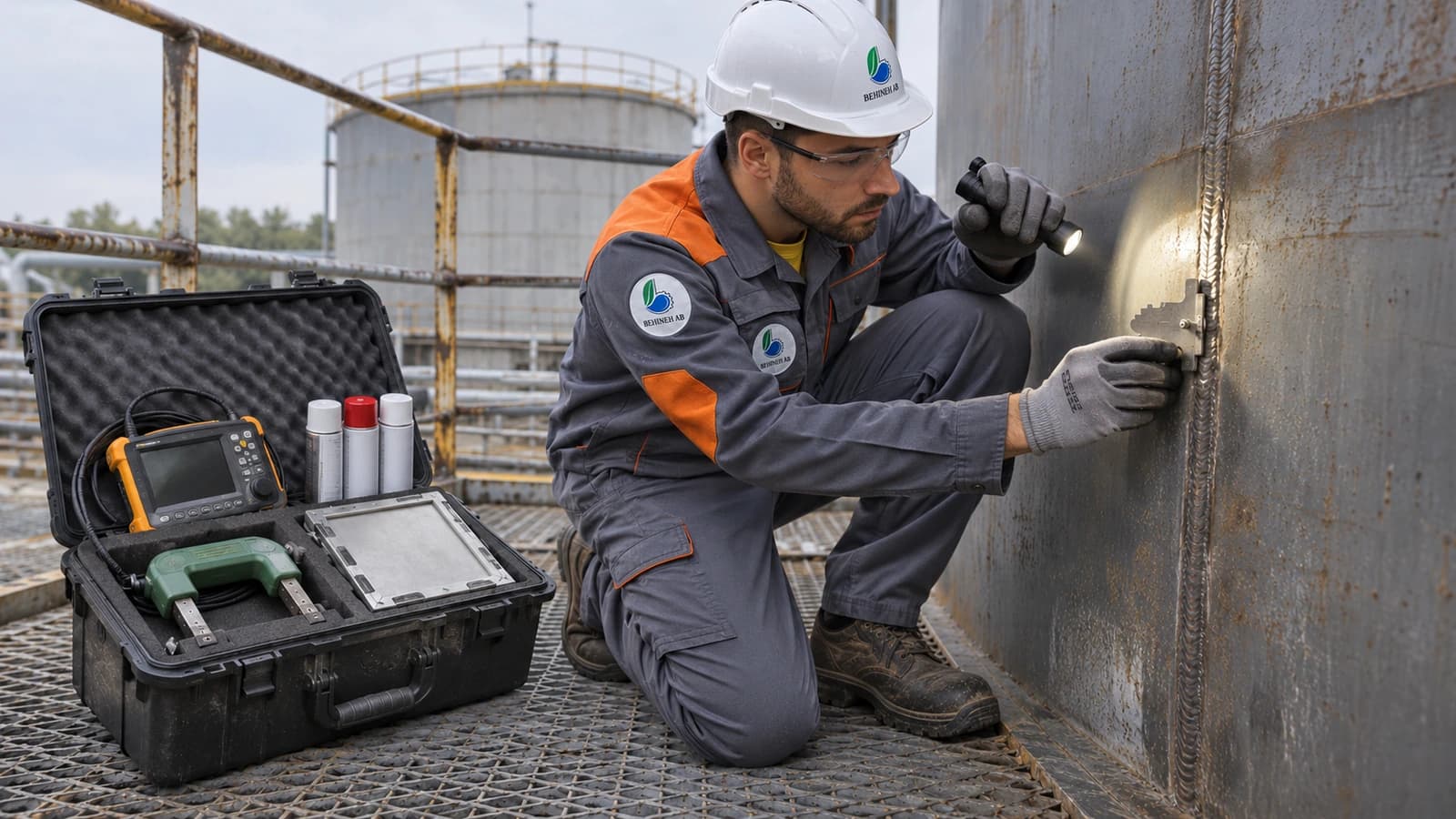
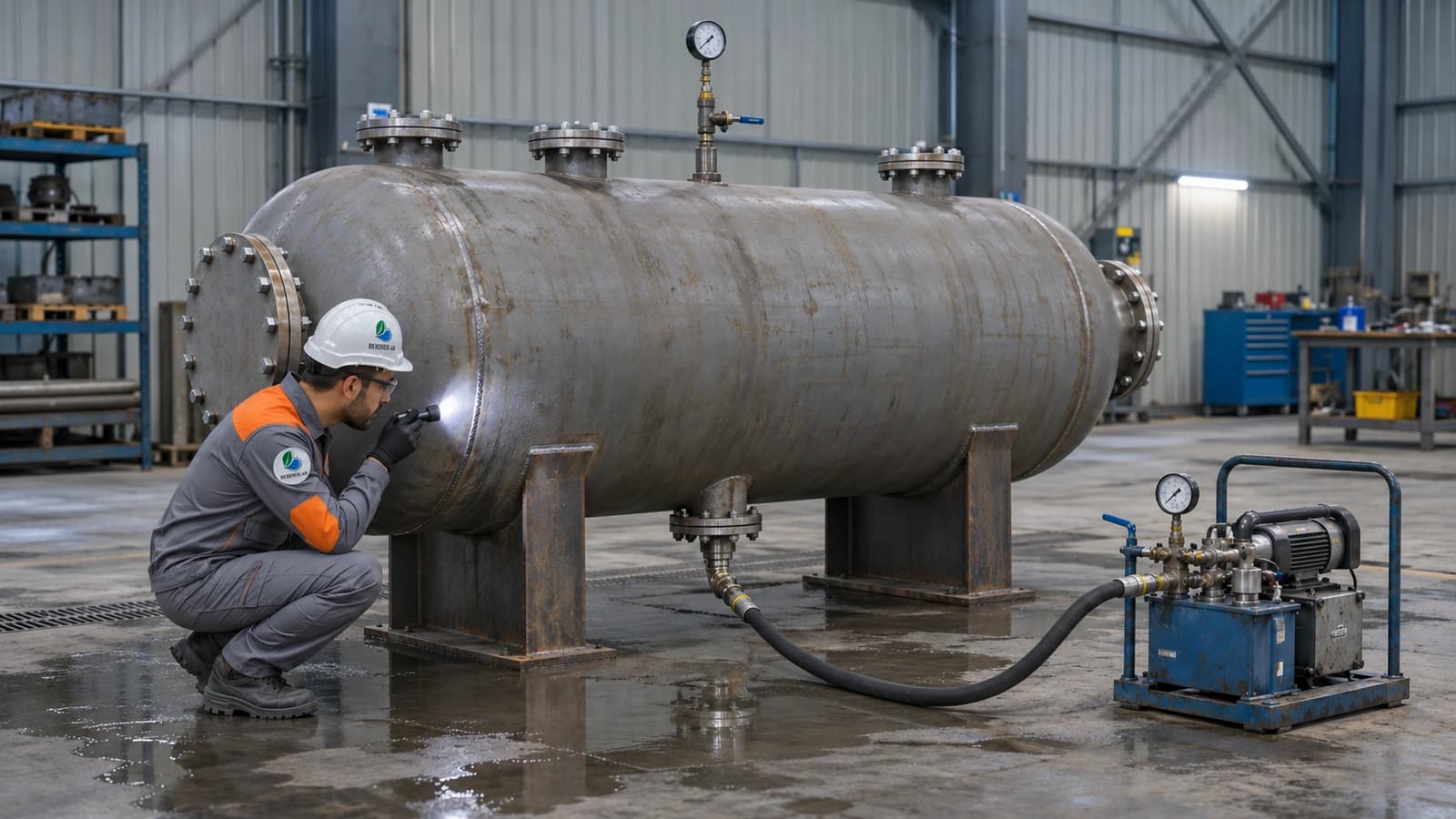
Periodic maintenance safeguards the tank's life and stops small defects from becoming costly failures. The inspection programme must cover the shell and coating, the structure and the mechanical parts.
| Interval | Inspection action |
|---|---|
| Monthly | Visual check for leaks, valve condition, water level and float operation |
| Quarterly | Check sealants and gaskets, overflow and drain blockage, bolted joints |
| Annually | Check the galvanized coating, structural connections and bolt tightness |
| Every 3 to 5 years | Wash and disinfect inside the tank; measure coating and plate thickness |
| Fault | Likely cause | Remedy |
|---|---|---|
| Leak at panel seams | Worn gasket or loose bolt | Replace the sealant and tighten to standard torque |
| Surface rust spots | Local damage to the galvanized coating | Repair with zinc-rich paint or zinc spray |
| Loss of network pressure | Low water level or line leak | Check incoming supply and fix the leak |
| Structural vibration | Loose bracing or connections | Inspect and tighten structural connections |
| Severe water sloshing | No baffle or insufficient freeboard | Add a baffle and review the design |
Where the galvanized coating has been damaged by an impact or scratch, it should be repaired as soon as possible with zinc-rich paint containing at least 92% zinc in the dry film. Direct contact between galvanized steel and dissimilar metals such as copper must be avoided to prevent galvanic corrosion.
8. Relevant standards
A galvanized elevated tank must be designed, built and installed to recognised national and international standards. The main references are summarised below:
| Standard | Scope |
|---|---|
| ISO 1461 | Hot-dip galvanizing of steel parts; coating thickness and quality requirements |
| ASTM A123 / A153 | Zinc coating on steel products and hardware (bolts and nuts) |
| ISO 9223 | Environmental corrosivity classification and corrosion-rate estimates |
| AWWA D103 | Design of bolted steel water storage tanks |
| AWWA D100 | Design of welded steel water storage tanks |
| National Building Regulations, Part 10 | Design and construction of steel structures in Iran |
| Iran Standard 2800 | Seismic design of buildings and structures |
| National Building Regulations, Part 6 | Loads on buildings (wind, snow, gravity) |
| Drinking-water requirements | Quality and hygiene of materials in contact with drinking water |
9. Frequently asked questions
With a standard galvanized coating and proper maintenance, a tank in an ordinary urban environment can last several decades; the exact figure depends on coating thickness and the environment's corrosivity category.
In most projects the bolted panel tank is preferred for its uniform coating, speed, transportability and expandability. Welded plate is used where a fully continuous shell is required.
A standard galvanized coating is suitable for contact with drinking water, provided the requirements for materials in contact with drinking water are met and the tank is flushed before use.
With zinc-rich paint or zinc metal spray, which restores cathodic protection similar to galvanizing at the damaged spot.
From the pressure needed at the points of use, network pressure losses and the local topography, bearing in mind that about every 10 m of height equals one bar of pressure.
10. Summary
The galvanized elevated tank combines the simple principle of gravity pressure with advanced corrosion-protection technology. Hot-dip galvanizing, with its layered structure and dual protection mechanism, extends the tank's life and cuts maintenance costs. The choice between panel and welded construction should reflect project conditions; in most cases the bolted panel tank is preferred for its uniform coating and ease of installation. Careful structural design under wind and seismic loads, compliance with recognised standards and a regular maintenance programme are the three pillars of long-term performance.
Behineh Ab Engineering — consulting, design and construction of galvanized elevated tank projects
Technical specifications
Painted or hot-dip galvanized: which lasts longer?
A painted steel tank is protected against corrosion by epoxy or polyurethane coatings, but these wear over time from scratches and UV and need periodic repainting. Hot-dip galvanizing forms a metallurgical zinc layer on the steel surface that gives more uniform, durable protection, usually lasting decades without periodic repair.
The choice between them usually depends on the project's initial budget and the long-term maintenance cost it can accept.
Elevated tank shapes: cylindrical, rectangular, conical or spherical
A steel elevated tank is not limited to a cylinder: the conical type empties completely from its narrow end and is used in agriculture and grain handling, the rectangular type takes less room in tight spaces, and the spherical type stores large volumes with the least plate. The shape should be chosen to suit the use and the installation space.
The height of an elevated tank directly affects the outlet water pressure; a height of about 50 m is commonly taken as a reference for balanced pressure in a distribution network.
Designing the support structure for wind and earthquake
An elevated tank holds a considerable weight at height, so the support structure must carry not only the static weight of the full tank but also the lateral forces from wind and earthquake. These calculations usually cover the dimensions of the legs, cross-bracing and a foundation designed for the local soil.
Service life and periodic maintenance of steel elevated tanks
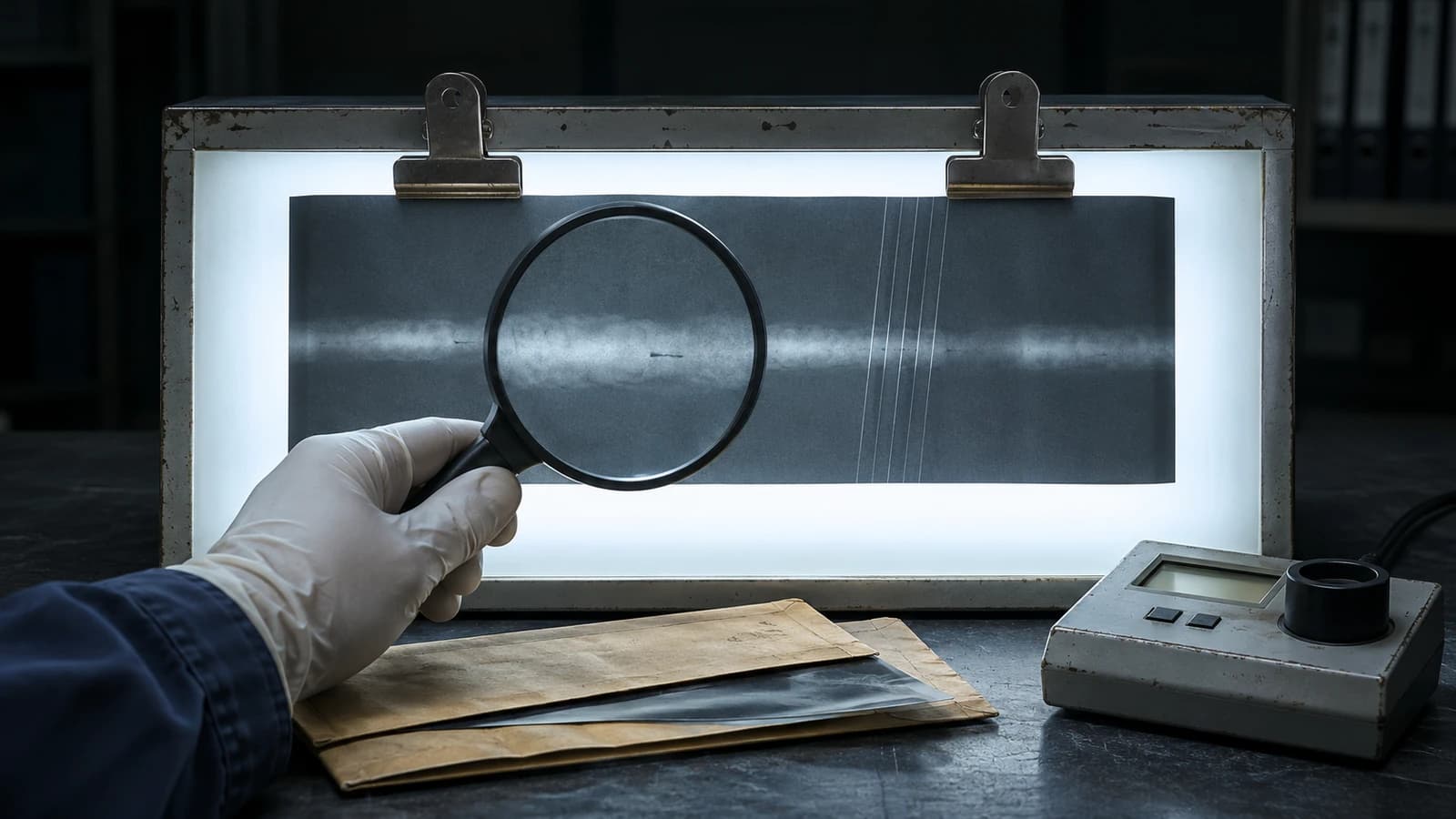
Periodic inspection of welded joints, checking for pitting where the tank meets the support structure, and checking the protective coating (on painted tanks) are essential maintenance steps. Following them noticeably extends the life of a steel elevated tank.
Applications and industries
Photo gallery
Steel and galvanized elevated tank gallery
Frequently asked questions
Request a quote
Galvanized elevated tank
Enter the pressure, temperature and fluid; our engineers send a technical proposal and price within 24 working hours.
- Written technical reply with a proposed concept drawing
- Site visit in Tehran and surroundings
- 24-month warranty on fabrication and welding