MT finds surface and slightly sub-surface cracks in carbon steel faster and more reliably than liquid penetrant. On 304 and 316 stainless, however, it can do nothing.
How it works
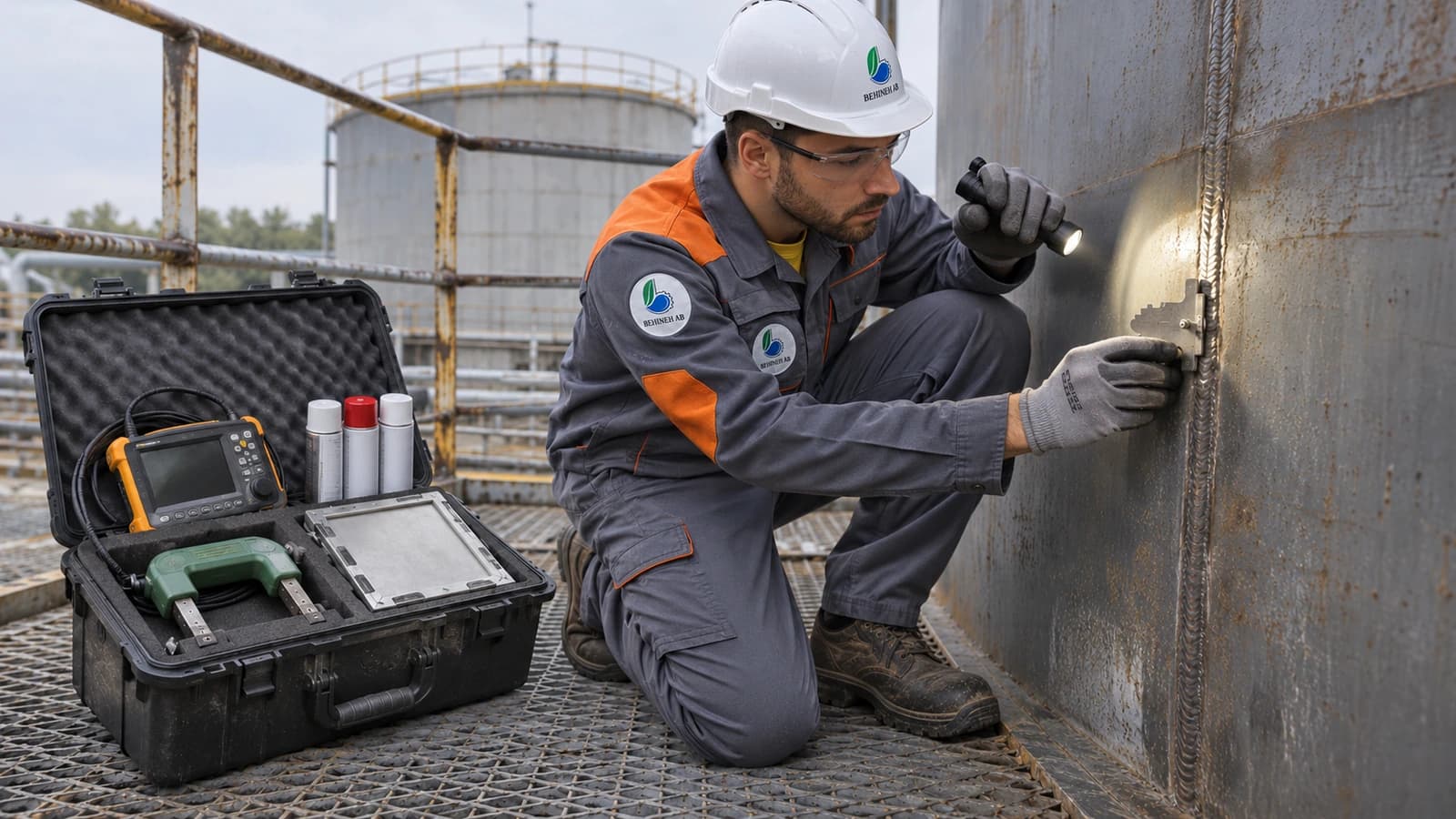
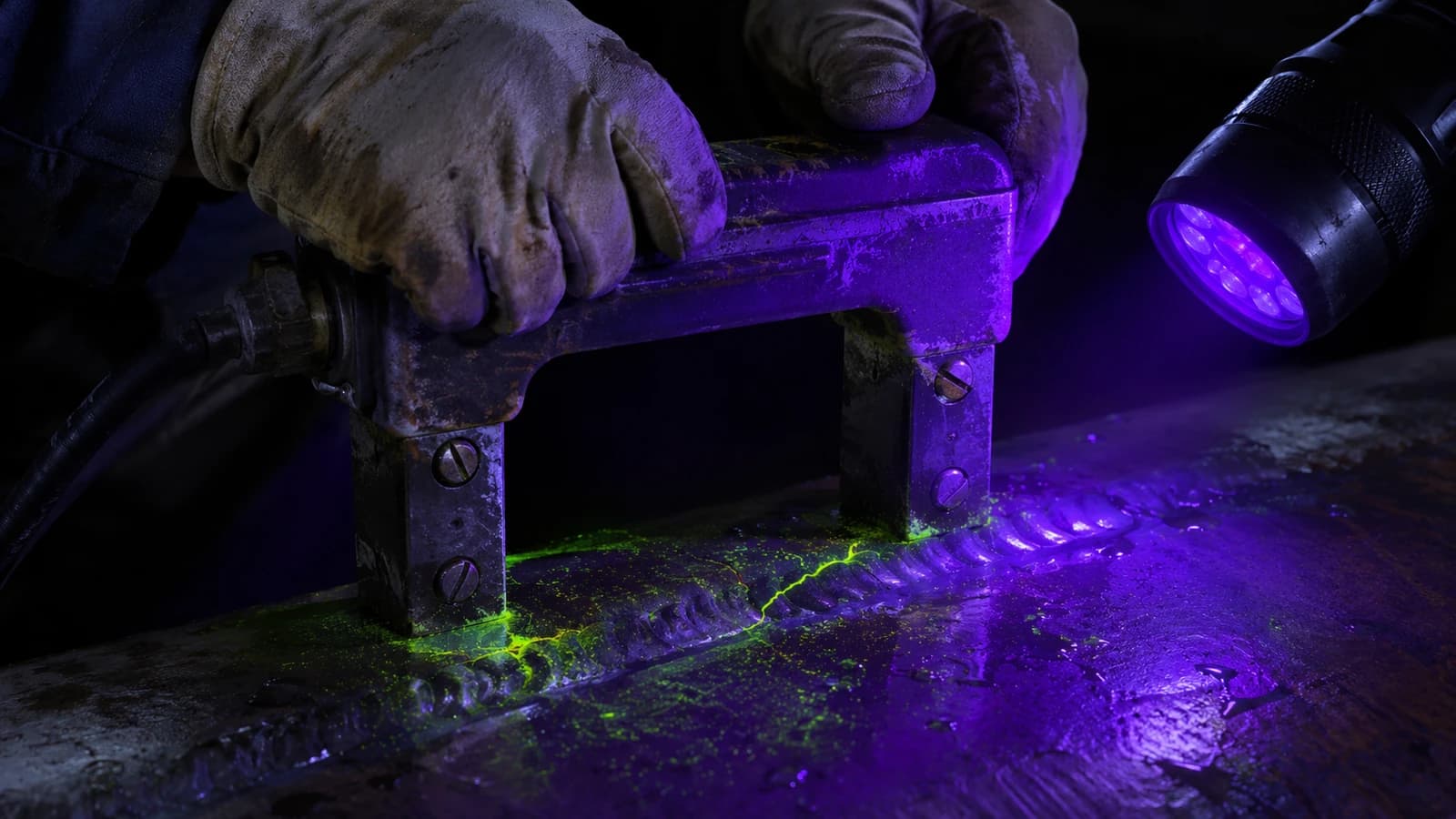
The weld area is magnetised with a yoke (an electromagnet). Where there is a crack, the magnetic field leaks out of the part. Fine iron particles sprinkled on the surface gather right there and show the shape of the crack. The particles can be dry or suspended in a liquid, coloured or fluorescent.
What materials does it work on?
Only on ferromagnetic materials, i.e. carbon steel and low-alloy steels, from which most storage tanks and pressure vessels are built. Austenitic stainless steel (304, 316), aluminium and titanium cannot be magnetised, and liquid penetrant testing is used for them.
| Magnetic particle (MT) | Liquid penetrant (PT) | |
|---|---|---|
| Material | Magnetic steel only | All non-porous metals |
| Sub-surface defects | Detectable to a shallow depth | Not seen |
| Sensitivity to surface cleanliness | Lower | Very high |
| Speed | Faster | Needs dwell and development time |
Practical points
- Cleaning the weld surface and removing scale and thick paint
- Placing the yoke on the weld and applying the particles while it is magnetised
- Repeating the test with the yoke turned about 90 degrees
- Examining and recording the indications and comparing them with the code acceptance criteria
- Demagnetising if needed, for example if welding is to be done later
A crack parallel to the field lines does not interrupt the field and is not seen. That is why each area is tested twice, in two directions perpendicular to each other.
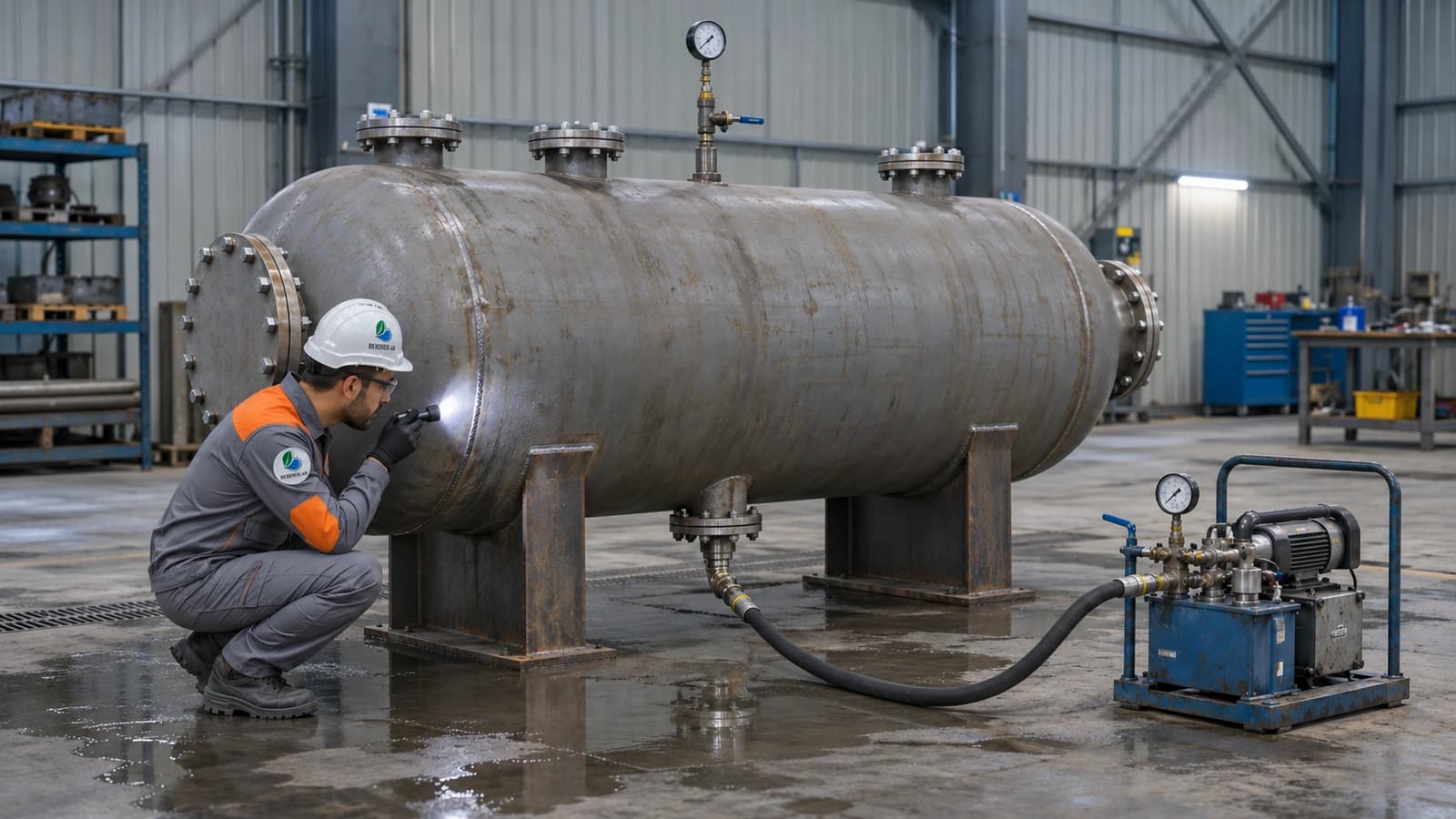
For nozzle and support welds in carbon steel tanks, MT is usually the first choice. This test is also carried out by a third-party inspection company, and its report is attached to the tank's documents.