The millimeters added to calculated thickness that protect useful life.
A sacrificial layer, not random extra metal
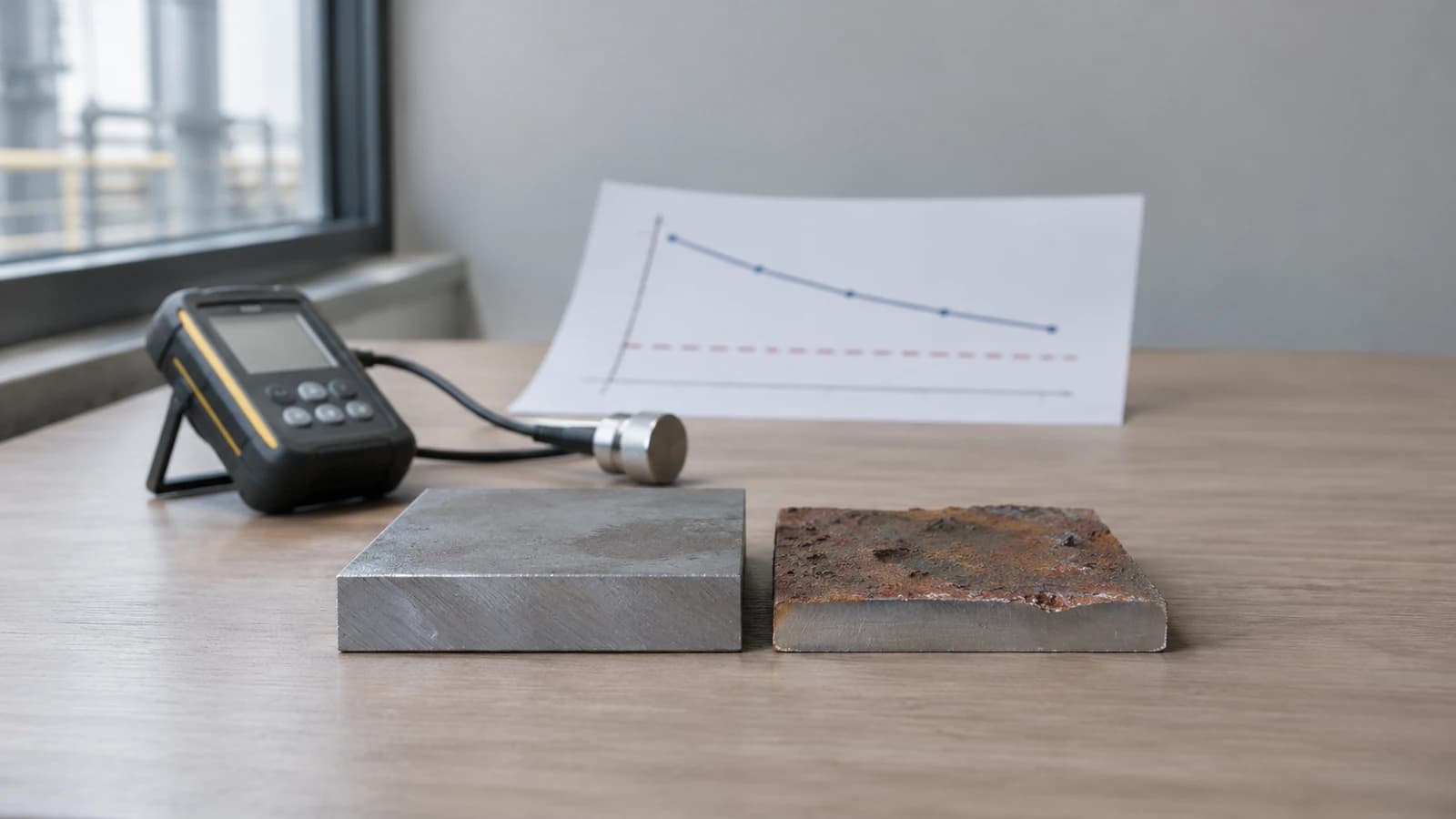
Corrosion allowance is metal added on purpose so that after gradual thinning over the design life the vessel remains safe. Its value depends on fluid, temperature, and environment.
Typical values on real projects
| Service | Common corrosion allowance | Why |
|---|---|---|
| Industrial/potable water | About 1–1.5 mm | Low, uniform corrosion |
| Ordinary petroleum product | About 1.5–3 mm | Limited moisture and sulfur compounds |
| Acidic or sour service | 3 mm or more, per a corrosion study | Higher, less uniform corrosion rate |
This number isn't a substitute for periodic inspection — it's a design assumption, not a guarantee. If measured thickness shows the real corrosion rate is higher than assumed, the inspection program needs to tighten, not lean harder on the original allowance.