The formula for the volume of vertical and horizontal cylindrical tanks, the volume of the heads and converting cubic metres to litres, with a worked example for a 20,000-litre tank.
Volume of a vertical cylindrical tank
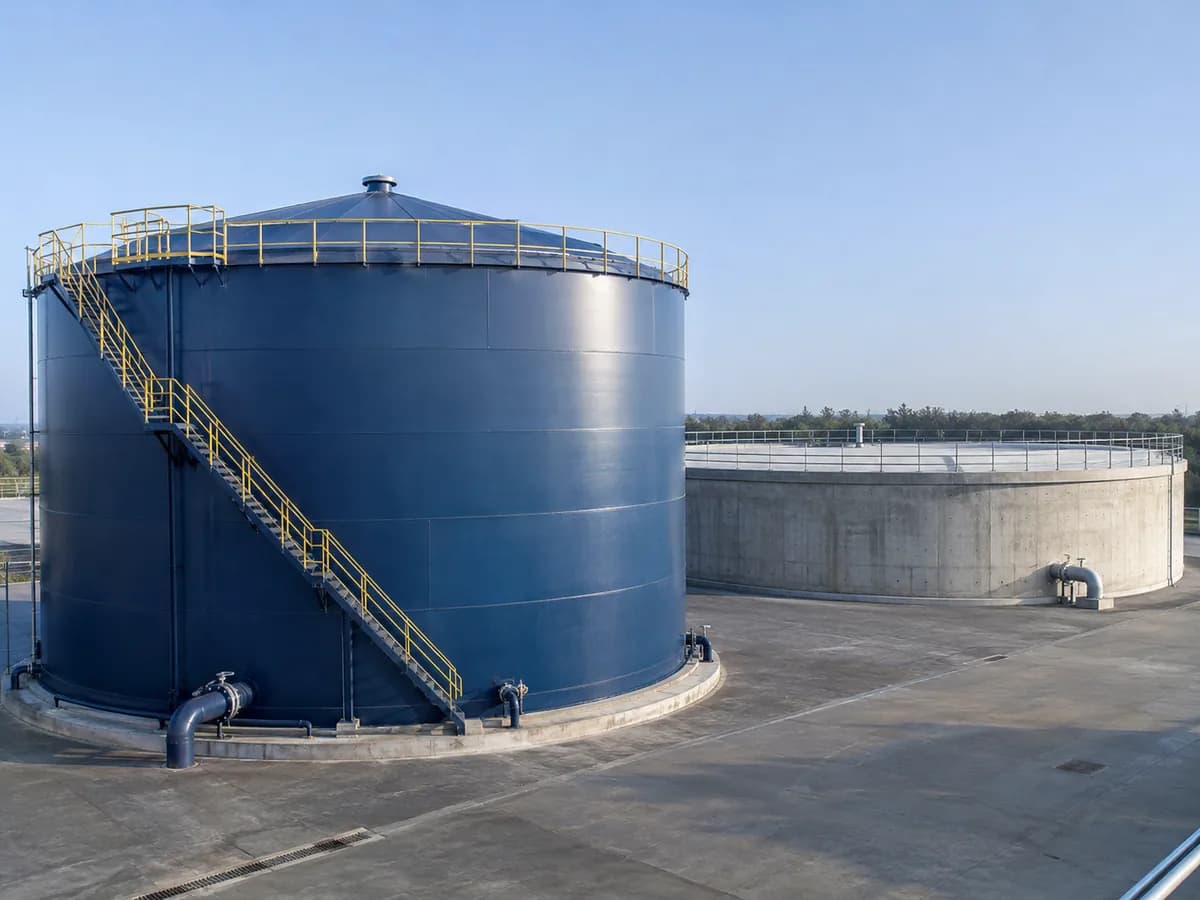
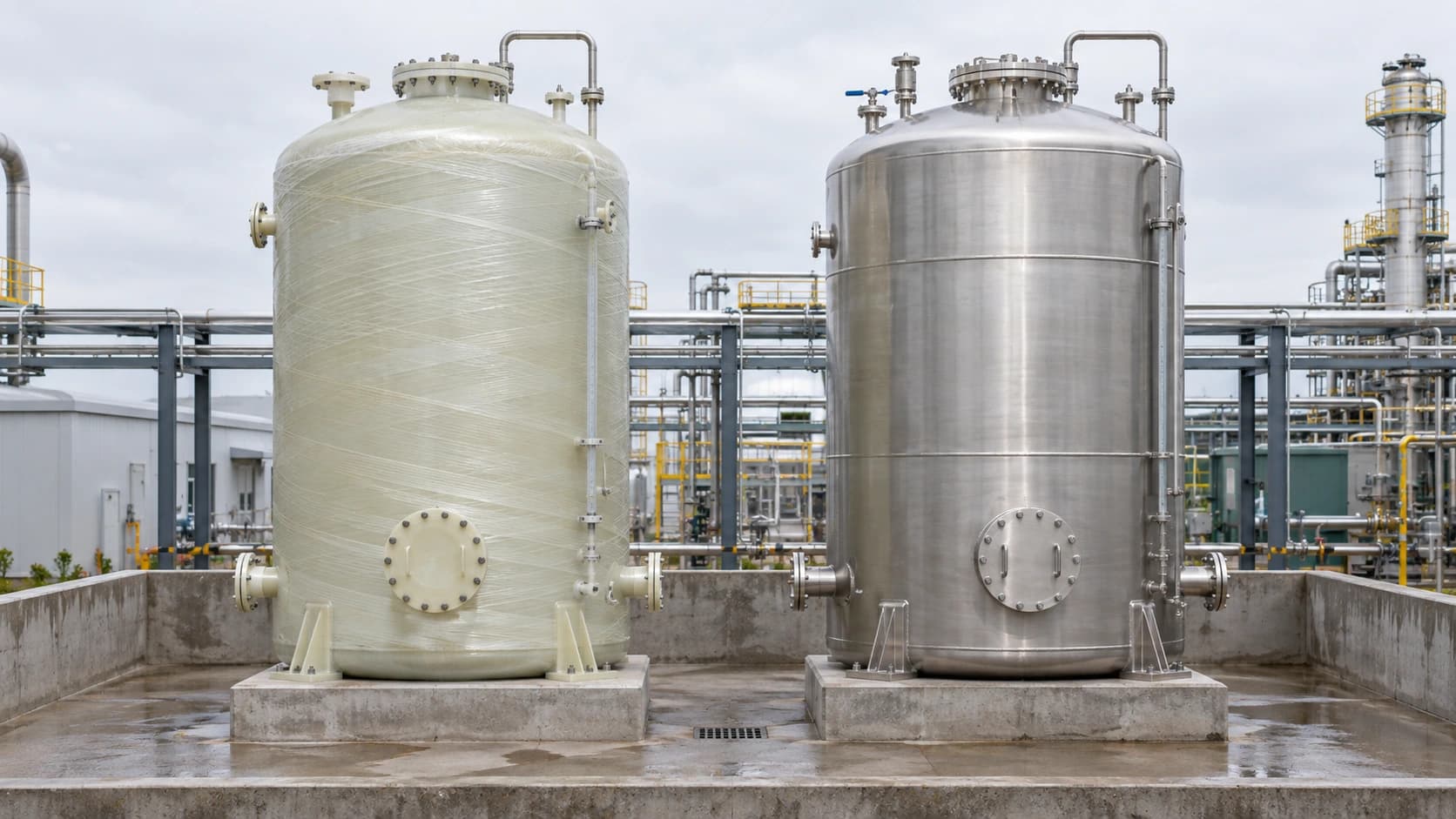
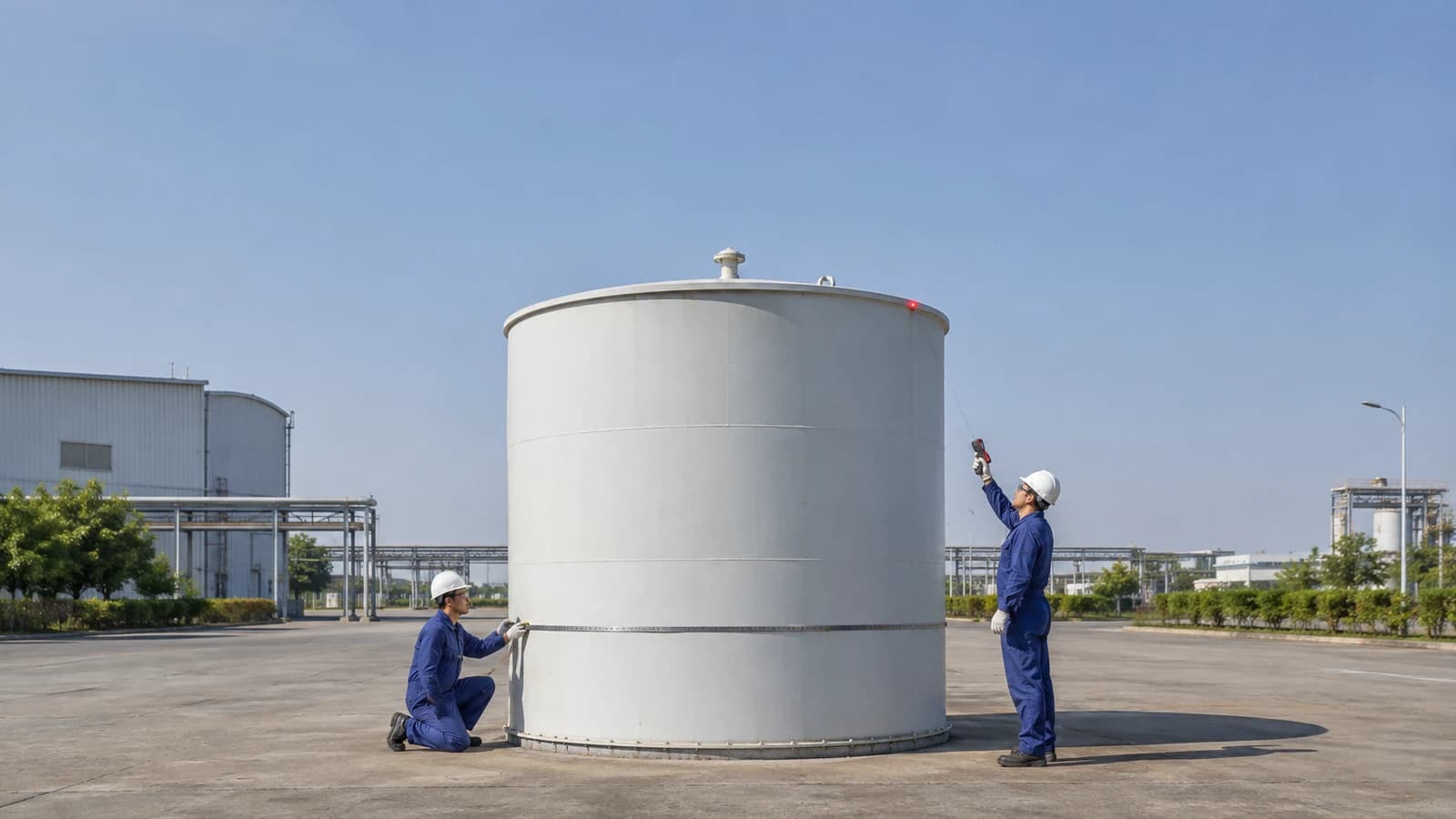
The volume of a cylinder equals the base area times the height: V = π × r² × H. Here r is the inside radius (half the inside diameter) and H is the liquid height or the shell height. If you give the dimensions in metres, the volume comes out in cubic metres. Each cubic metre is a thousand litres.
A tank with an inside diameter of 2.5 m and a height of 4.1 m: the radius is 1.25 m, so V = 3.1416 × 1.25² × 4.1 ≈ 20.1 m³, i.e. about 20,100 litres.
Total volume is not the same as working volume. A few tens of centimetres at the top of the tank always stay empty so that the overflow, the vent and level fluctuations have room. At the bottom too, below the outlet nozzle, some liquid remains that cannot be drawn off. For a water tank, the working volume is usually taken as 90 to 95 percent of the total volume.
Volume of a horizontal cylindrical tank with heads
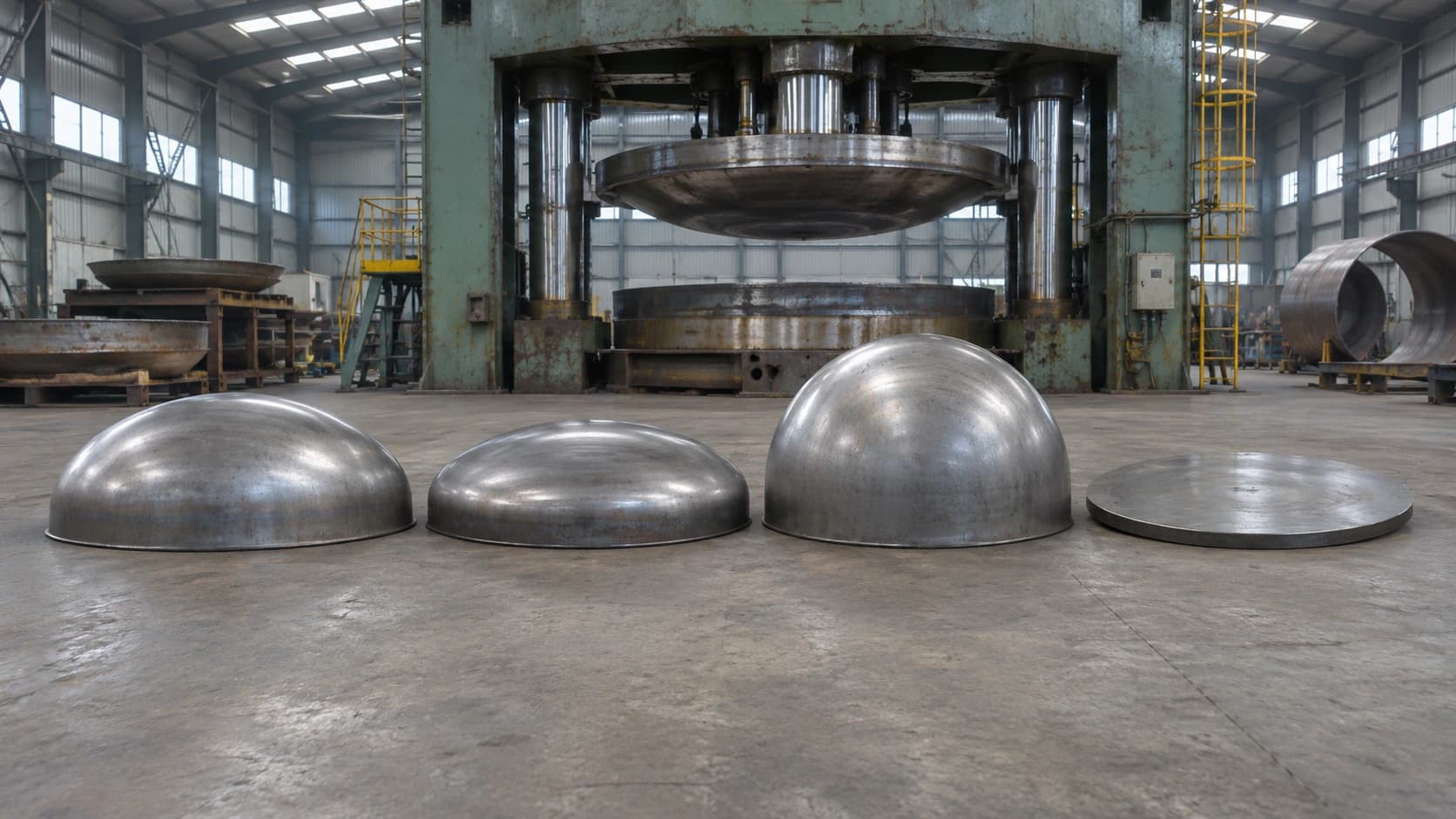
A horizontal tank consists of a cylindrical shell and two heads. The shell volume uses the same cylinder formula, with the shell length instead of the height. The volume of the heads is added separately and depends on their type.
| Head type | Volume of each head (without straight flange) |
|---|---|
| 2:1 elliptical | π × D³ / 24 |
| Hemispherical | π × D³ / 12 |
| ASME torispherical (6%) | About 0.08 × D³ |
| Flat | Zero |
A horizontal tank 2 m in diameter with a 5 m shell and two 2:1 elliptical heads. The shell volume is π × 1² × 5 ≈ 15.71 m³. Each head has a volume of π × 8 / 24 ≈ 1.05 m³. The total volume is about 17.8 m³, i.e. 17,800 litres.
If the horizontal tank is not completely full and you want to know how many litres it holds at a given liquid height, the formula is different. We explain it in the article on the volume of a partly filled horizontal tank.
Volume of a spherical tank
The volume of a sphere is V = (4/3) × π × r³. A spherical tank 10 m in diameter has a volume of about 524 m³. Because volume rises with the cube of the diameter, doubling the diameter multiplies the volume by eight.
Online calculation
To avoid doing these calculations by hand, use the online tank calculator. It shows the volume, suggested dimensions, plate thickness, weight and a price estimate together. For large storage tanks there is also the online API 650 tank calculator.
Shell volume comes from π × r² × length, the head volume from the table above, and the working volume is about 90 to 95 percent of the total. Always use inside dimensions, not outside.